Relations between Pakistan and Bangladesh have shown signs of improvement since the ouster of former Bangladeshi prime minister Sheikh Hasina Wajid in August 2024. Yet, the passage of time has not diminished the importance of understanding the forces that led to the creation of Bangladesh on December 16, 1971.
Before independence, present-day Bangladesh formed the eastern wing of Pakistan — a federation that was structurally fragile from the outset. The separation of East Pakistan was not the result of one leader’s ambition or a single political decision, but rather the outcome of deep-rooted political, economic and constitutional failures that unfolded over more than two decades.
A divided federation from day one
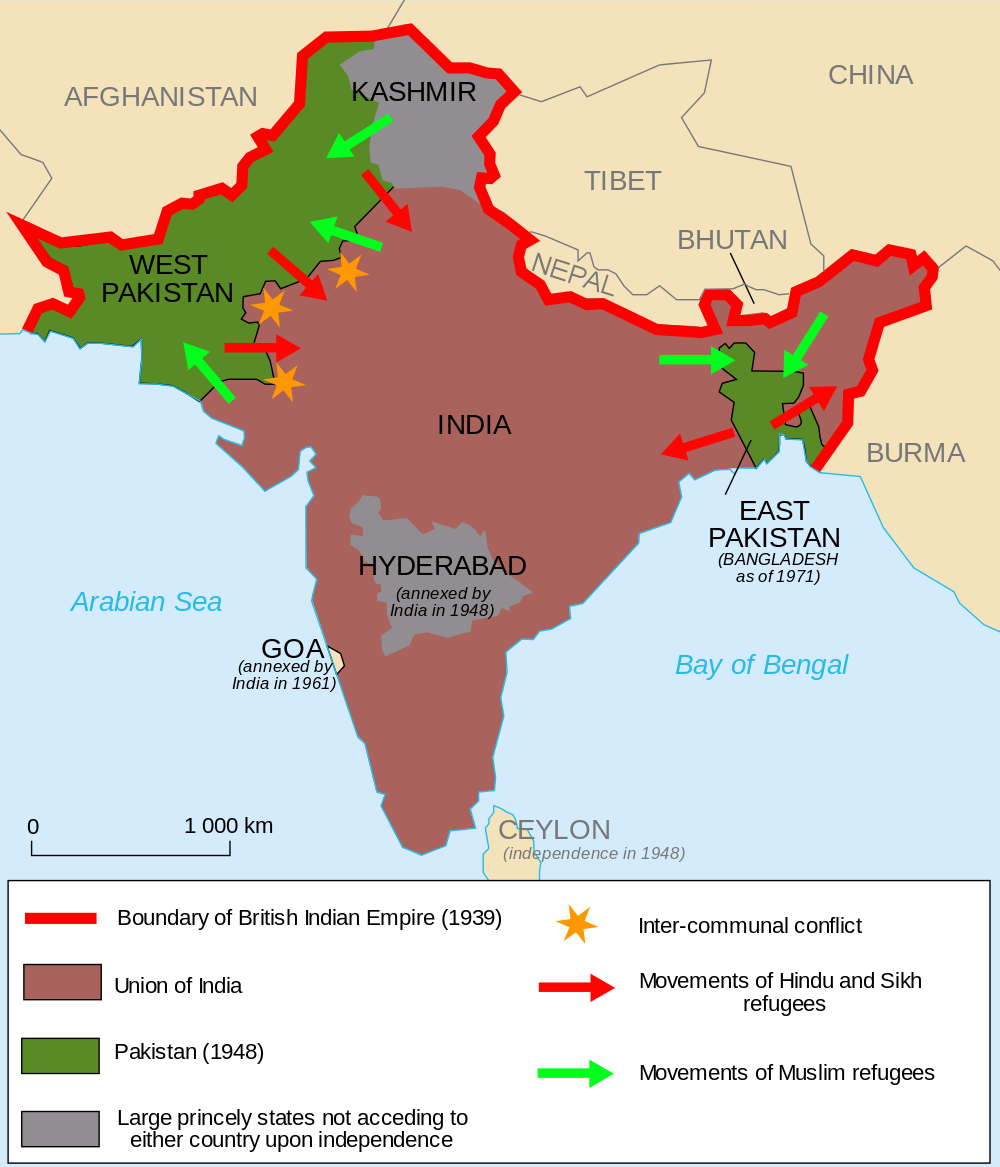
Pakistan’s geography posed a fundamental challenge: its two wings were separated by more than a thousand miles of Indian territory. This lack of geographical contiguity not only complicated governance but also made the federation strategically vulnerable. India, which had reluctantly accepted Pakistan’s creation in 1947, remained ideologically opposed to partition on religious grounds and was widely seen as having little incentive to preserve Pakistan’s unity.
Culturally and economically, the two wings were markedly different. East Pakistan was ethnically homogeneous and politically conscious, while West Pakistan was ethnically diverse and dominated by feudal structures. Despite East Pakistan comprising nearly 54 per cent of the country’s population, political and economic power remained concentrated in the western wing.
Democracy deferred, autonomy denied
For Pakistan to function as a stable federation, it required regular elections, genuine provincial autonomy and equitable economic development. None of these conditions were met. National elections were delayed for more than two decades, largely because ruling elites feared losing power — particularly to East Pakistan, whose larger population would dominate an elected parliament.
Although several prominent leaders from East Pakistan held top offices — including Khwaja Nazimuddin, Iskandar Mirza, Mohammad Ali Bogra and Huseyn Suhrawardy — none came to power through a popular mandate. As a result, their legitimacy among East Pakistanis remained weak.
Economic disparities widened alongside political exclusion. During Ayub Khan’s military rule (1958–69), provincial autonomy was curtailed under the 1962 Constitution, and power became increasingly centralised. The income gap between the two wings, already significant, more than doubled during this period.
Six points and the breaking point
Discontent in East Pakistan crystallised in Sheikh Mujibur Rahman’s Six-Point Programme, announced in 1966, which demanded sweeping autonomy and a weak central government. While framed within a federal context, the proposal alarmed West Pakistan’s political and military leadership.
In Pakistan’s first general elections in 1970, the Awami League swept East Pakistan, winning 151 of 153 National Assembly seats, while Zulfikar Ali Bhutto’s Pakistan People’s Party dominated West Pakistan. Neither party had a nationwide base — a critical weakness for a divided federation.
Despite holding a clear majority, the Awami League was not invited to form the government. Delays, mistrust and political manoeuvring led to mass unrest in East Pakistan. The military operation launched by the central government to suppress the uprising proved disastrous, and subsequent Indian military intervention sealed Pakistan’s dismemberment.
A lesson written in history
The fall of East Pakistan was not sudden, nor inevitable because of one man or moment. It was the result of sustained political exclusion, economic inequality, constitutional manipulation and the failure to respect democratic norms. More than five decades later, the history of 1971 remains a reminder that federations survive not by force, but through inclusion, representation and trust.