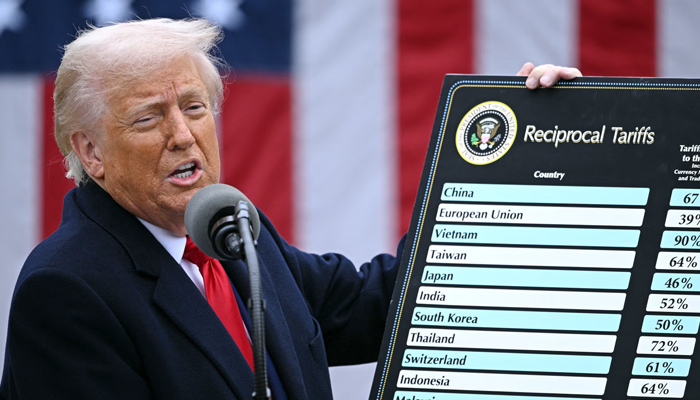
US Supreme Court invalidates President Trump’s global tariff measures in a landmark ruling on executive power. The decision matters because it limits presidential authority over trade without congressional approval. The ruling affects US trade policy and countries, including Pakistan, facing imposed tariffs.
The Supreme Court of the United States delivered the verdict on Friday. The court ruled that President Donald Trump exceeded his constitutional authority. Judges said the sweeping tariffs disrupted global commerce.
Read more: Trump threatens tariffs on Iran trade partners
According to international media reports, the court found that Trump overstepped legal boundaries. The tariffs targeted multiple countries under emergency economic powers. However, the judges determined that such broad measures required congressional authorization. Therefore, the ruling reinforced limits on unilateral executive trade actions.
The court closely reviewed the International Emergency Economic Powers Act. It concluded that the law does not grant authority to impose wide-ranging tariffs. As a result, the justices declared the measures unlawful. The judgment clarified that Congress holds primary power over trade policy. Legal experts described the ruling as a major constitutional clarification.
Read more: Trump slaps 25% tariff on AI chips
Moreover, analysts called the decision a serious setback for Trump’s economic agenda. Tariffs had been a central tool of his trade strategy. Experts warned that ongoing trade agreements could face uncertainty. The ruling may also influence future presidential actions on commerce. Markets and policymakers are now assessing the broader implications.
Previously, Trump imposed tariffs on several countries, including Pakistan. He had warned that an unfavorable ruling would create challenges for the United States. Nevertheless, the court’s decision now reshapes the legal framework governing US trade authority. The verdict sets a new precedent on executive power in economic policymaking.