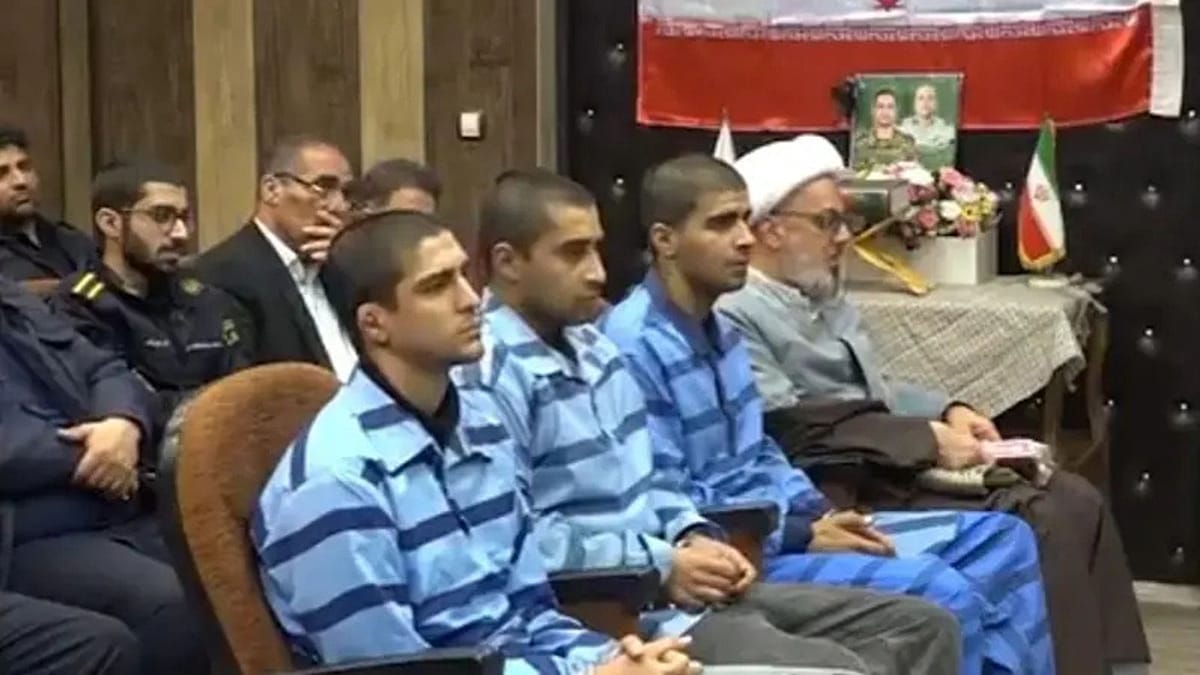
Iran has executed three men accused of killing police officers during anti-government protests earlier this year, marking the first confirmed hangings linked to the demonstrations, according to state media reports.
The executions were carried out in Qom province after the country’s Supreme Court upheld the death sentences, as reported by Tasnim News Agency. Those executed were identified as Saleh Mohammadi, Mehdi Ghasemi and Saeed Davoudi.
Read More: Iran’s Khamenei likens protests to ‘coup’, warns of regional war
Among them was Saleh Mohammadi, described by sources as a teenage member of Iran’s national wrestling team. Authorities said the men were convicted of killing two police officers in separate incidents during unrest in January.
View this post on Instagram
The trio were also found guilty of “moharebeh” — or waging war against God — a charge frequently used in Iran to impose capital punishment in cases involving political dissent or security-related offences.
However, rights organisations have strongly criticised the executions, alleging the men were denied fair trials and that confessions were obtained under torture. The claims could not be independently verified due to restrictions on information within the country.
The executions come amid wider unrest that began in December and escalated in January, spreading to cities across all provinces of Iran. The protests were initially driven by economic grievances, including currency collapse and rising living costs, before evolving into broader calls for political change.
Read More: NGOs struggle to measure deadly Iran crackdown
In a separate case, Iran also executed Kouroush Keyvani, a dual national accused of spying for Israel. His execution drew criticism from Sweden, whose foreign ministry questioned the legal process.
The developments come against a backdrop of heightened regional tensions involving the United States and Israel, further intensifying international scrutiny of Iran’s internal security measures.