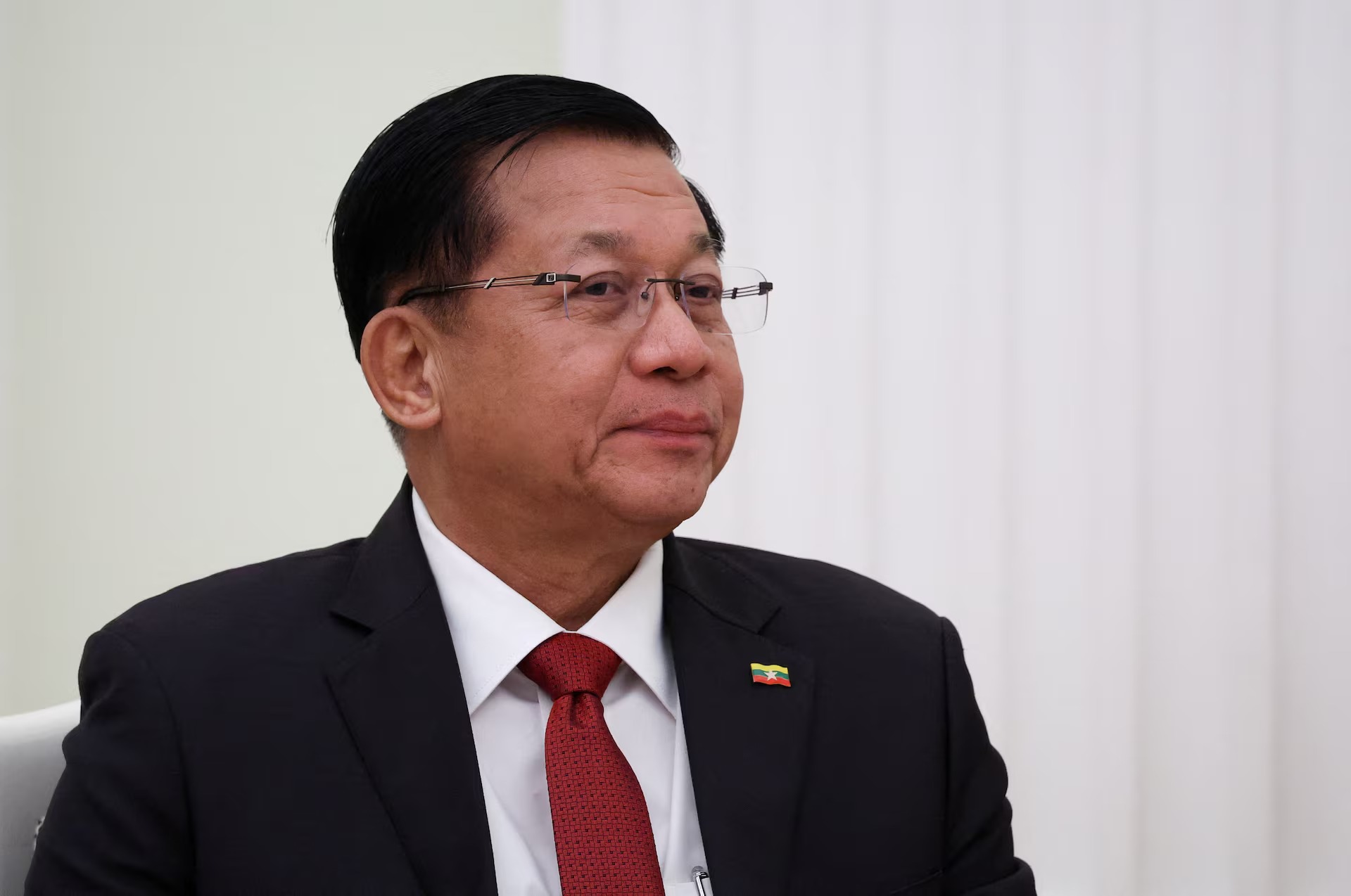
Myanmar’s military-backed administration has imposed martial law in 60 townships, tightening control over conflict-hit regions as part of a new emergency directive. The decision reflects an effort by the ruling authorities to reinforce security measures in areas still facing armed resistance since the 2021 military takeover.
The order, issued by junta leader-turned-president Min Aung Hlaing, covers townships across multiple states and regions, including Kachin, Kayah, Kayin, Chin, Shan, Rakhine, as well as Saging, Magway, and Mandalay. These areas have experienced ongoing instability, curfews, and restrictions following years of internal conflict.
Read more : Myanmar airstrike kills 31 at Rakhine hospital
Furthermore, authorities stated that the 90-day emergency measures aim to restore what they described as the “rule of law” and eliminate armed opposition groups operating in several parts of the country. Under the directive, all executive and judicial authority in the designated townships has been transferred to military command structures.
Meanwhile, military official Ye Win Oo has been assigned full administrative control over the affected regions during the emergency period. State-run media reports confirmed that the new arrangements give the military direct oversight of governance and security operations in conflict-affected territories.
Read more : Pro-military party dominates first phase of Myanmar elections
Additionally, the move comes shortly after Min Aung Hlaing assumed the presidency following a controversial election process widely criticised by international observers. The latest action is seen as part of broader efforts by the military leadership to consolidate authority across war-affected regions and strengthen central control.
Finally, Myanmar’s political crisis traces back to the 2021 military coup that removed an elected government led by Aung San Suu Kyi, triggering nationwide protests and armed resistance. Since then, repeated states of emergency and prolonged conflict have deepened instability across the country, with limited progress toward lasting political resolution.