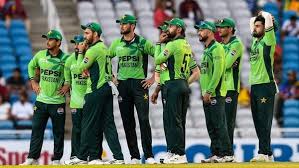
The Pakistan Cricket Board (PCB) on Monday introduced a revamped framework for awarding central contracts to players, set to take effect from the upcoming fiscal year starting July 1, 2026. Despite recent underwhelming performances — including a 2-0 Test series defeat to Bangladesh and a narrow 2-1 ODI series win at home against a relatively inexperienced Australian side — the board opted not to make changes to the national selection committee or coaching staff.
The announcement was made by PCB Chairman Mohsin Naqvi during a press conference held at a local hotel. He was joined by Director of the High Performance Centre Aaqib Javed, white-ball head coach Mike Hesson, Chief Medical Officer Dr Javed Mughal, along with other officials.
Prior to the announcement, Naqvi met with 49 players currently participating in red-ball and white-ball training camps in Lahore, where he briefed them on the newly introduced contract structure.
Although Naqvi had earlier hinted at broader structural changes within the PCB, Monday’s announcement primarily focused on overhauling the central contracts system.
Under the revised model, players will now be divided into five categories instead of the previous four: Track AB, Track A, Track BC, Track C, and Track D.
Track AB represents a dual-format category covering both Test and One-Day International (ODI) cricket. According to the PCB, this top-tier category is reserved for elite multi-format players who are integral to both squads. The board clarified that such players are not automatically considered short-format specialists unless required by team selection needs.
Track A is dedicated exclusively to red-ball cricketers. This category aims to support and reward players who focus on Test cricket, ensuring they remain committed to the longest format.
Track BC is designed for white-ball specialists featuring in ODIs and T20 Internationals. It effectively merges roles that were previously separated under different categories.
Track C recognises T20 franchise specialists, offering them greater flexibility to participate in domestic and international franchise leagues while fulfilling national duties.
Track D serves as a development pathway for emerging talent, with a focus on nurturing young players through the National Cricket Academy and broader high-performance programs.
The PCB also outlined two guiding principles behind the new structure. Firstly, players will only be evaluated against others within the same track rather than across formats. Secondly, each senior track will include two internal tiers, allowing players to move up or down based on performance without switching formats. The development track will remain a single tier.
The board stated that the number and distribution of contracts within each track will remain confidential, as they fall under the selection process and are subject to periodic review.
A significant policy shift has also been introduced to strengthen Test cricket. For the first time, dedicated red-ball players will be permitted to participate in overseas first-class competitions in leading cricketing nations. The PCB emphasized that this move is intended to enhance players’ skills in demanding conditions, rather than divert them toward shorter formats.
“This initiative is aimed at improving the quality of our Test cricketers. Competing in top-level first-class cricket abroad will help them return more refined and better prepared,” the board stated, adding that these players will still be restricted from participating in T20 franchise leagues.
Naqvi further revealed that future selection decisions will be largely data-driven, with analytics accounting for 85 percent of the evaluation process, while selectors’ discretion will make up the remaining 15 percent.
He noted that fitness standards, medical assessments, mandatory participation in domestic cricket, and on-field performances will all play a crucial role in team selection.
“The system is designed to ensure accountability and transparency. Decisions will be based on documented processes rather than personal preferences,” Naqvi said.
Acknowledging Pakistan’s inconsistent performances in major tournaments, including ICC and Asian Cricket Council events, Naqvi assured that efforts are underway to improve results on the global stage.
Aaqib Javed highlighted that the new structure includes better financial incentives, particularly for Test players, in an effort to make red-ball cricket more appealing.
However, he cautioned against expecting immediate success. “There are no guarantees of instant results. Progress will take time,” he said.
Head coach Mike Hesson also expressed optimism, stating that the reforms would benefit Pakistan cricket in the long run.
Meanwhile, Dr Javed Mughal addressed concerns regarding transparency in fitness testing, explaining that conducting such assessments publicly is not feasible.
The PCB believes that the new system will lay the foundation for sustained improvement, balancing performance, accountability, and player development across all formats.