 The Strait of Hormuz is one of the world’s most important shipping lanes, carrying a significant share of global oil and liquefied natural gas exports. Tehran temporarily restricted passage through the waterway during the recent conflict with the United States and has since suggested that vessels transiting through it could face future service or transit charges, prompting concerns among shipping companies and major energy importers.
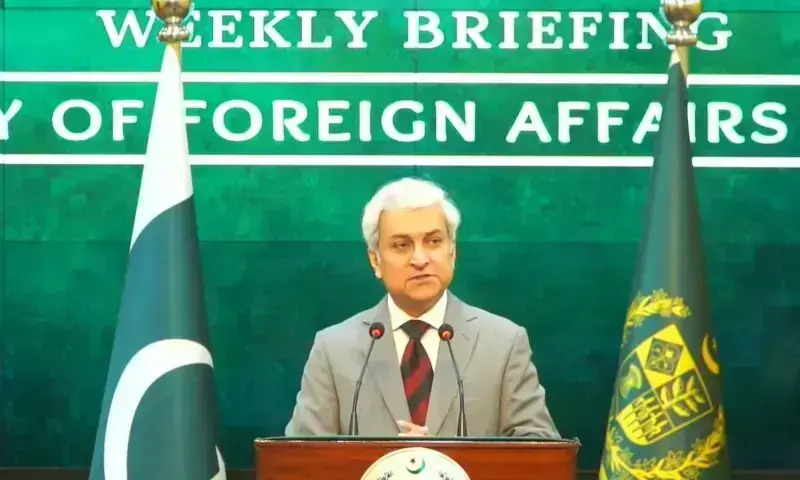
Addressing a weekly news briefing, Foreign Office Spokesman Tahir Andrabi outlined Islamabad’s position on the vital energy chokepoint amid discussions about its future operating arrangements following the Iran-US conflict.
“As regards the future of the Strait of Hormuz, Pakistan has supported the restoration of status quo ante on the Strait of Hormuz,” Andrabi said.
“We have also supported any GCC initiative on this. We will support regional efforts with the spirit of regional ownership of this process, particularly the littoral states to the Gulf.”
Andrabi acknowledged that the waterway would take time to return to normal operations following the lifting of restrictions but expressed confidence that maritime traffic would gradually normalize.
“The blockade has been lifted. So we hope that the freedom of navigation will be easing as we move ahead progressively,” he added.
Separately, Prime Minister Shehbaz Sharif held a phone call with the Qatari emir on Wednesday, during which he said the two leaders expressed satisfaction at the “positive progress” made in the first round of technical talks between the US and Iran in Switzerland and agreed to sustain this momentum.
“Had a warm and most cordial telephone conversation with my dear brother, His Highness Sheikh Tamim bin Hamad Al Thani, emir of the State of Qatar, this afternoon,” PM Shehbaz posted on X.
He added that he thanked the Qatari emir for his country’s “steadfast support for the peace efforts that culminated in the historic Islamabad Memorandum of Understanding”, which was signed by the US and Iran on June 18.
“We expressed satisfaction at the positive progress made during the first round of technical talks in Bürgenstock and agreed on the importance of sustaining this momentum through continued dialogue and diplomacy,” he wrote.
PM Shehbaz also thanked the Qatari emir for his “kind condolences on the tragic loss of a Pakistani national in the recent fire incident in Ras Laffan”, referring to the blast at the liquefied natural gas (LNG) complex.
The prime minister appreciated the Qatari leadership for its “generous hospitality towards the vibrant Pakistani community in Qatar”.
Affirming that Islamabad values its close brotherly ties with Doha, PM Shehbaz said his country looked forward to welcoming the Qatari emir “later this year”.
Moreover, PM Shehbaz Sharif received a telephone call from Governor of Tabuk Province, Saudi Arabia, Prince Fahd Bin Sultan Bin Abdulaziz Al Saud.
During their most warm and cordial conversation, the governor congratulated the prime minister on Pakistan’s remarkable diplomatic efforts that resulted in the Islamabad Memorandum of Understanding (MoU) between the United States (US) and Iran, a Prime Minister’s Office news release said.
Meanwhile, Deputy Prime Minister Ishaq Dar on Wednesday held interaction with the Foreign Minister of the People’s Republic of China, Wang Yi, who congratulated the DPM and the leadership for successfully conducting this mediation process and signing of Islamabad MOU.