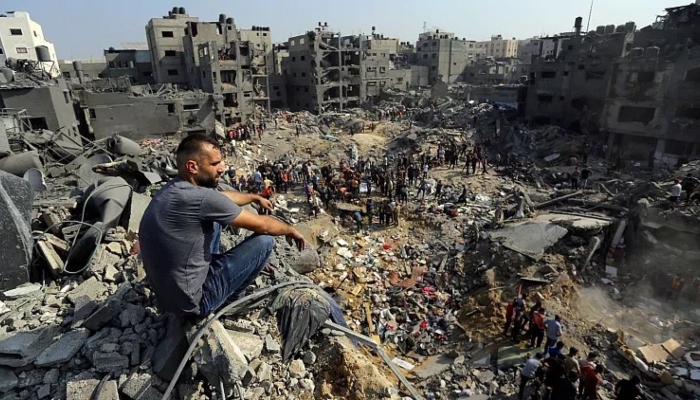
Gaza faces a severe environmental crisis following a serious food shortage and ongoing bombardments. Explosions have contaminated the soil and water, making them toxic and unsafe. According to a Bloomberg report, 55 million tons of debris, toxic dust, and heavy metal pollution are entering the soil and water. This contamination threatens public health and the environment.
The report reveals that the Souk Al-Faras market has turned into a massive 200,000-ton garbage pile. Around 45% of Gaza City is deserted, roads are destroyed, and trash piles grow uncontrollably. More than 350 new waste dumps have appeared, many near tents and water sources. This worsens sanitation and health conditions.
Water supply, Gaza’s only source, is at high risk of contamination. Daily, 84,000 cubic meters of sewage flow into the Mediterranean Sea, further polluting the region. Toxic residues from the war will impact future generations. About 95% of Gaza’s farmland is now unusable, pushing food prices to record highs.
Bloomberg’s report warns that the environmental damage will not remain confined to Gaza’s borders. It could spread and affect neighboring areas as well. The crisis worsens Gaza’s humanitarian situation and poses long-term regional risks.
Gaza’s ongoing conflict has triggered a deep environmental and food crisis. Toxic soil and polluted water threaten health, agriculture, and the wider region. Immediate action is crucial to prevent further damage and human suffering.