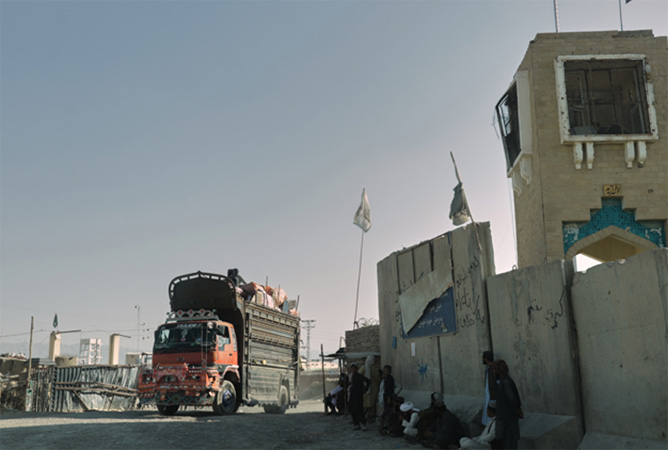
 Three days of intense negotiations in Istanbul between Pakistan and Afghanistan concluded without a definitive result, exposing once again the persistent friction along a border that has long been a source of insecurity and anxiety. The meetings, facilitated by Qatar and Türkiye, were meant to translate dialogue into action. Instead, they highlighted a familiar tension: Pakistan’s insistence on actionable security guarantees versus Kabul’s repeated evasions.
According to sources close to the talks, Afghan delegates repeatedly avoided committing to practical measures against militant sanctuaries that have enabled attacks inside Pakistan. Time-stamped evidence of militant bases and cross-border movements was said to be presented, but the Afghan delegation questioned the provenance of the evidence rather than addressing it. They shifted discussions to procedural and political points, repeatedly contacting Kabul during negotiations. The result was a stalemate, frustrating both mediators and the Pakistani team.
Negotiations spanned three gruelling days. 19 hours on the first day, 11 on the second, and 18 on the third. Draft agreements were finalised three separate times. On the third occasion, General Shahab Aslam reportedly reminded the Afghan delegation, “In Islam, it is said that anything committed three times is considered final. So it is now final from your side?” The Afghans verbally agreed. However, after stepping out to consult Kabul, they returned and backed off from the agreement. Observers noted that even seasoned Qatari and Turkish mediators were visibly shocked, reportedly muttering, “Allah help and forgive these people.”
The core obstacle remained the same as always. The Afghan side refuses to take responsibility for hostile groups operating from its territory, including the Tehreek-i-Taliban Pakistan (TTP) and the Baloch insurgents. Pakistan’s delegation insisted on enforceable measures, warning that continued attacks would compel Islamabad to act in self-defence. Afghan proposals for reciprocal guarantees on airspace were politely rejected, with Pakistan clarifying it could not control unilateral actions by third parties and would not be held responsible for militant activity emanating from Afghan soil.
The talks revealed deep-seated tensions not just over security, but over trust and credibility. Pakistani sources described the Afghan posture as defensive and occasionally dismissive, with some members speaking provocatively or avoiding direct answers. Qatar and Türkiye, acting as neutral mediators, reportedly expressed surprise at the uncooperative stance. One diplomat noted that the repeated last-minute withdrawals of agreement reflected directives from Kabul rather than genuine negotiation.
The stakes are undeniably high. According to Pakistan’s Ministry of Interior, cross-border attacks from Afghan territory have killed at least 124 civilians and over 300 security personnel so far in 2025. The frequency of these attacks, averaging more than two incidents per week along the Pakistan-Afghanistan border, has created a climate of tension, disrupting local economies and displacing thousands of families in border districts such as Bajaur, South Waziristan, and Khyber. These attacks represent the daily reality of communities living under the shadow of militants who move with relative impunity.
Pakistan has repeatedly demonstrated a willingness to engage constructively. During the meetings, the delegation emphasised that any response would be proportional, defensive, and aimed strictly at neutralising threats. Yet, without reciprocal action from Kabul, dialogue risks being reduced to performative diplomacy rather than effective conflict management.
Observers point out that these talks must be understood within the broader regional context. The Afghan government, still grappling with internal divisions and external pressures, has been cautious in committing to measures that could provoke militant factions. Pakistan, meanwhile, faces a domestic imperative to protect its citizens. The negotiations in Istanbul occurred just a week after meetings in Doha, indicating Islamabad’s commitment to diplomacy, all the while highlighting the slow pace of progress.
UN estimates suggest that cross-border attacks in Pakistan’s tribal districts have displaced over 35,000 people this year alone. Schools and hospitals remain vulnerable to attacks, and economic activity in border regions has fallen by nearly 20% in affected districts, according to local chamber of commerce reports. Islamabad’s demand for actionable security measures is, therefore, grounded in the preservation of lives, livelihoods, and territorial integrity.
Qatar and Türkiye’s involvement signals that Pakistan is acting in concert with global mediators seeking regional stability. Yet, the Afghan delegation’s repeated evasions, combined with directives from Kabul, threaten to undermine these multilateral efforts. The stalemate also has wider implications for counterterrorism cooperation, including intelligence sharing and cross-border policing, key components of any sustainable regional security architecture.
Pakistan’s approach in Istanbul, sources emphasise, has been consistent: negotiation first, but not at the expense of core security interests. The repeated reversals by Afghan delegates have reinforced Islamabad’s position that peace cannot be achieved solely through dialogue. Pakistan’s willingness to offer multiple opportunities for consensus reflects a long-term commitment to regional stability, even as frustration mounts.
The talks also highlight a broader lesson for the region: credibility and trust cannot be substituted by rhetoric. Pakistan has shown patience, transparency, and cooperation. Its demands are clear. Afghan soil must not be used to launch attacks against Pakistani citizens. Without verifiable action, verbal assurances are insufficient to protect lives or prevent further deterioration along the border.
As Islamabad considers its next steps, the Istanbul talks serve as a sober reminder of how peace along the Pakistan-Afghanistan frontier is attainable, but only through a combination of verifiable action, accountability, and sustained engagement.