WASHINGTON – NASA is urgently exploring backup options for its Artemis III moon landing mission, as delays in SpaceX’s Starship development threaten the agency’s goal of returning astronauts to the lunar surface by 2026.
Acting NASA administrator Sean Duffy announced that the agency may move away from SpaceX — its primary partner under a $2.9 billion contract — due to repeated technical setbacks and growing competition from China.
Read More: NASA’s bold mission: Nuclear reactors on the moon by 2030
SpaceX’s Starship rocket, designed to serve as the lunar lander, requires a complex and unprecedented orbital refuelling process. Multiple test-flight explosions and delays in refuelling systems have raised doubts about whether the system can meet NASA’s timeline.
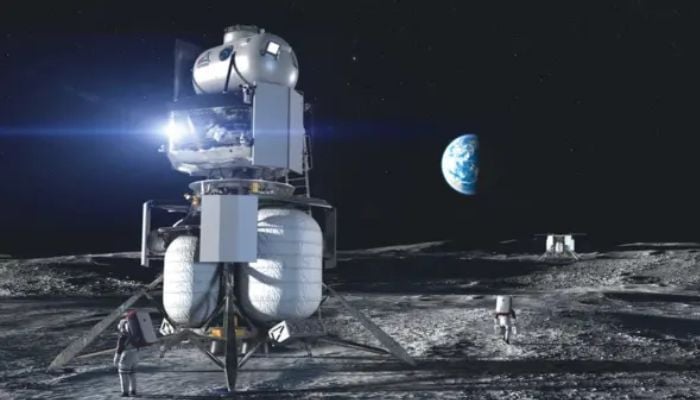
With China aiming to land astronauts on the moon by 2030, Duffy has described the situation as a “national security imperative.” To accelerate progress, alternative proposals have emerged. Blue Origin, owned by Jeff Bezos, has offered a lander design that avoids orbital refuelling entirely. Meanwhile, Lockheed Martin has proposed a two-stage lander built from spare Orion spacecraft parts to speed up development.
Read More: NASA’s high-tech device detects human life beneath rubble
However, experts caution that building a new spacecraft typically takes six to seven years and requires significant new funding. NASA is now reviewing all options as it faces mounting pressure to maintain America’s lead in lunar exploration.