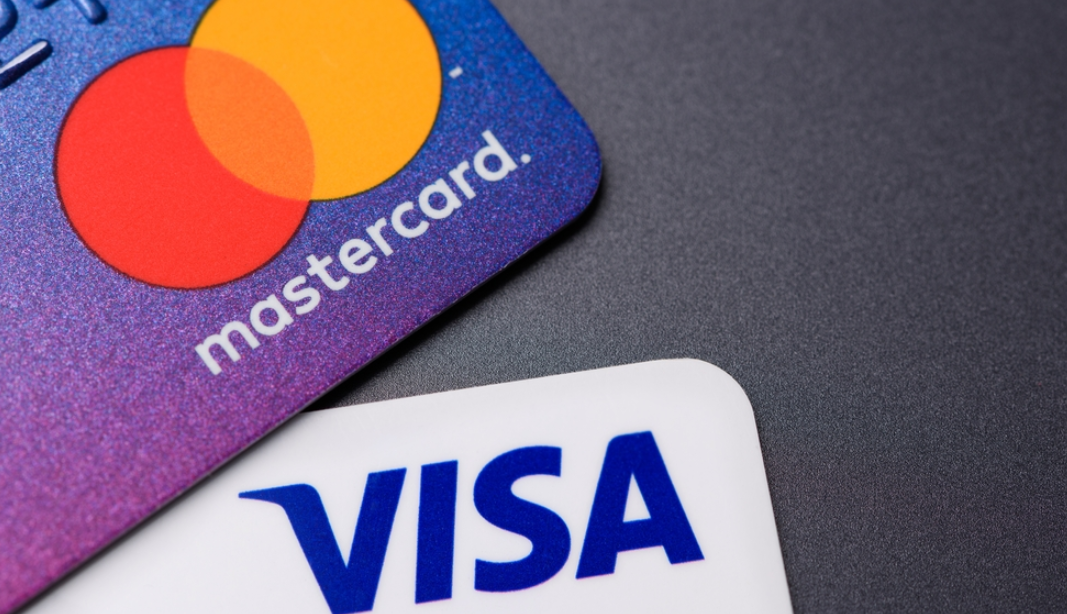
Visa and Mastercard have announced a revised $38 billion settlement with U.S. merchants who accused the credit card giants of inflating fees for processing transactions, in an effort to gain approval from a federal judge who previously rejected a smaller deal.
The proposed agreement seeks to end two decades of antitrust litigation, where merchants alleged that Visa, Mastercard, and major banks conspired to keep “swipe fees” — also known as interchange fees — artificially high.
The new settlement comes months after U.S. District Judge Margo Brodie rejected a previous $30 billion accord in June 2024, calling it “paltry” and insufficient to address the issue.
Revised Terms Aim to Lower Costs
Under the new proposal, Visa and Mastercard would reduce swipe fees by 0.1 percentage point for five years, from an average of 2.35% in 2024. Merchants would also gain flexibility in choosing whether to accept different categories of cards, such as premium rewards cards or commercial cards.
Read More : Bank of Khyber unveils Mastercard Debit Card portfolio
Standard consumer card fees would be capped at 1.25% for eight years, marking a reduction of more than 25%. Additionally, merchants would be permitted to apply up to a 3% surcharge on card transactions, allowing them to offset processing costs.
Both companies said the deal offers “meaningful relief” to businesses of all sizes, with Mastercard emphasizing benefits for smaller retailers.
Merchants Still Skeptical
Despite the concessions, merchant groups — including the National Retail Federation (NRF) and the Merchants Payments Coalition — remain opposed. They argue that the settlement fails to address fundamental issues in the payments system and still leaves businesses paying excessive fees, particularly for rewards cards that dominate the U.S. market.
“You can’t just suddenly tell more than 80% of your card customers you’re not going to take their cards,” said Stephanie Martz, NRF’s general counsel. “You would lose a lot of business.”
According to NRF data, U.S. swipe fees totaled $111.2 billion in 2024, up from $100.8 billion in 2023, and have quadrupled since 2009.
Two economists representing merchant plaintiffs — Nobel laureate Joseph Stiglitz and University of Washington’s Keith Leffler — estimated that the settlement could save merchants $38 billion by 2031 and unlock $224 billion in competitive benefits by curbing fee inflation.
Read More : Mastercard reaffirms commitment to Pakistan with new office in Karachi
Visa and Mastercard continue to deny wrongdoing under the settlement, and their shares remained largely unchanged in trading following the announcement.
The earlier $30 billion deal was struck down after Judge Brodie ruled it failed to remove restrictive rules such as “Honor All Cards,” which forces merchants to accept all Visa or Mastercard cards if they accept any.
The new proposal aims to address those concerns by allowing merchants greater freedom to decline high-cost card types, a key demand in the long-running legal battle.