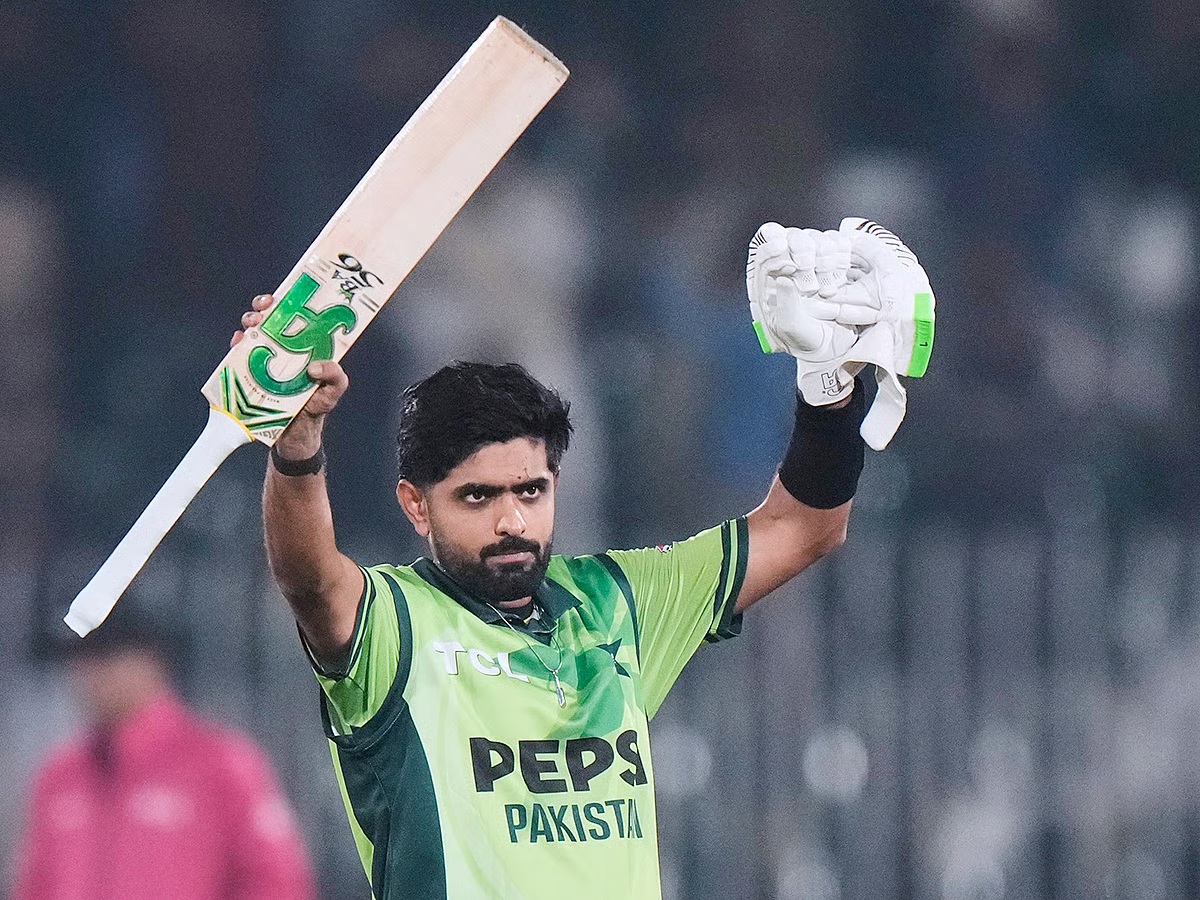
For two years, two months, fifteen days, and eighty-three long innings, Pakistan waited for a sound it had almost forgotten. Not the sound of bat meeting ball — that had never stopped — but the sound of destiny returning. The sound of elegance reclaiming its place. The sound of a king rediscovering his crown. When Babar Azam walked into the Rawalpindi Cricket Stadium, something in the air shifted. The crowd wasn’t just watching him; it was searching for him. Searching for the Babar who once made cricket look like poetry. Searching for the Babar whose cover drive alone could revive a nation’s heartbeat. Searching for the Babar who had gone missing in numbers, but never in memory.
Pakistan had been living in a strange emotional drought. Babar scored runs, yes — fifties, forties, fighting thirties — but the hundred, the one symbol everyone needed, stayed away like a forgotten prayer. He carried expectations heavier than any bat ever crafted. Every inning brought scrutiny. Every dismissal brought headlines. Every press conference became a battlefield. The world had begun whispering that Babar’s magic was fading, his touch weakening, his aura dissolving. Critics claimed bowlers had “figured him out.” Pundits suggested Pakistan should “move forward.” Social media conducted trials after every innings. For a player who once dominated rankings, stadiums, and hearts, this was a fall no less dramatic than a Shakespearean tragedy.
Then came the night when tragedy turned into triumph.
Rawalpindi was alive, humming, vibrating with hope disguised as tension. Fans held their breath with every shot. The stadium lights reflected off his helmet, but beneath that steel exterior was a man carrying two years of noise, doubt, and bruises. And in that silence, in that pressure, something inside him reignited. He played with a serenity that only great players possess — a calmness that comes not from confidence, but from conviction. Every boundary was a vow. Every single was a step toward reclaiming his lost kingdom. The crowd, once hesitant, began to believe again.
And then the moment arrived. The ball sped off his bat, raced through the infield, and the scoreboard flickered. Not slowly. Not dramatically. Instantly. Brightly. Boldly. The number “100” lit up the night sky like a rising sun. The stadium erupted into an explosion of sound powerful enough to wake every sleeping memory of Pakistan cricket. People on their feet, some in tears, some hugging strangers, some screaming his name like a prayer finally answered. It did not feel like a cricket match. It felt like a resurrection.
That century wasn’t just his twentieth ODI hundred. It was a statement that traveled far beyond the stadium walls. In just 136 innings, he reached 20 ODI centuries — one of the fastest in cricket history. Only Hashim Amla and Virat Kohli have done it quicker. He equaled Saeed Anwar’s Pakistani record, but in nearly half the matches. He surpassed legends like Brian Lara, Mahela Jayawardene, and Joe Root in the race to this milestone. It wasn’t just a return; it was a return with force, with authority, with mathematics that only geniuses can produce.
This hundred also raised his international century tally to 32 across formats — and every one of them is a chapter in a larger story. His journey isn’t just decorated with milestones; it is paved with records that define eras. He is the fastest Asian to 5,000 ODI runs, taking only 97 innings. He jointly holds the world record for fastest to 6,000 ODI runs in 123 innings alongside Hashim Amla. He has Pakistan’s highest-ever calendar-year aggregate of 2,477 international runs, a number that speaks to relentless consistency. In T20 internationals, he is the format’s all-time leading scorer — ahead of everyone, from Kohli to Guptill to Rohit to Finch. These numbers don’t belong to a player in decline. They belong to a giant.
But numbers alone cannot explain what last night meant. Cricket sometimes becomes bigger than statistics. It becomes emotional theatre — and Babar was the actor, director, and scriptwriter of this grand act. He didn’t bat like a man trying to prove something. He batted like a man who already knew. His footwork was controlled, his timing effortless, his balance poetic. The cover drives flowed like water gliding over glass. The flicks whispered elegance. The back-foot punches shouted defiance. Each shot was a reminder of why the world once declared him the most technically gifted batsman of his generation.
Pakistan felt that reminder.
In homes, cafés, bazaars, and rooftops, people stopped what they were doing and stared at screens. Old fans remembered the Babar who once rose to world No.1 in all formats simultaneously. Young fans saw the hero they grew up admiring rediscover his fire. Critics felt their arguments crumble. Commentators found their vocabulary insufficient. And the crowd inside the stadium found its voice again, chanting in a rhythm that drowned out two years of noise: “This is our king… this is Babar Azam.”
The match ended, but the moment remained. As he lifted his helmet and raised his bat, there was no arrogance. Only dignity. Only gratitude. Only a quiet fierceness in his eyes that revealed the battles he had fought — not with bowlers, but with himself, with doubt, with pressure, with expectation. After the match, he said simply, “My strength was my belief… and the people who stood with me when things were difficult.” These were not rehearsed words. They were the words of a man who survived storms the public never saw.
What makes this century extraordinary is not just the statistics it added to his résumé, but the psychological weight it erased. This was not a hundred scored on a flat pitch without pressure. This was a hundred scored on a night when everything — reputation, respect, narrative — was on the line. And he delivered like only great players do: not with rage, but with class. Not with noise, but with silence. Not with desperation, but with certainty.
The hundred has done more than revive his form. It has revived Pakistan’s cricketing soul. The country that breathes through this sport found its heartbeat again. The debates quieted. The doubters retreated. The critics swallowed their words. The fans celebrated. And somewhere in the midst of all this, Babar stood like a man who knows that every comeback is sweeter than any rise.
He is thirty — an age where most great batters enter their golden era. Kohli peaked after 30. Smith peaked after 30. Williamson matured after 30. If this is the beginning of Babar’s second phase, then Pakistan may be witnessing the rise of a stronger, wiser, more ruthless version of him. A Babar who has seen the height, survived the fall, and now understands the climb better than ever.
Last night did not just give Pakistan a century. It gave them a reminder of who he is. A reminder that class never dies. A reminder that giants only sleep — they never disappear. A reminder that the crown was never lost. It was simply waiting.
When he walked off the field, bat in hand, shoulders straight, eyes calm, it felt like watching a king returning to his throne — not as a ruler entitled to power, but as a warrior who earned it again.
If there was ever a moment that defined Babar Azam, it was this one: the night he rose, not because the world believed in him, but because he believed in himself.
And as long as that belief remains, his reign isn’t ending.
It is just beginning again.