WASHINGTON – The International Monetary Fund (IMF) has projected that the world’s 20 largest economies will grow by just 2.9% by 2030, marking their weakest medium-term outlook since the 2009 global financial crisis. The IMF cited protectionism, policy uncertainty, and fiscal pressures as key factors constraining growth.
Read More: IMF warns corruption threatens Pakistan’s economic stability
The report forecasted that advanced G20 economies—including the United States, Britain, Germany, Japan, and others—will see modest growth of just 1.4% by 2030. Emerging markets such as China, India, Brazil, and Indonesia are expected to outperform, with projected growth of 3.9% over the same period.
For 2025, the IMF expects the G20’s economic output to expand by 3.2%, down from 3.3% in 2024, and moderate further to 3.0% in 2026. The report highlighted risks from widening public debt, aging populations in developed countries, and ongoing trade tensions.
The IMF also warned that global inflation, while slowing, remains a concern. Headline inflation is expected to hover around 3.5% in G20 countries in 2025, with core inflation in the US not anticipated to reach the Federal Reserve’s 2% target until 2027. Rising tariffs and trade barriers could further hinder growth, according to the report.
Read More: IMF reported deep-rooted corruption risks in Pakistan’s governance system
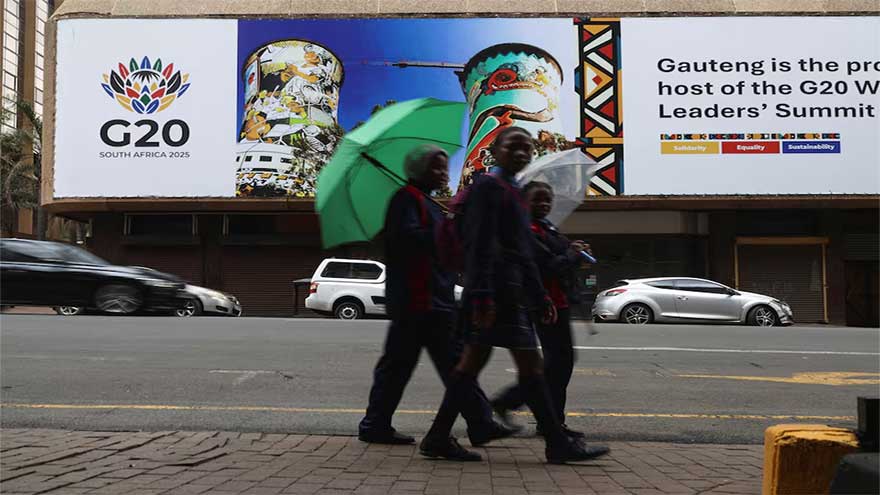
Ahead of the upcoming G20 summit in South Africa, which US President Donald Trump and Chinese President Xi Jinping are set to skip, the IMF urged member nations to cooperate on trade policies. The global lender recommended clear and transparent trade roadmaps and warned against measures like purchase commitments or quantitative restrictions that could stifle economic growth.