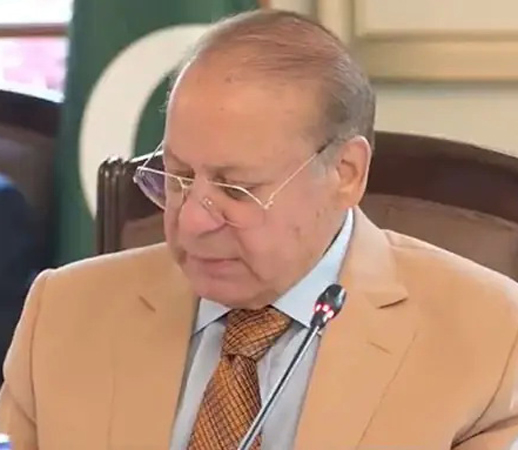
 PML-N President Nawaz Sharif on Friday asked his brother, Prime Minister Shehbaz Sharif, to give funds to Azad Jammu and Kashmir (AJK) and Gilgit-Baltistan (GB) in accordance with the National Finance Commission (NFC) Award.
Nawaz’s suggestion on including AJK and GB’s share in the NFC is significant, as smaller provinces have previously rejected this federal plea several times. The proposal was formally initiated when NFC talks started under then-prime minister Imran Khan, while current Foreign Minister Ishaq Dar had also suggested the same in the past to reduce the financial burden on the Centre.
“Funds should be given to Azad Kashmir and Gilgit-Baltistan under the NFC award. I will speak to PM Shehbaz Sharif in this regard,” he PML-N supremo said while talking to party leaders in Lahore.
“A certain amount every year must be given to both provinces – Azad Kashmir and GB. This is very important,” he said, adding that these two provinces must have the capacity to spend this money.
He recalled how both provinces could not properly utilise the funding they received from the federal government in the past. “They need to know how to spend that money. The way I want such funds utilised did not happen,” he stated.
Nawaz also sought applications for elections in both provinces by December 31.
“We decide who will be awarded the tickets on merit in both provinces, as we do in other provinces,” he announced. “We will not tolerate infighting on tickets. Anyone involved in this will be excluded from the process.”
The PML-N supremo also praised his daughter, Punjab Chief Minister Maryam Nawaz Sharif, for her performance as the province’s chief executive. He specifically praised initiatives such as building cancer hospitals, model villages and introducing the metro bus system.
During the NFC meeting last week, the federal government proposed mobilising additional consolidated revenues amounting to more than 5 per cent of GDP over the next three years (roughly Rs 6.5 trillion per annum at the current exchange rate).
The suggestion came during the much-delayed inaugural meeting, which also sought legal opinion on whether federal expenditure priorities bind provinces.
Participants told journalists outside the Ministry of Finance that there was no demand for reducing the provincial share in the divisible pool from the existing 57.5pc as being speculated, nor any discussion about more or less responsibilities, as they were subjects of the Council of Common Interests (CCI) and the National Economic Council (NEC).
Fiscal requirements of Azad Kashmir and Gilgit-Baltistan would also be deliberated at a working-group level.