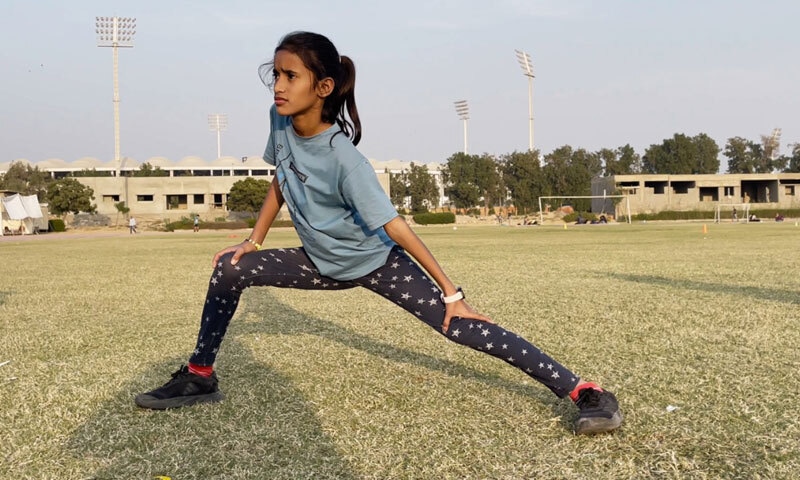
KARACHI — Nine-year-old Kainat Khalil recent successes on Pakistan’s road runner circuit have drawn widespread attention — and controversy — highlighting inconsistencies in sports governance and child safety in Pakistani athletics
Kainat was barred from officially competing in the 21-kilometre half marathon at the BYD Karachi Marathon 2026, despite having registered and finishing the race with one of the fastest times. Organisers later awarded her an honorary prize and publicly criticised her coach for entering a child in an adult-distance event.
Read More: Sana Mir highlights need for protecting young athletes
This incident followed a similar episode at the National Games 2025, where Kainat was prevented from competing in the 5,000-metre race after winning bronze in the 10,000 metres. Her coach, Abu Bakar, noted that objections surfaced only after she defeated institutional teams, raising concerns about selective enforcement of age-eligibility rules.
Kainat, a third-grade student, began competing just over a year ago. She has already secured podium finishes in major events including the Governor House Karachi Marathon, Green Karachi Marathon, Pakistan Day Marathon, Maarka-i-Haq Marathon, and Shuhada Run.
Experts caution, however, that children under 12 are biologically unprepared for long-distance competition, with risks including growth plate injuries, heat illness, cardiac strain, and chronic overuse damage. Sports medicine specialists stress that medical clearance cannot replace age-appropriate competition structures.
Read More: InDrive becomes official partner of Islamabad United for PSL 2025
Critics argue that the authorities’ delayed interventions — allowing Kainat to race, then disqualifying her — failed to protect her when it mattered most, creating emotional distress and public controversy. Analysts also highlight potential gender and socio-economic biases, noting Kainat’s father earns a modest income, limiting access to institutional support.
Kainat’s coach has indicated that future participation will focus on shorter distances and long-term junior development. Yet the case underscores broader systemic weaknesses in Pakistan’s athletics ecosystem: inconsistent rule enforcement, lack of child-centred policies, weak medical oversight, and gender and class disparities.