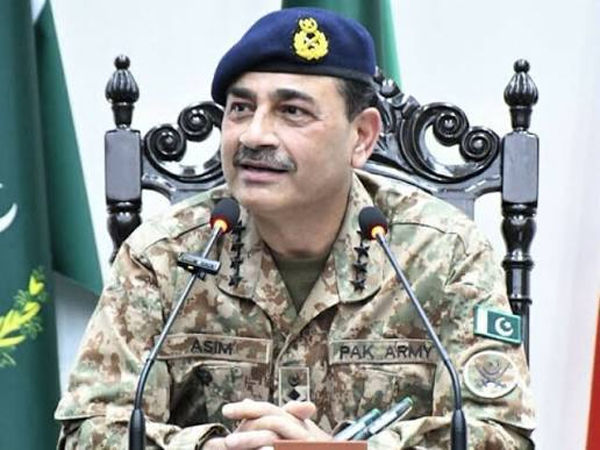
 Chief of Defence Forces Field Marshal Asim Munir played a decisive role in Pakistan’s mediation during the US-Iran crisis, helping prevent a wider regional war that could have carried grave consequences for the Middle East and the Muslim world, security sources told journalists during an important media session.
The briefing covered key national security matters, including the Islamabad peace deal, the Indus Waters Treaty, Kashmir, Afghanistan and Balochistan. Security sources maintained that Pakistan’s civil and military leadership had not pursued mediation for any narrow objective, but for regional stability and peace within the Muslim Ummah.
“This was a war won by Field Marshal Asim Munir through sincerity, competence, brilliance and Allah’s blessings for the greater good of humanity without actually being fought,” security sources stated, calling it the “pinnacle of strategy”.
They stressed that the diplomatic process remained sensitive and required confidentiality, responsibility and caution. As a responsible mediator, Pakistan could not afford speculation and would not go into the contents, substance or next steps of any talks.
Sources warned that spoilers and detractors would continue efforts to subvert peace, but Pakistan would keep working with partners in pursuit of stability. They underlined that military diplomacy and relations with friendly countries could not be viewed through a single, narrow lens, as such ties formed part of broader diplomacy based on national interests.
The National Security Committee’s declaration of April 24 pertaining to Indus Water Treaty was also read out to participants. The declaration, they recalled, had clearly stated that water was a vital national interest and would be protected “at all cost” with the full spectrum of national power.
While there was no doubt about Pakistan’s military response, capability and resolve, sources maintained that Islamabad had also launched a successful legal and diplomatic response to what they described as India’s violation of the treaty.
They also emphasised the need for better water management and conservation, arguing that irrespective of what the military could and would do, Pakistan must build more storage, improve canals and strengthen regulatory structures.
Since India had failed militarily during Marka-e-Haq and faltered diplomatically afterwards, it was now using water rhetoric for political face-saving and to justify a defence budget of more than $90 billion.
On Kashmir, security sources reiterated Pakistan’s longstanding position that the issue remains central to the right of self-determination of the Kashmiri people. They recalled that the 1948 war had been fought jointly by the Pakistan Army, Kashmiris and tribesmen, adding that five wars had been fought over the issue.
Occupied Kashmir, sources claimed, had been turned into one of the world’s largest military cantonments.
They accused India of trying to create unrest in Azad Jammu and Kashmir to hide its failures in occupied Kashmir. Referring to the banned Awami Action Committee, sources claimed that the motives behind the so-called rights movement had been exposed.
Pakistan’s leadership, they noted, had always preferred dialogue, adding that talks continued in Kashmir for two years and facilities demanded by protesters were provided, but elements within the movement later turned to violence, arson and inflammatory mobilisation.
The committee had also ignored the Supreme Court of AJK’s decision and continued to inflame anti-state sentiment. The 12 seats, sources stated, were linked to the Constitution and the Kashmiris’ right to self-determination, and no mob or armed group could impose its will by force.
Security sources further asserted that terrorism and Afghanistan had become two sides of the same coin. They disclosed that security forces and law-enforcement agencies had conducted 32,092 operations across the country this year.
They claimed that 2,170 terrorism incidents had taken place with the support and patronage of the Afghan Taliban regime, while 1,861 terrorists had been killed and 640 Pakistani personnel had embraced martyrdom.
They maintained that Pakistan’s diplomatic engagement with Afghanistan remained transparent, formal and based on the core demand that support, shelter and facilitation for terrorism must end immediately.
Still, all air and military strikes carried out inside Afghanistan, they claimed, were based on precise intelligence. On Balochistan, security sources described Fitna Al Hindustan (BLA) as a terrorist network sponsored by India and some European elements. Anti-Pakistan actors, they claimed, were trying to obstruct Balochistan’s development and prosperity through violence and propaganda.