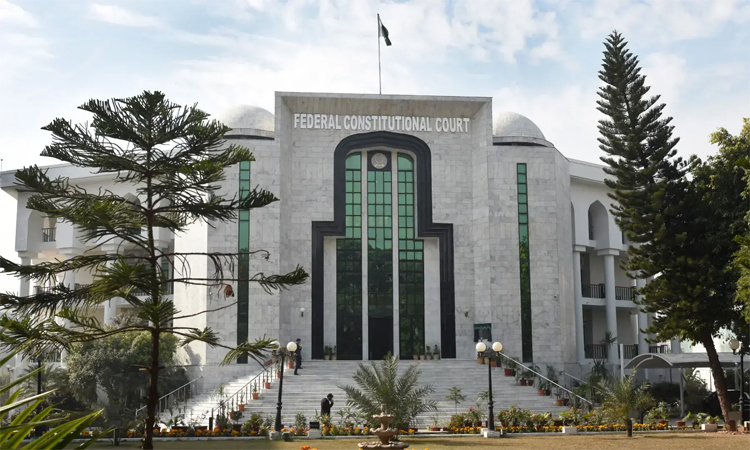
The Federal Constitutional Court’s (FCC) recent ruling on Karachi’s Nasla Tower has placed renewed responsibility on the Sindh government and the Sindh Building Control Authority (SBCA) to regulate illegal constructions, with legal experts saying the decision clarifies the constitutional roles of the judiciary and executive authorities.
Read More: FCC withdraws SC’s orders in Karachi illegal constructions case
The ruling recalled earlier Supreme Court orders that had led to the demolition of Nasla Tower and other enforcement actions in Karachi. According to the FCC, while addressing illegal construction is an important public interest matter, the responsibility for enforcing building laws primarily rests with provincial authorities rather than the judiciary.
Senior constitutional lawyers welcomed the judgment, arguing that the Supreme Court had exceeded its jurisdiction by issuing broad directives concerning demolition drives across the city. They said the FCC has reaffirmed that courts should decide disputes brought before them, while administrative agencies remain responsible for regulating construction, land use and urban planning under existing laws.
Legal experts noted that the verdict does not provide legal protection to unauthorized buildings. Instead, it reinforces the obligation of the Sindh government and the SBCA to take action against illegal constructions through due process and in accordance with applicable laws, including the Sindh Building Control Ordinance and the Karachi Building and Town Planning Regulations.
Former Attorney General Anwar Mansoor Khan and other senior lawyers said the judgment also places greater emphasis on preserving public amenities, parks and open spaces. They stressed that provincial authorities are constitutionally bound to prevent encroachments and ensure public land remains protected for future generations.
Some experts also argued that the earlier demolition orders had created uncertainty for property owners and investors, while others emphasized that any accountability of public officials should proceed through established legal procedures.
Read More: Constitutional court overturns Nasla Tower demolition orders
The FCC’s decision highlights the importance of separating judicial functions from administrative responsibilities. While reaffirming that illegal construction must not be tolerated, the court has clarified that enforcement actions should be carried out by the relevant provincial institutions through transparent legal procedures that safeguard constitutional rights and ensure fair process.