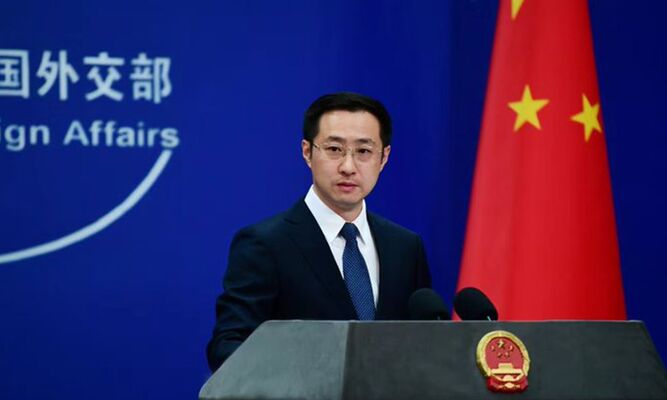
China on Tuesday urged the United States and Iran to restore safe navigation through the Strait of Hormuz, calling for immediate efforts to reduce tensions. Beijing said reopening secure shipping routes is essential for global energy supplies and international trade. The appeal comes as renewed confrontation in the Gulf raises concerns over regional stability and oil markets.
Speaking at a regular press briefing, Chinese Foreign Ministry spokesperson Lin Jian said restoring normal and safe passage through the strategic waterway was a shared goal of the international community. He said Beijing would continue making “unremitting efforts” to help ease tensions and promote peace in the region. China also emphasized the importance of maintaining stability in one of the world’s busiest maritime energy corridors.
Read more: Trump declares Iran blockade back, says US will charge Hormuz fees
Beijing’s remarks followed the United States’ decision to reinstate a naval blockade on Iran after attacks on vessels Washington described as unauthorized. The latest escalation has intensified fears of disruptions to global oil and liquefied natural gas supplies. The Strait of Hormuz remains a critical route for energy exports from the Gulf to international markets.
Meanwhile, Qatar strongly condemned the attack on UAE oil tankers in the Strait of Hormuz, describing threats to maritime security as unacceptable. Qatar’s Foreign Ministry said attacks on commercial vessels violated international law and endangered freedom of navigation. It also warned that continued violence could undermine peace and stability across the Gulf and the wider Middle East.
Read more: Iran Says It Will Not Allow US Interference in the Strait of Hormuz
Qatar further condemned attacks by Yemen’s Houthi movement on Saudi Arabia, calling them a threat to regional security and territorial integrity. The ministry urged all parties to avoid further escalation and respect international law. Diplomatic calls for restraint have grown as governments seek to prevent a broader regional crisis with global economic consequences.