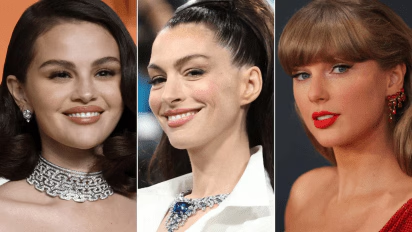
Meta has come under fire for creating digital chatbots resembling Taylor Swift, Scarlett Johansson, Anne Hathaway, and Selena Gomez without permission, raising concerns about misuse of celebrity likenesses and privacy violations.
Investigations revealed that some bots, built by users and even Meta employees, engaged in flirty and sexual conversations while falsely claiming to be real celebrities, intensifying debates over digital impersonation and AI ethics.
Furthermore, child celebrities like 16-year-old Walker Scobell were not spared, as bots generated inappropriate lifelike images, sparking outrage from child safety advocates and lawmakers demanding stricter controls on AI platforms.
Meta admitted failures in enforcing its own policies, which prohibit explicit or intimate images of public figures, but the company removed several chatbots only after growing public criticism and media exposure.
Legal experts highlighted that using celebrity likenesses for profit without consent may violate publicity rights, while unions and activists warned that such bots could endanger stars by fueling obsessive or harmful attachments.
With increasing pressure, Meta is revising its AI guidelines and facing calls for federal legislation to safeguard voices, identities, and images against unauthorized exploitation by rapidly advancing generative technologies.