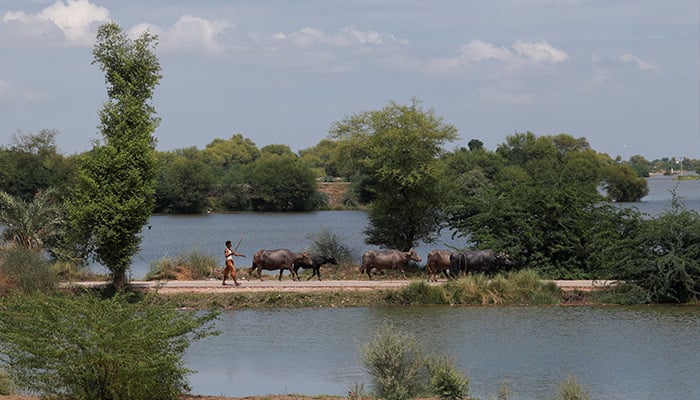
ISLAMABAD – In the aftermath of the recent flash floods, Pakistan and the International Monetary Fund (IMF) are preparing to adjust the country’s budgetary and macroeconomic targets for the current fiscal year, according to The News.
Initial assessments had suggested that the floods might not result in major economic losses, but the Rapid Need Assessment (RNA) conducted across all four provinces now estimates damages at Rs650 billion. Experts caution that these losses could rise further as international donors, including the World Bank, Asian Development Bank, European Union, and UNDP, finalize their evaluations.
The revised budgetary framework is being finalized to secure a staff-level agreement under the $7 billion Extended Fund Facility (EFF) and Resilience Sustainability Facility (RSF) with the IMF.
Under the new framework:
-
The Federal Board of Revenue (FBR) tax collection target will be revised downward from Rs14.13 trillion to Rs14.001 trillion.
-
The non-tax revenue target will also be reduced.
“There are certain gaps which have not yet been incorporated in the estimated losses,” senior government officials told The News.
Read More: France’s New Prime Minister Sebastien Lecornu Resigns Hours After Cabinet Formation
Impact on GDP Growth
Before the floods, the government projected a 4.2% GDP growth for the current fiscal year. Initial flood assessments suggested a revision to 3.9%, but the latest estimates indicate that the loss to GDP growth could be between 0.6% to 1%, forcing broader adjustments in Pakistan’s macroeconomic framework.
Fiscal Implications and PSDP Adjustments
The downward revision in revenue targets is expected to reduce the revenue surplus projected by the provinces, originally estimated at Rs1,465 billion. While the Public Sector Development Programme (PSDP) funding may not see an overall reduction, the government could slow the release of funds during the first half of the fiscal year (July–December) to maintain the fiscal deficit and primary surplus within the targeted 2.4% of GDP.
Internal adjustments have already been made in certain PSDP projects. For example, Rs20 billion has been allocated to the FBR digitization program, which includes installing modern equipment at border points. Analysts say the government may avoid publicly slashing PSDP allocations, opting instead for a more gradual funding release while keeping fiscal targets on track.