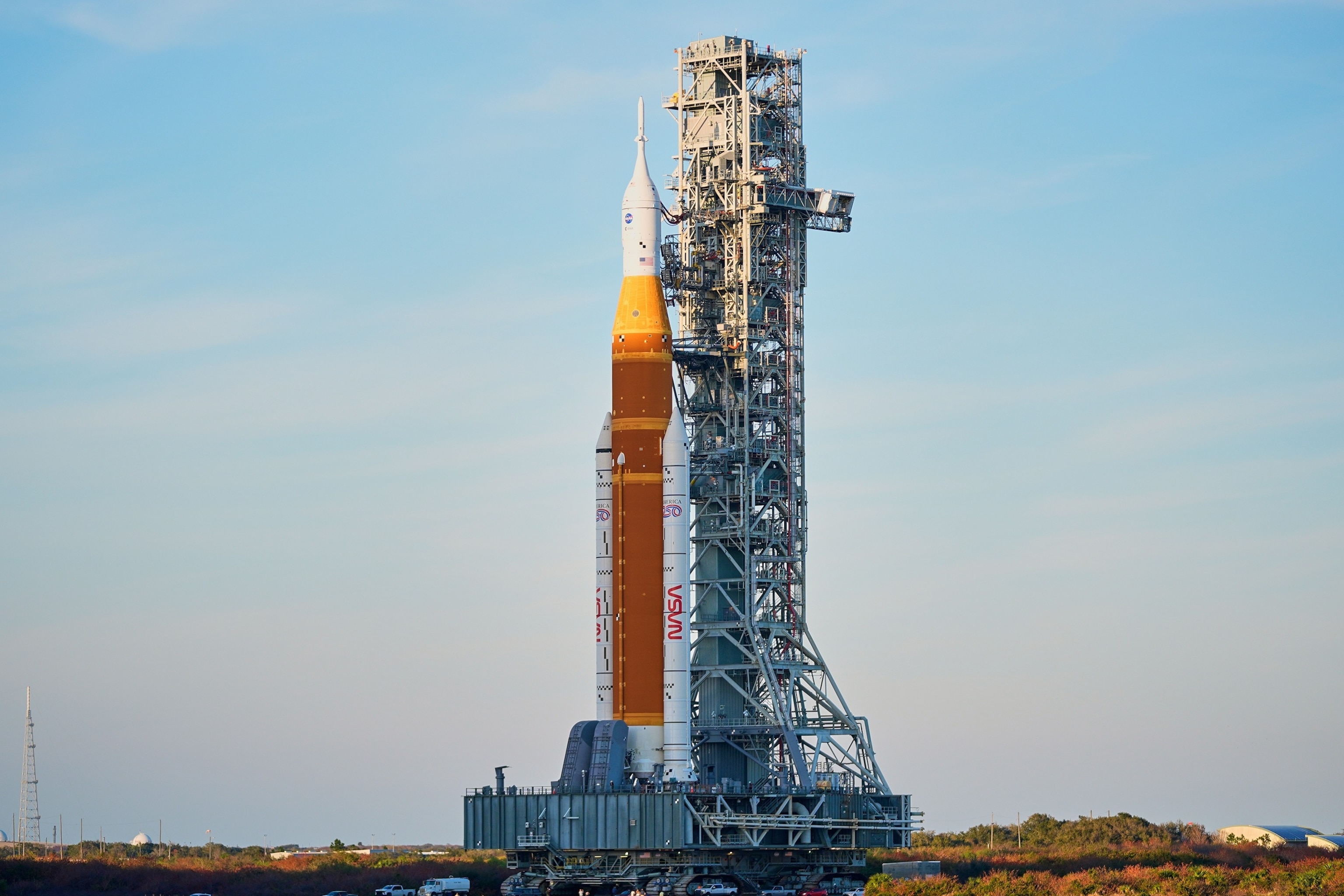
CAPE CANAVERAL: NASA has begun rolling its massive Space Launch System (SLS) rocket and Orion spacecraft back to the launch pad in Florida, marking a key step toward its planned crewed mission around the Moon.
Read More: NASA warns earth vulnerable to 15000 city-killer asteroids
The operation started Thursday evening at the Kennedy Space Center, where engineers initiated the slow transfer of the fully assembled rocket from the Vehicle Assembly Building to Launch Pad 39B. The journey, covering about four miles, can take up to 12 hours due to the size and complexity of the system.
The rollout comes after NASA completed repairs related to technical issues, including a problem with helium flow that forced the agency to delay an earlier launch attempt. Engineers had also previously encountered a liquid hydrogen leak during testing, further complicating timelines.
The mission, known as Artemis II, is expected to carry four astronauts — three from the United States and one from Canada — on a roughly 10-day journey that will orbit the Moon before returning to Earth.
If successful, Artemis II would mark the first crewed lunar flyby in more than 50 years and a major milestone in NASA’s broader plan to return humans to the lunar surface. The initiative revives ambitions first outlined during the presidency of Donald Trump.
Read More: NASA nears historic crewed moon return mission
NASA is targeting April 1 as the earliest possible launch date, with additional windows available in the following days if needed. Final checks and system validations will be conducted at the launch pad before liftoff.
Meanwhile, the Artemis II crew has entered quarantine in Houston as preparations intensify for what could become a historic step in modern space exploration.