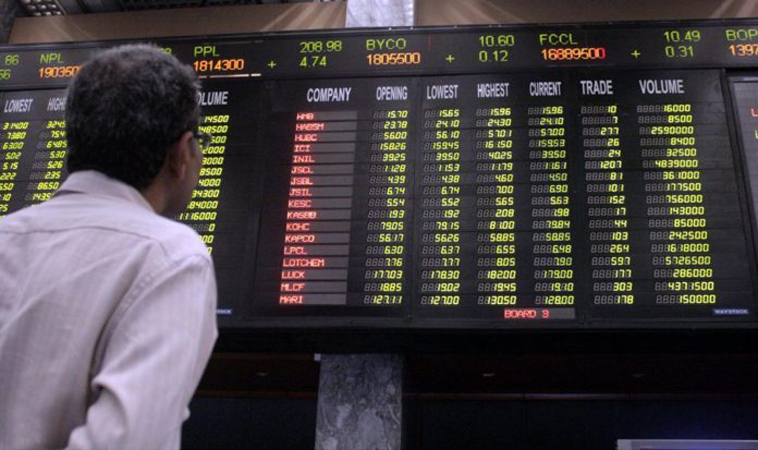
Asian stock markets showed a positive trend at the start of the new trading week, while the Pakistan Stock Exchange (PSX) moved in the opposite direction, reflecting a bearish sentiment.
Read More: PSX turns bearish, loses over 1,576 points
In early trading, the benchmark KSE-100 index at the PSX declined by 0.7%, shedding around 1,199 points to trade at 169,472. Market analysts attributed the negative momentum to cautious investor sentiment and ongoing economic uncertainties.
Despite the downturn in Pakistan, major Asian markets recorded gains. Japan’s Nikkei 225 rose by 1.6%, driven by strong performance in technology and export-oriented stocks. South Korea’s KOSPI surged by 2.3%, reflecting investor optimism and improved global market cues.
Similarly, Thailand’s SET Index posted a gain of 1%, while China’s Shanghai Stock Exchange recorded a modest increase of 0.15%. Hong Kong’s Hang Seng Index also edged up by 0.25%, supported by selective buying in financial and tech sectors.
The divergence highlights the varying investor outlooks across the region. While Asian markets are benefiting from improved global cues and expectations of economic stability, the PSX appears to be under pressure due to domestic factors, including inflation concerns and currency volatility.
Experts note that market direction in Pakistan may remain sensitive to policy developments and external economic conditions in the coming days. However, they also suggest that any positive macroeconomic signals or investor-friendly measures could help restore confidence and stabilise trading activity.
Read More: Bears in command as PSX loses over 2,000 points
The contrasting trends underscore the interconnected nature of global markets, where regional developments and local economic indicators collectively shape investor behaviour and market performance.