
A planned protest call by the Joint Awami Action Committee (JAAC) for June 9 has sparked debate in Azad Jammu and Kashmir, with differing views emerging over whether the move reflects genuine public grievances or a shift toward political pressure tactics.
Read More: AJK residents snub strike call by public action committee
Pro-government voices argue that the situation on the ground has improved significantly, citing ongoing development projects and the rollout of relief measures for citizens across the region. They claim that several key public demands have already been addressed through administrative action and increased development spending.
According to this perspective, continued calls for protests despite visible government initiatives raise questions about the intent behind the agitation. Supporters of this view say that when issues are being resolved through policy and funding, protest politics can risk disrupting stability and slowing down development momentum.
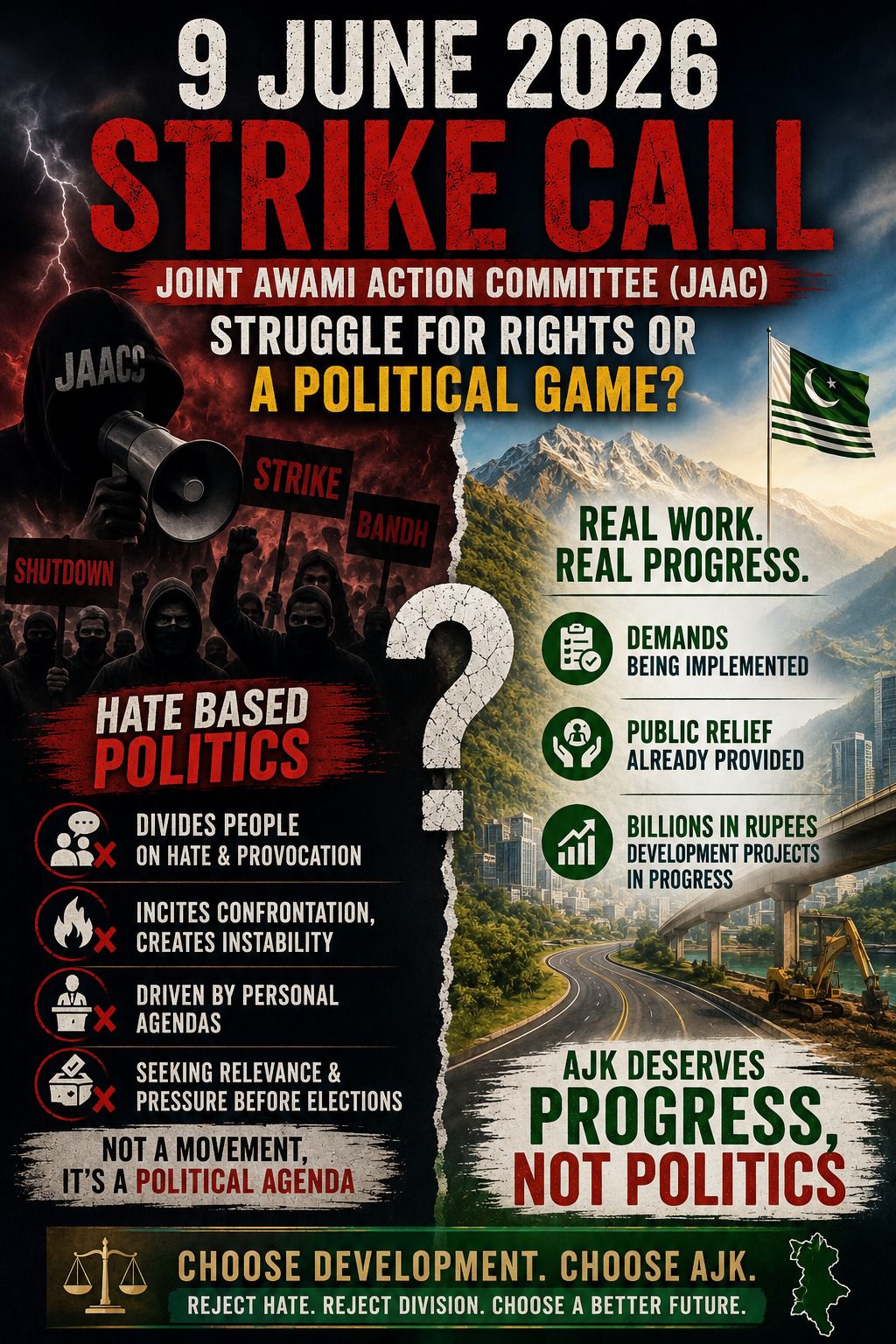
They further argue that the focus should remain on infrastructure growth, public service delivery and long-term economic stability rather than repeated shutdowns and street demonstrations.
However, critics of this position maintain that protests remain a legitimate democratic tool to press for unresolved demands and to ensure accountability in governance. They argue that development claims do not automatically eliminate the need for public mobilisation, especially if sections of society feel their concerns remain unaddressed.
The debate highlights a broader tension in the region between continuity of development projects and recurring cycles of political mobilisation. Observers note that such situations often reflect competing narratives over governance performance, public expectations and political space.
Some analysts suggest that sustained dialogue between authorities and protest leadership could help reduce confrontation and shift focus toward negotiated solutions rather than disruptive actions.
Read More: Pakistan renews call for Kashmir justice on Youm-e-Istehsal
Meanwhile, residents in several areas express mixed views, with some prioritising stability and economic opportunities, while others emphasise the importance of continued advocacy for unresolved local issues.
As the June 9 deadline approaches, attention is focused on whether dialogue can ease tensions or whether the situation will escalate into another round of political disruption in the region.