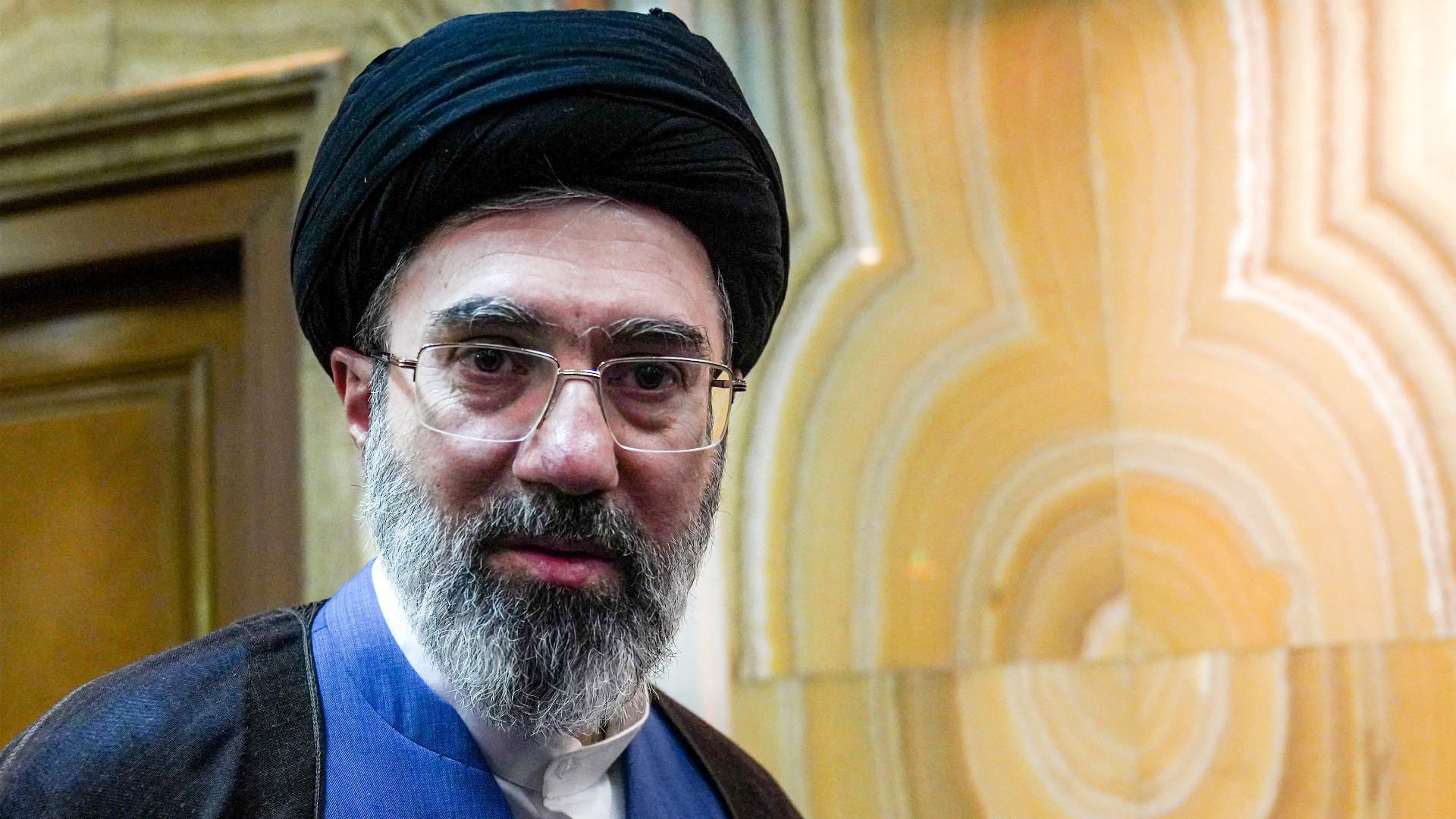
Iran’s supreme leader Mojtaba Khamenei has warned that regional countries will no longer act as protective shields for United States military bases, escalating tensions amid ongoing regional conflict. In a written statement broadcast on state television during Hajj messaging, he said shifting regional dynamics are reducing US strategic influence across the Middle East. His remarks come as diplomatic and military tensions continue to rise despite a fragile ceasefire arrangement.
Furthermore, Khamenei declared that nations and territories in the region would not continue enabling American military presence or providing indirect protection for foreign bases. He stated that geopolitical changes are permanently altering the balance of power, limiting safe operational zones for US forces. According to his message, the United States is steadily losing strategic positioning in the region as resistance and regional alignment patterns evolve.
Read more : Iran’s Supreme Leader warns Gulf nations over US bases
Meanwhile, Iran’s Islamic Revolutionary Guard Corps issued a separate warning, stating that it reserves the right to respond to any ceasefire violation with immediate reciprocal action. The IRGC claimed it had recently downed a US drone and fired at aircraft attempting to enter Iranian airspace, although exact timings were not disclosed. Officials described these actions as defensive measures against perceived external aggression.
In parallel, the United States Central Command reported strikes on missile sites in southern Iran as well as operations targeting boats allegedly preparing to lay mines. These actions were carried out despite the ongoing ceasefire agreement, according to regional security reports. Iranian authorities responded by accusing the United States of violating the ceasefire terms through military activity in Hormozgan province.
Read more : Iran executions spark growing human rights concerns –
Diplomatic sources noted that Iran and the United States have been engaged in indirect exchanges aimed at reaching a broader settlement to end ongoing hostilities that began earlier in the year. Although both sides have reportedly reached partial understandings on several issues, officials confirmed that a final agreement remains uncertain. The situation continues to remain fragile, with both sides maintaining strong military readiness in the region.
Additionally, analysts observed that the leadership transition in Iran has influenced recent policy messaging, as regional tensions intersect with internal political developments. Ayatollah Ali Khamenei was succeeded by Mojtaba Khamenei following his reported assassination during earlier regional strikes, further intensifying geopolitical instability. Consequently, observers believe that current statements reflect both strategic positioning and escalating regional power competition.