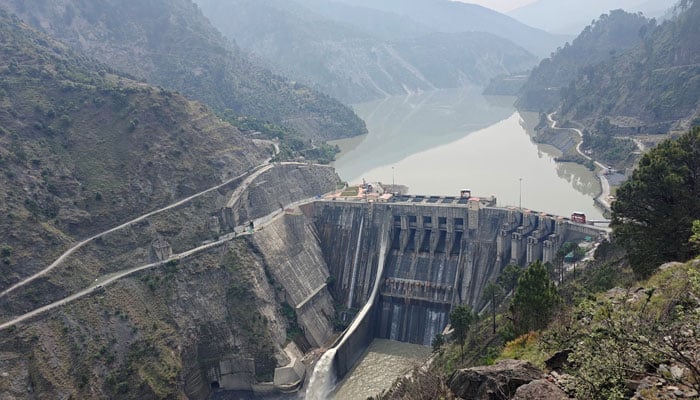
India has said it is actively working on measures to ensure that “not a single drop of water” flows into Pakistan in the coming years, escalating tensions over shared river resources governed by the Indus Waters Treaty.
Indian Water Minister CR Patil made the remarks in an interview with Indian media, stating that the government was acting under directives from Prime Minister Narendra Modi. He said New Delhi was implementing long-term plans aimed at restricting water flows to Pakistan.
The statement comes after India suspended participation in the Indus Waters Treaty following a 2025 incident in Indian-administered Jammu and Kashmir. Pakistan has rejected the suspension, insisting that the treaty remains legally binding and cannot be unilaterally revoked.
Pakistan has strongly opposed any attempt to alter the flow of shared rivers, calling such actions a potential “act of war” and warning that water should never be used as a geopolitical weapon. Islamabad has also accused India of attempting to politicise transboundary water resources in violation of international agreements.
The Indus Waters Treaty, signed in 1960, governs the distribution of water from six rivers in the Indus basin, which originate in India and flow into Pakistan. The agreement is considered vital for Pakistan’s agriculture, irrigation and broader economic stability, as millions depend on its river system.
India’s recent statements follow earlier announcements of infrastructure and engineering projects on rivers including the Chenab, including proposals for diversion tunnels and sediment removal works. However, experts note that India’s current infrastructure does not allow it to fully block or significantly divert river flows, and any major changes would require years of additional construction.
Analysts say large-scale diversion projects could take several years to complete, with some estimates suggesting operational impacts would not be seen before the end of the decade.
The latest remarks are likely to further strain already tense relations between the two nuclear-armed neighbours, where water security has increasingly become a central point of political and diplomatic confrontation.