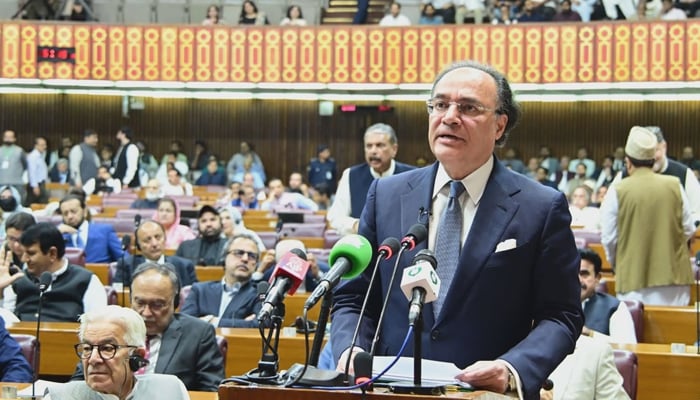
The federal government has presented a Rs18,771 billion budget for the upcoming fiscal year in the National Assembly. Finance Minister Muhammad Aurangzeb tabled the budget, highlighting economic reforms, development priorities, and tax adjustments. The budget also includes relief measures for salaried individuals and pensioners. It is the government’s third budget and outlines key fiscal targets.
The finance minister said the government achieved economic stability despite domestic and global challenges. He noted improvements in growth, inflation control, and foreign reserves. Moreover, he highlighted rising remittances and stronger macroeconomic indicators. Therefore, the government claims a steady recovery in key sectors.
Under the new proposals, salaries of government employees will increase by 7 percent. In addition, pensions will also be raised by 7 percent. The minimum wage has been proposed to increase by 10 percent. Moreover, tax relief has been announced for multiple income slabs of salaried individuals.
The budget also includes major allocations for defence, development, and social protection. Defence spending is set at Rs3 trillion, while the Benazir Income Support Programme receives Rs838 billion. Furthermore, infrastructure, water, and energy projects have been prioritized under the development plan. Consequently, large-scale public investment will continue.
Tax reforms include reduced rates for salaried classes, cuts in property taxes, and changes in super tax structure. The government also proposed incentives for IT exports and small businesses. Additionally, certain duties and levies have been reduced or removed. Overall, the budget aims to balance relief with fiscal discipline.