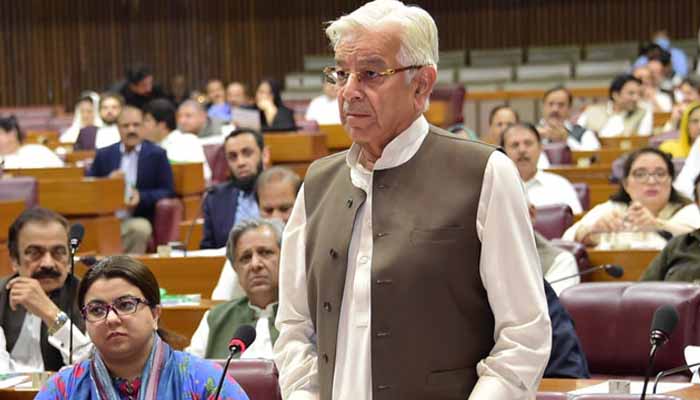
Defence Minister Khawaja Asif said Pakistan’s economy has emerged from a critical phase and regained stability. Speaking in the National Assembly, he credited reforms and IMF-backed measures for the improvement. His remarks matter because economic recovery directly affects businesses, investors, and millions of Pakistanis.
Addressing lawmakers during the budget debate, Asif said Pakistan once faced a serious risk of default. He noted that strict IMF conditions helped restore financial stability and improve economic confidence. While acknowledging remaining challenges, he expressed optimism that the country could achieve six to seven percent growth within two years. He added that current economic indicators reflected a positive direction.
Furthermore, the minister called for broad tax reforms to encourage voluntary compliance. He argued that excessive taxation often pushed citizens toward tax avoidance. Therefore, he urged policymakers to create a fair tax structure that promotes participation and economic activity. According to Asif, a balanced system would strengthen revenue collection and support long-term growth.
Turning to security issues, Asif said instability in Balochistan was a longstanding problem requiring collective political responsibility. He stressed that no single government could be blamed for the situation. Instead, he urged all political stakeholders to work together on lasting solutions. He also highlighted Pakistan’s role in facilitating the recent US-Iran agreement, calling it a major diplomatic achievement.
Earlier, Health Minister Mustafa Kamal criticised the population-based National Finance Commission formula as unfair to smaller provinces. He argued that provinces controlling population growth should receive financial incentives. Kamal also welcomed the proposed removal of tax on contraceptives, saying it could help manage population growth. Additionally, he questioned whether current resources could meet future demands for schools, hospitals, and employment opportunities.