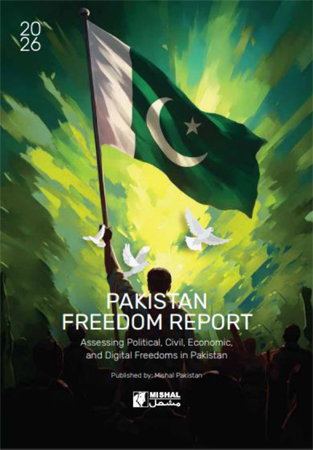
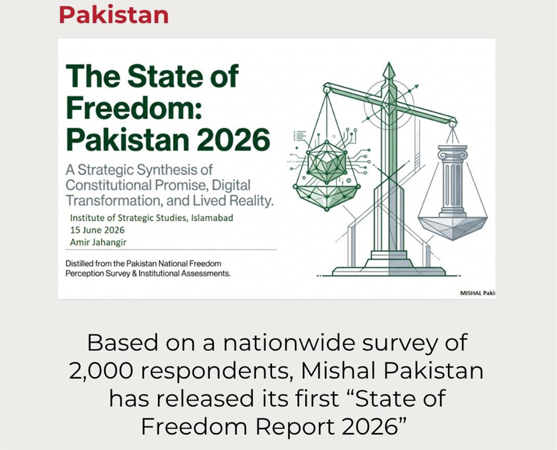
 The publication of The State of Freedom Report – Pakistan 2026 marks a major milestone in how the country talks about governance and laws. Published by Mishal Pakistan (the Country Partner Institute of the World Economic Forum), this is the nation’s very first comprehensive study on freedom. The report avoids simply using outside international rankings. Instead, it looks at freedom through a citizen-centric lens, checking whether the promises written in Pakistan’s constitution match the actual daily lived experiences of its people.
This report comes at a critical moment. Pakistan is now home to over 245 million people, making it the fifth most populous country in the world. It also has one of the youngest populations globally, with nearly 64 percent of its citizens under the age of 30. Because the country is so young, things like freedom, job opportunities, inclusion, and fair governance are more important than ever for Pakistan’s future.
Digital Transformation & Online Governance
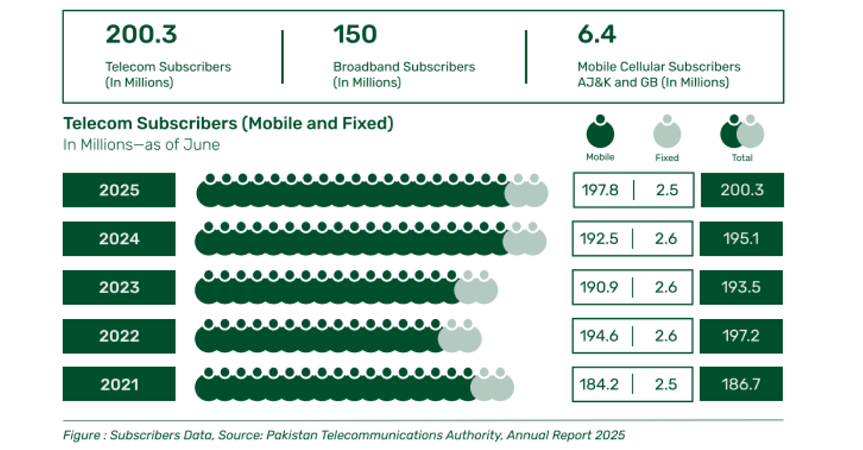
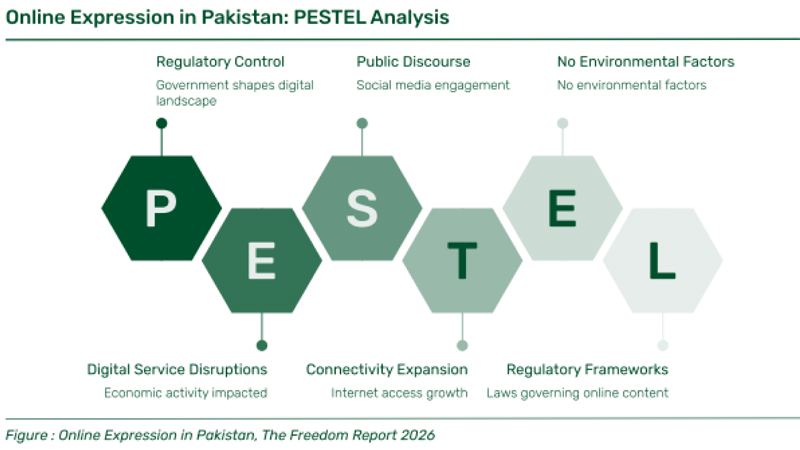
One of the biggest changes in Pakistan today is the rapid growth of the internet and digital platforms. Pakistan has turned into a highly connected society, boasting over 145 million broadband subscribers and around 70 million social media users. For millions of people, social media has replaced traditional television and newspapers as the primary source of news and daily interaction.
According to the report’s TRUST Survey, which interviewed citizens across major cities, the internet dominates how people get information:
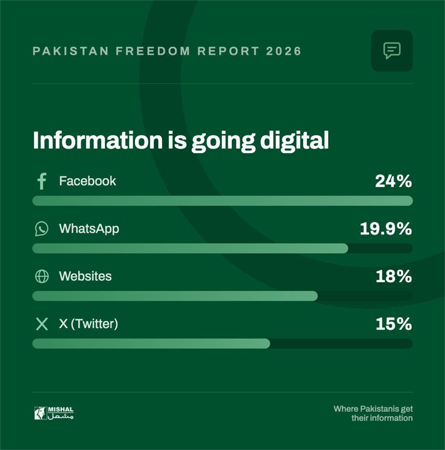
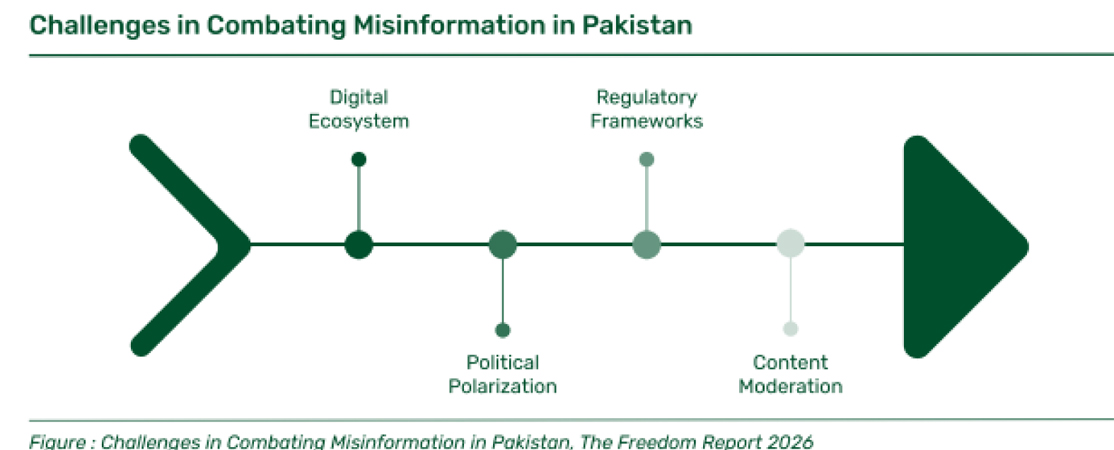
Only 15% still rely primarily on TV. Because everyone is online, managing the digital space has become a massive governance task. To fight online threats, hate speech, fake news, and extremist content, Pakistani authorities submitted 15,391 requests to global tech platforms to restrict or remove certain content. Tech companies took action on about 45.8 percent of these requests. The report notes that the government faces a difficult balancing act: it must keep internet users safe while protecting the constitutional right to free speech.
Economic Freedom & Gender Gaps
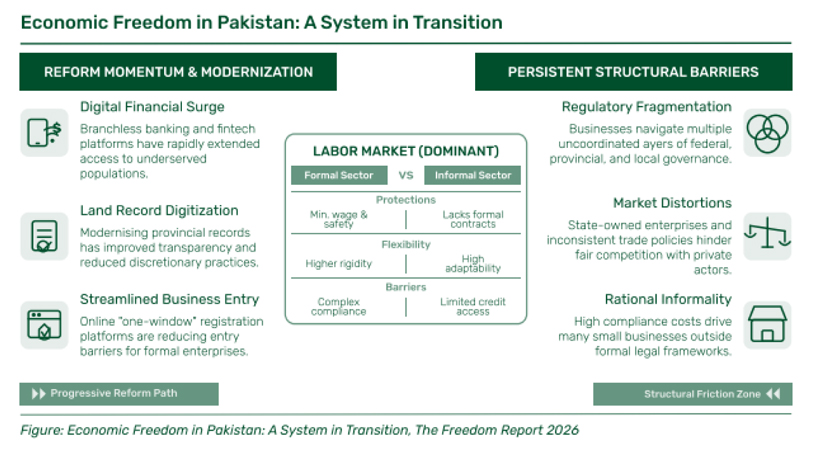
For most regular citizens, the word freedom is directly tied to their wallets. In public surveys, Pakistanis consistently say that true freedom means having stable jobs, business opportunities, financial security, and protection against inflation. Even though the country’s overall economy is showing signs of stabilizing, citizens still worry most about day-to-day issues like earning a decent income and finding work.
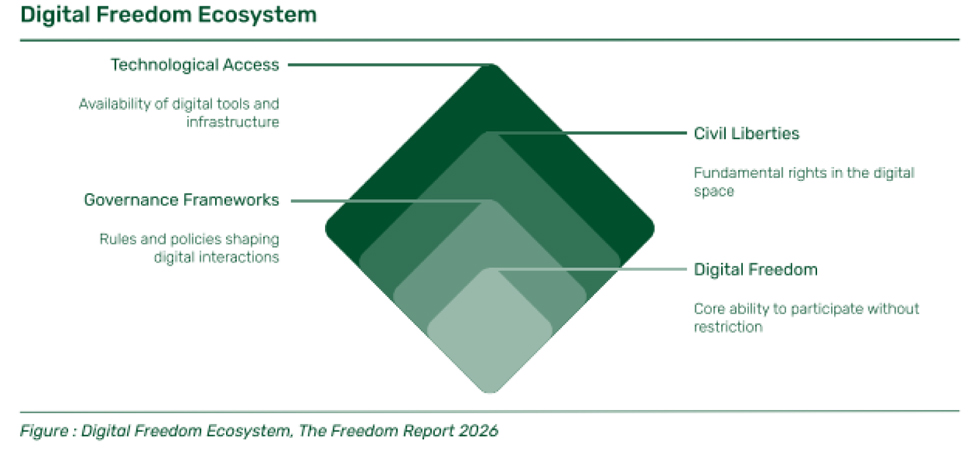
On the bright side, the report points out that the digital economy, online freelancing, and young tech startups are opening up exciting new paths for financial independence, especially for youth. However, these opportunities are often disrupted by internet shutdowns and speed throttling, which act like a hidden tax on digital businesses and scare away international investors.
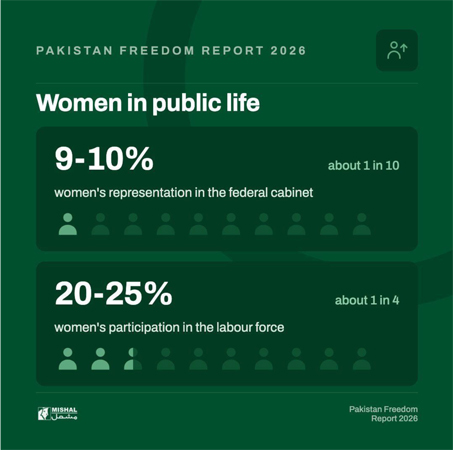
A major problem highlighted in the report is the economic exclusion of women. Although there are laws meant to promote equality, a massive gap remains between men and women in the workplace:
Only 20 to 25 percent of women are part of the active workforce, compared to a massive 65 to 68 percent for men. This places Pakistan at the very bottom (148 out of 148 countries) on the global Gender Gap index.
Most working women are stuck in the informal sector-such as unpaid housework, farming, and local handicrafts. Because this work isn’t officially recorded, women lack financial protection, and their contributions to the economy are ignored in national statistics. While apps and digital banking (like the Raast payment system) are expanding, women are 20 percent less likely than men to own a smartphone or use the internet, cutting them off from modern financial tools.
Social Freedom, Safety & the Legal Gap
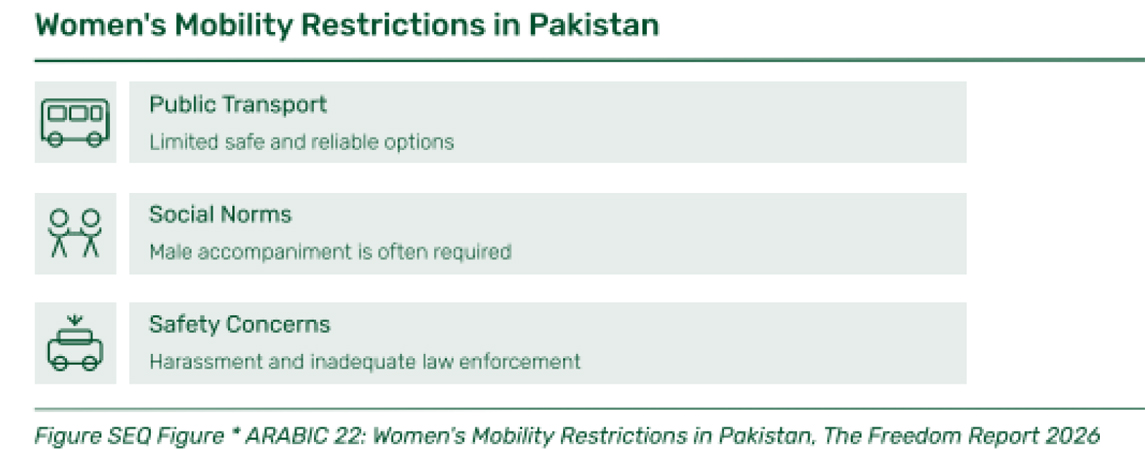
Social freedom in Pakistan depends heavily on where a person lives and local cultural norms. For instance, a woman’s physical freedom to travel to work or school is frequently limited by unsafe public transport and conservative social views. The report mentions that targeted programs like the government initiatives providing subsidized e-bikes and electric scooters to female students in Punjab and Sindh are great examples of how to break down these traditional barriers and help women move around independently.
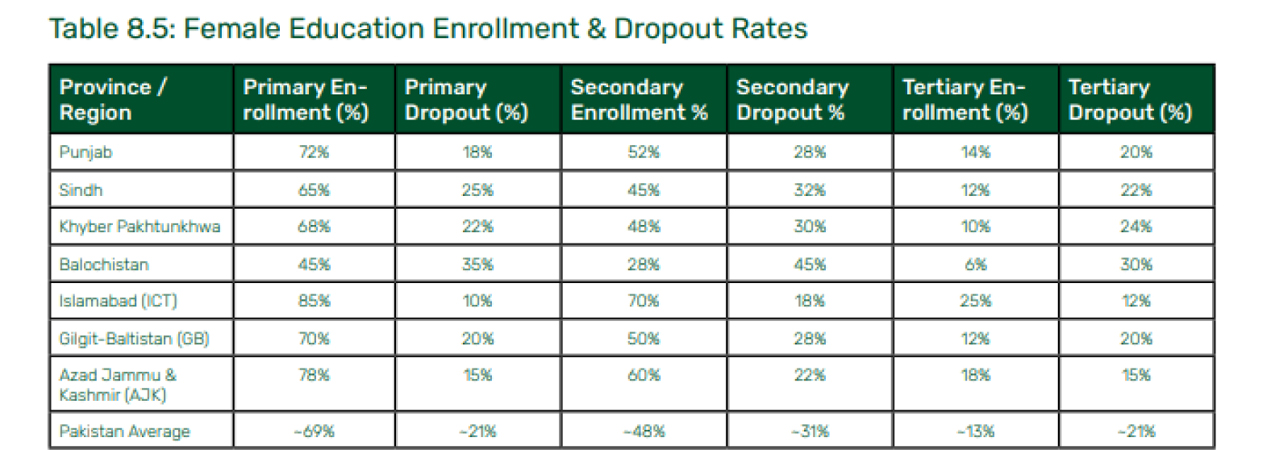
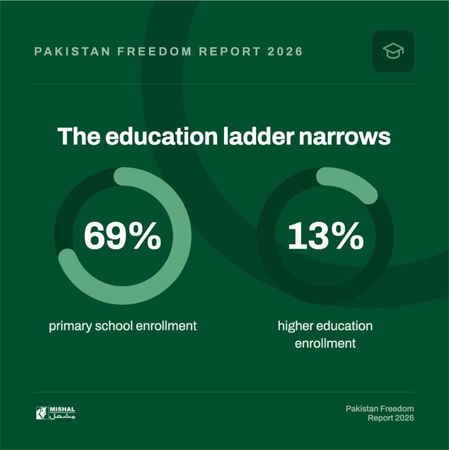
Education is another area facing a major retention gap. While primary school enrollment for girls is decent at 69 percent, it drops drastically to just 31 percent in secondary school, and down to 21 percent for higher education. Safety concerns, poverty, and early marriages are the main reasons young girls drop out.
Pakistan actually has an extensive list of excellent laws to protect women from domestic violence and workplace harassment. However, the actual enforcement of these laws is weak, and support services are mostly found only in big cities. In rural areas, unofficial, traditional village councils like jirgas or panchayats still operate outside the law, often ignoring the constitutional rights of women and vulnerable groups.
Sector-by-Sector Freedom Challenges
Lets take a deep look at specific parts of public life to see where freedom is being squeezed:
Pakistan has a very diverse media scene with over 120 licensed TV channels. However, the media faces heavy regulations.
In recent years, 137 incidents of threats, arrests, or legal harassment against journalists were recorded. The state is increasingly using formal laws, like the Prevention of Electronic Crimes Act (PECA), to control the news narrative.
Universities face censorship and restrictions when trying to discuss sensitive or politically charged topics. The report recommends creating an official academic freedom charter to protect universities.
Non-profit organizations (CSOs) face heavy restrictions, paperwork delays, and tight funding controls by government divisions under the guise of anti-money laundering regulations.
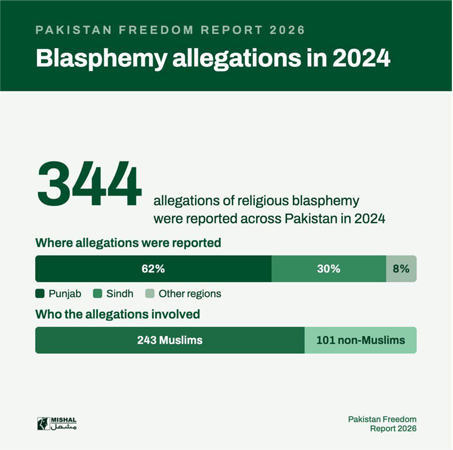
Religious freedoms are highly restricted due to the fear of mob violence and the misuse of blasphemy laws. In 2024, 344 individuals were accused of blasphemy (mostly in Punjab). The majority of those accused were Muslims (242), followed by Qadiyanis (49), Hindus (32), and Christians (20).
Key Recommendations
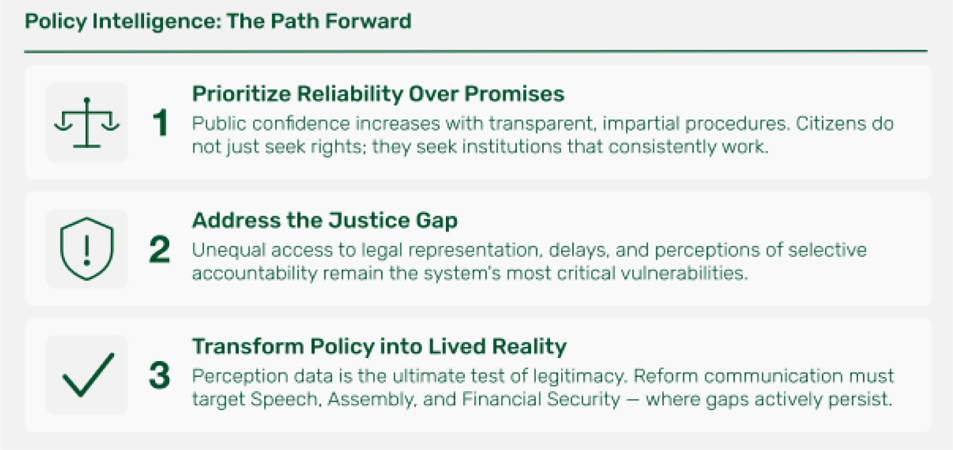
The State of Freedom Report 2026 concludes that while Pakistan has strong constitutional foundations, an energetic youth population, and great digital potential, it cannot progress without building public trust and improving governance.
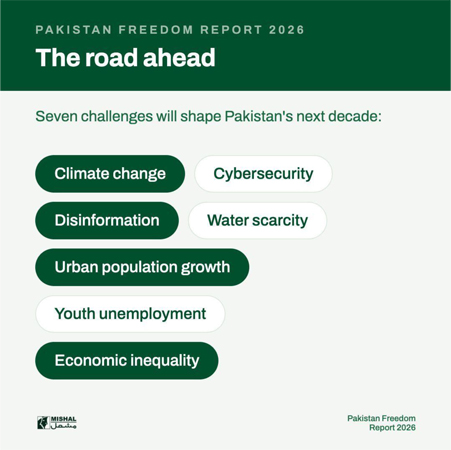
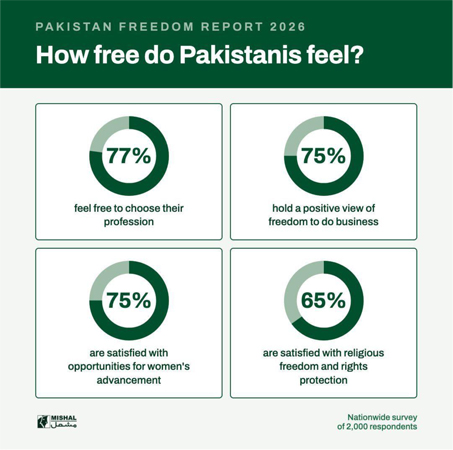
The survey clearly shows that what Pakistani citizens want most is not abstract political promises, but predictability, fairness, and a system where the law applies equally to everyone.
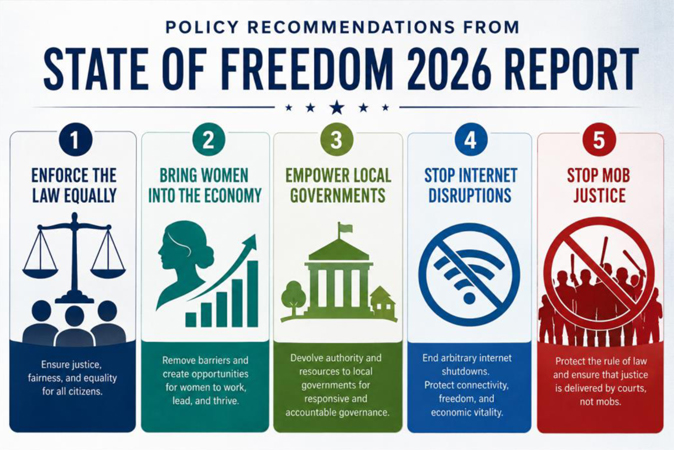
To turn things around, the report outlines five clear pathways for reform:
1. Set up fast-track, specialized courts to handle gender-based violence cases quickly, and train local police to protect vulnerable citizens.
2. Count informal work (like farming and caregiving) in official economic data, and create digital credit systems to help women start businesses.
3. Fix and run consistent local governments so that regular citizens and young people can enter politics without needing wealth or elite connections.
4. Treat high-speed internet as essential economic infrastructure. Avoid blanket digital shutdowns, which hurt freelancers and damage the economy.
5. Create strict legal checks to prevent false blasphemy allegations, raise the standard of evidence required to file a case, and punish vigilante mobs who take the law into their own hands.