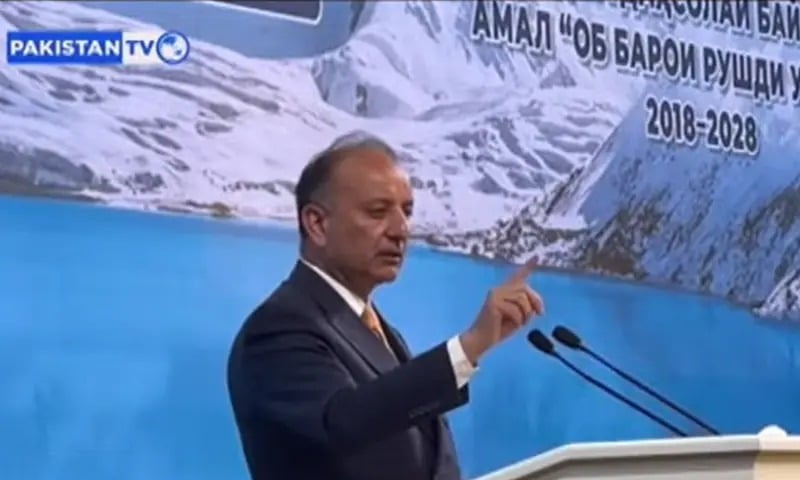
Federal Minister for Climate Change and Environmental Coordination Dr Musadik Malik has warned that any attempt by India to block Pakistan’s share of water would be treated as a declaration of war. He delivered these remarks while addressing a seminar on transboundary water resources held in Brussels, organised by European policy institutions and Pakistan’s diplomatic mission. He stressed that water is vital for Pakistan’s agriculture, economy, and national survival under growing climate pressure and regional uncertainty. The statement highlighted rising concerns over shared river management between the two countries.
Moreover, Malik explained that nearly 40 percent of Pakistan’s population depends directly on agriculture, while the sector contributes around 25 percent to the national gross domestic product. He emphasized that water availability plays a central role in food security, rural livelihoods, and overall economic stability across the country. He warned that any disruption in river flows could create severe pressure on both agricultural output and national development goals. His remarks linked water security with long-term economic resilience and national planning priorities.
In addition, the minister described the global water crisis as an issue of justice rather than simple scarcity, pointing out unequal access and climate vulnerability. He said upstream control of shared rivers is increasingly affecting downstream countries like Pakistan, especially under changing environmental conditions and melting glaciers. He noted that vulnerable communities suffer the most as climate change disrupts predictable water flows across regions. This, he added, makes fair and cooperative water governance more important than ever.
Furthermore, Malik highlighted Pakistan’s exposure to climate-related risks, including glacier melt, shifting rainfall patterns, and unpredictable river flows across major water systems. He specifically referred to sudden fluctuations in the Chenab River, where water levels changed significantly within two days despite no rainfall in the region. He said such unusual variations raise serious concerns about transboundary water management and require urgent scientific and diplomatic attention. These developments, he added, underline the fragile nature of shared water resources.
Meanwhile, the minister clarified that Pakistan seeks peace and cooperation rather than confrontation, despite rising concerns over water-related disputes with neighbouring countries. He stated that while consequences of past tensions are well understood, dialogue remains the preferred path for resolving sensitive issues between nations. He added that farmers on both sides of the border face similar challenges due to climate change and environmental stress. His remarks aimed to balance strong warnings with calls for regional understanding and stability.
Finally, Malik urged academics, policymakers, and international organisations to support constructive dialogue and promote negotiated solutions for transboundary water disputes. He stressed that sustainable cooperation is essential to prevent future conflicts and ensure fair distribution of shared water resources across borders. He also called for stronger international frameworks to manage climate-driven water challenges affecting multiple countries. His address concluded with a renewed appeal for collaboration, justice, and long-term regional peace.