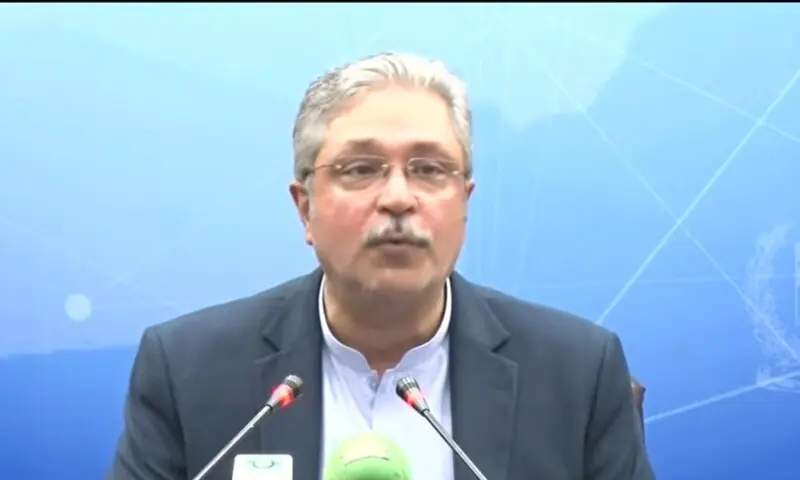
Prime Minister’s Coordinator for Khyber Pakhtunkhwa Affairs Ikhtiar Wali Khan has called for the reversal of recently enacted provincial laws that expand the powers, immunities and privileges of members of the Khyber Pakhtunkhwa Assembly, arguing that the legislation requires reconsideration.
Read More: KP Assembly approves privileges amendment bill
Speaking at a press conference in Islamabad, Khan criticized the new legal framework, saying it grants lawmakers broad protections that could undermine accountability. He urged the provincial government to withdraw the legislation and review its provisions in the broader public interest.
The laws, passed by the Khyber Pakhtunkhwa Assembly on April 30 and approved by Governor Faisal Karim Kundi on May 6, cover the powers and privileges of members of the provincial assembly, the speaker and deputy speaker, as well as lawmakers’ salaries and allowances. The legislation and official gazette notifications have not yet been uploaded to the KP Assembly’s website.
Khan objected to provisions that provide assembly members immunity from preventive detention and require prior approval from the speaker before the arrest of a lawmaker in a criminal case. He argued that such measures could make accountability more difficult and questioned whether the permission process would be applied impartially.
The prime minister’s coordinator also criticized a provision allowing lawmakers to obtain licences for up to eight non-prohibited bore weapons, including four free licences. He reiterated his support for nationwide de-weaponisation, saying responsibility for public security should remain with the state and law enforcement institutions.
In addition, Khan expressed concern over provisions related to lifetime official passports for lawmakers and their spouses, as well as clauses that he said could restrict media access to assembly proceedings.
Read More: KP Assembly Members to Receive New Benefits Under Amendment
The Khyber Pakhtunkhwa Assembly, however, has defended the legislation. In an earlier statement, Speaker Babar Saleem Swati’s office said the amendments do not introduce extraordinary new privileges and clarified that most of the provisions already existed under the 1988 law, with the latest changes primarily aimed at clarifying and updating the legal framework.