Explainer
Looming threat of terrorism is byproduct of extremism. Transformation of intolerance in physical violence always take place in the womb of misleading ideologies. Decade old unrest in the South Asian region proves that violent ideologies thrive on misleading interpretations and equally destructive narratives. Pakistan suffered heavily due to prolonged violent turbulence in neighborhood. Presence of globally sanctioned terrorist groups across Western border badly spoiled the tolerant fiber of Pakistani society. Nerve taking war on terror revolved around kinetic operations and Counter Violent Extremism (CVE).
 With no disregard to exceptional performance in kinetic domain, Pakistan left no stone unturned to cut to the roots of terrorism by pursuing CVE measures.
 Major CVE Measures
Pakistan took the challenge with
comprehensive measures like formula of National Action Plan (NAP), National Counter Terrorism Authority (NACTA), formulation of CVE policies at provincial level, Rehabilitation/de-radicalization programs, legislation and cooperation with international partners.

Paigham e Pakistan (PEP)
Comprehensive document of PEP was jointly signed by over 1800 religion scholars from major Islamic schools of thought primarily to provide a solid ideological base against misleading narratives floated by terrorists using wrong interpretations of religion concepts. PEP aims at countering extremist ideologies, promotion of critical thinking and curbing the hateful intolerant tendency in society.
 Revival of Mosque’s SanctityPut an End to FAK Factor
Islam is a religion of peace, unity and knowledge. Mosques are the scared spaces which are the centers of worships, prayers, community and learning. Mosques are not only physical places of prayer but also spiritual sanctuaries where Muslims connect with their Creator and each other in harmony. However, extremist elements like the Fitna Al Khawarij have repeatedly desecrated these sacred spaces, turning them into command centers for their corrupt and violent agenda.
 The Fitna Al Khawarij have resurfaced in recent times under new guises, cloaked in religious rhetoric but devoid of genuine Islamic values. These militants abuse the sanctity of mosques, using them as hideouts, meeting points and operational hubs to carry out acts of terrorism and anarchy. By occupying mosques and forbidding local worshippers from entering, they insult not just the physical sanctity of these holy places but also the spiritual essence they represent.
True Islamic teachings uphold that a mosque is open to all believers, regardless of social status, political views or ethnicity. The Holy Prophet Hazrat Muhammad e Mustafa (Peace Be Upon Him) emphasized that the mosque is a house of Allah meant for prayer, reflection and community support. It is a place where hearts are healed, minds are enlightened and souls are elevated. By contrast, the Khawarij have transformed these houses of peace into breeding grounds of hatred, fear and violence.
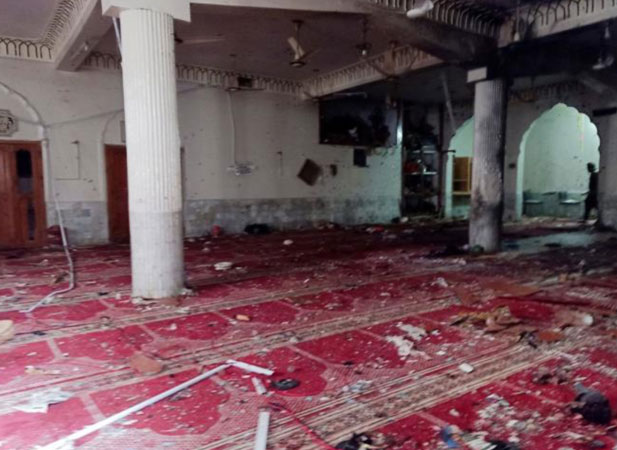 One of the most shameful tactics employed by these extremists is their exploitation of the deep respect Muslims – including Pakistan’s security forces – have for religious spaces. Knowing that the Pakistan Army and law enforcement agencies avoid confrontation in mosques to preserve their sanctity, the Khawarij hide behind religious slogans but have no respect for Islamic rules. This cowardly behavior is a far cry from the valor they pretend to display. Their actions are not jihad but a mockery of it – a perverse imitation that Islam categorically rejects.
Time and again, during intelligence-based operations (IBOs), these militants take shelter in mosques and later falsely accuse the security forces of violating religious sanctity. In reality, it is they who desecrate these places first – by weaponizing them, defiling them with violence and shutting out the faithful from their own places of worship. This exploitation must end. The religious scholars of Pakistan have a critical role to play. It is imperative for them to rise and issue clear, unambiguous fatwas condemning the actions of the Khawarij. They must educate the public that these militants’ slogans are hollow – nothing more than manipulations meant to deceive and divide. Islamic jurisprudence does not permit the misuse of religious sites for terrorist or militant objectives. The misuse of mosques for terror is not just a political crime; it is a grave sin in the eyes of ALLAH.
The Khawarij are a black stigma on the name of Islam. Their acts not only bring death and destruction but also tarnish the global image of Muslims and their faith. Every bomb they plant, every ambush they launch from within a mosque, pushes the Ummah further into disrepute and pain. Their actions create fear in the hearts of common worshippers who once found solace in mosques- this is the true face of the so-called “warriors” of the Khawarij.
But the people of Pakistan are resilient. With the unwavering support of the public, Pakistan’s armed forces are determined to root out this fitna once and for all. The fight against the Khawarij is not just a military operation – it is a moral and spiritual obligation. Every citizen, every scholar, every leader must call out their hypocrisy, reject their ideology and reaffirm the sanctity of our religious institutions.
It is now time for all segments of society to unite – not just in condemnation, but in action. Let us restore our mosques to their rightful status as beacons of peace and unity. Let us expose the Khawarij for what they are: traitors to Islam, enemies of peace and a curse on humanity. And let us pledge never to allow our sacred places to be used as shields for violence again.