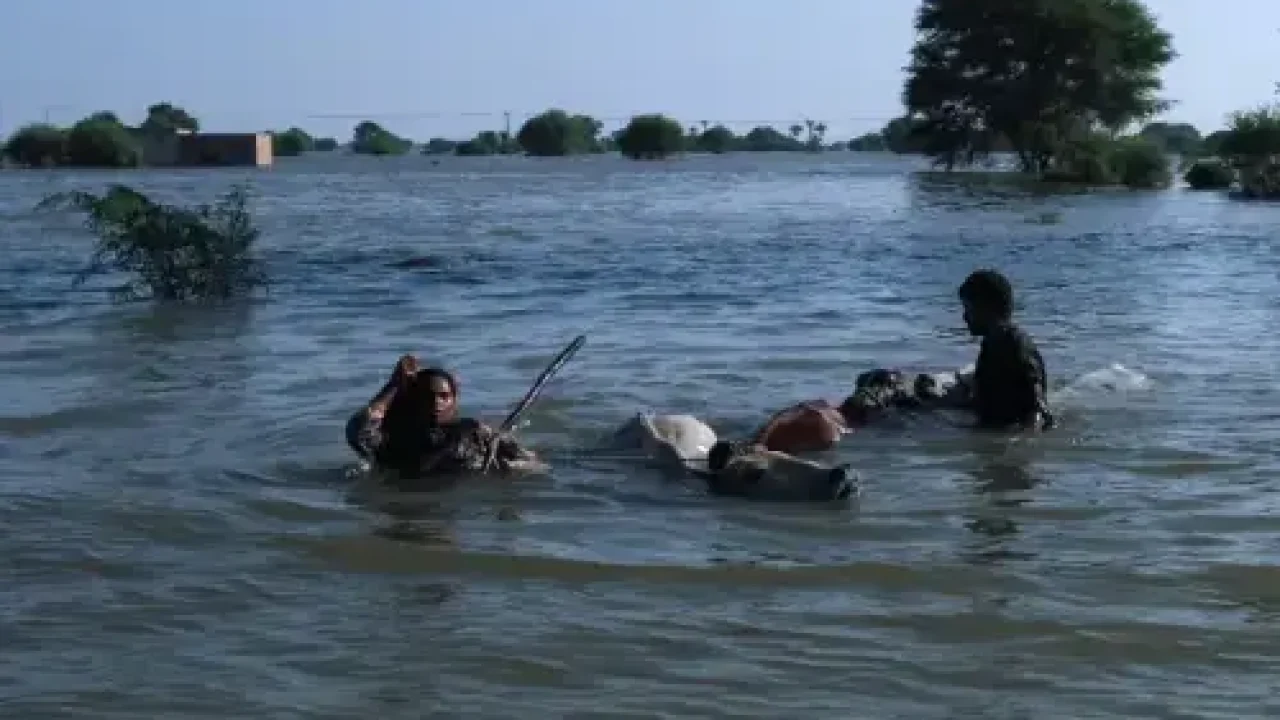
The National Disaster Management Authority (NDMA) reported decreasing river levels in Punjab, while Sindh braces for rising floodwaters. Rivers Chenab, Ravi, and Sutlej show normal to receding flows at many points. However, severe flooding continues in southern Punjab districts like Multan, Bahawalpur, and Rahim Yar Khan. Meanwhile, the Indus River at Guddu Barrage recorded a high flood flow of 635,000 cusecs, signaling growing danger downstream.
At Guddu, floodwaters are expected to reach Sukkur Barrage within 2 to 3 days and Kotri Barrage between September 24-26. Flood levels at Kotri could rise significantly to 400,000-445,000 cusecs. Thousands of acres of farmland are submerged, and around 1.6 million residents near Kandhkot in Sindh have been relocated for safety. Authorities warned low-lying communities to move to safer areas immediately.
The Punjab Provincial Disaster Management Authority (PDMA) forecasted heavy rains from September 16 to 19 across many districts, including Rawalpindi, Lahore, Gujranwala, and Sialkot. Increased rainfall will raise water levels in streams and nullahs, especially in hilly regions like Murree and Galiyat. Officials stressed that this new monsoon spell could worsen the already critical situation caused by recent floods.
In Khyber Pakhtunkhwa, authorities issued warnings for heavy rain, thunderstorms, flash floods, and landslides from September 16 to 19. District administrations were instructed to keep emergency teams ready and maintain drainage systems. Reservoirs such as Mangla and Tarbela are nearly full, increasing the risk of overflow if more rain falls. Residents near rivers and mountains are urged to avoid travel and seek higher ground or relief camps.
Since June 26, monsoon rains and floods have killed 985 people and injured over 1,000, NDMA said. Rescue and relief operations continue under the Prime Minister’s instructions. The emergency helpline 1129 remains active, and authorities advise following official guidance for evacuations and safe returns to affected areas.