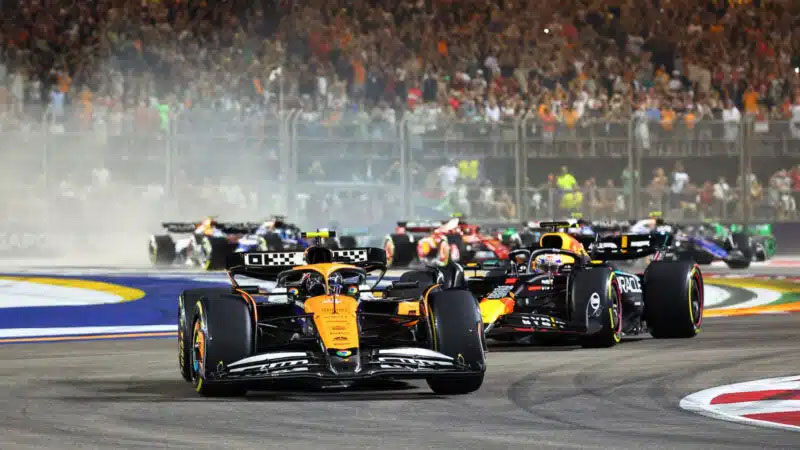
 Formula 1’s governing body has declared this weekend’s Singapore Grand Prix a ‘heat hazard’ race.
The FIA’s ruling, triggered because temperatures are predicted to exceed 31C amid high humidity in the tropical environment, means drivers could be using cooling vests during the race.
Using the vests is not mandatory but teams must fit the system to their cars to ensure any drivers not using them does not gain an advantage by having a lighter car.
The Singapore Grand Prix marks the first time a race has been designated as a heat hazard under a new rule that was introduced this year.
However, it will not be the first time drivers have used the vests – teams have been testing them intermittently through the year.
Mercedes’ George Russell, a director of the Grand Prix Drivers’ Association (GPDA), tried it out in Bahrain earlier this year and said on Thursday: “Not everybody finds the top comfortable, but I think some find it more comfortable than others, and of course over time you’ll be able to adjust it to your own preferences.
“But the concept is good, and when you’re racing in 90% humidity and the cockpits are getting on for 60C, it’s a bit of a sauna inside the car, so I think we all welcome it.”
Williams driver Carlos Sainz, also a GPDA director, said that the FIA’s decision to declare a heat hazard was “fair”.
“Only hot is not too bad for us,” Sainz said. “We have that, for example, in Hungary where it gets really hot but it’s not humid.
“Humid on its own is not too bad at all if it’s not too hot. But when it’s 28C, 30C degrees plus humid, that’s when it gets to Singapore levels and it’s tough.”
Singapore has long been renowned as the toughest grand prix because of the combination of heat, humidity, the length of the race, which runs close to the maximum two-hour limit, and the bumpy track surface at Marina Bay.