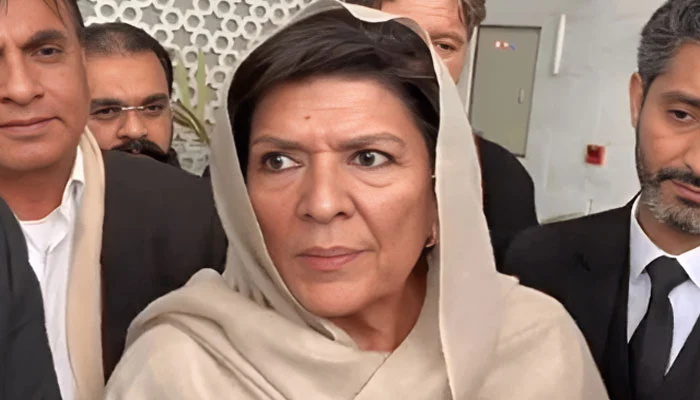
A case has been registered against PTI founder Imran Khan’s sister, Aleema Khan, along with 400 others for staging a sit-in outside Adiala Jail in Rawalpindi. The FIR was lodged by Saddar police under the Anti-Terrorism Act, naming 35 accused individuals and around 400 unidentified participants.
Read More: Another Tuesday, another Adiala sit-in
Those specifically named include Aleema Khan, Noreen Niazi, Qasim Khan, Salman Akram Raja, and Aliya Hamza, among others. The FIR also invokes Section 120, relating to criminal conspiracy to wage an attack against the state.
Police said 14 individuals were arrested from the protest site and presented before an anti-terrorism court. The accused face charges for violating Section 144, attacking police personnel, and obstructing official duties.
رات اڈيالہ جيل احتجاج ميں گرفتار کارکنوں کو پيش کر ديا گيا ہے 400 نامعلوم لوگوں پر Fir دی گی ہے ظلم بھی کيا گيا اور Fir بھی کر دی گی ہے دہشت گردی کی جن نے دہشت گردی کی وہی Fir دہ رہيں ہيں pic.twitter.com/zbqYgXkxVT
— Raja Mateen Adv (@RajamateenAdv) December 17, 2025
کفر ٹوٹا خدا خدا کر کے‼️‼️
آخر کار ریاست نے راولپنڈی بلخصوص اڈیالہ کے دل کی فریاد سن لی۔ ہر ہفتے اڈیالہ کے باہر منگل بازار لگانے والوں کے خلاف تادیبی کاروائی کا آغاز۔
دفعہ 144 کے نفاظ کے باوجود اڈیالہ جیل کے باہر ڈرامے بازی کرنے، روڈ بلاک کرنے اور ریاست مخالف نعرہ بازی کرنے پر… pic.twitter.com/5LR00SMZ2r— سید عدنان بادشاہ 🇵🇰 (@syed_bacha) December 17, 2025
According to the FIR, protesters raised slogans against the government and state institutions, blocked roads, and continued to incite workers, causing significant inconvenience to the local population. Authorities alleged that stones and glass bottles were hurled at police during the sit-in.
The crackdown aimed to disperse the protest and restore public order, with police emphasizing that continued interference with official duties would not be tolerated. Investigations are ongoing to identify and hold all participants accountable under relevant laws.
Authorities stressed that such actions violate public safety norms and the rule of law, highlighting the legal consequences of organizing or participating in unlawful protests.