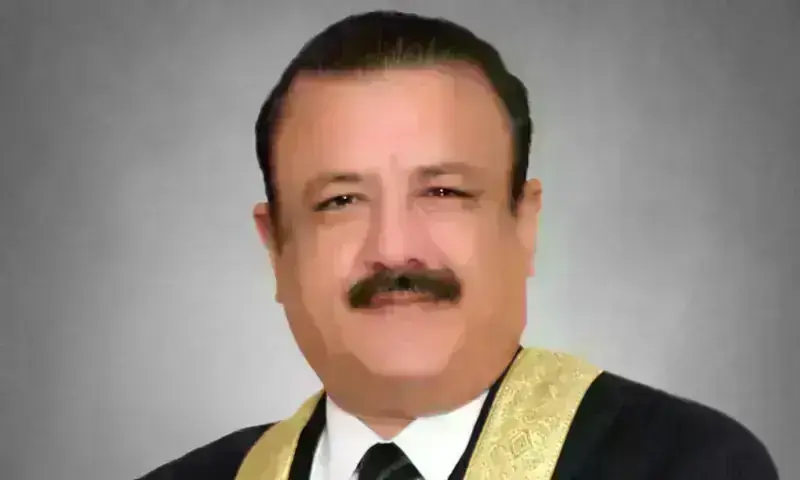
Former Islamabad High Court (IHC) judge Tariq Mehmood Jahangiri is set to file an appeal next week before the Federal Constitutional Court (FCC), challenging his removal from office following a controversial verdict that declared his judicial appointment unlawful.
Read More: President approves retirement notification of ex–IHC judge Siddiqui
Sources familiar with the matter said Jahangiri’s legal team has finalised a constitutional petition contesting the IHC’s December 18 decision, which ruled that his appointment was invalid due to an allegedly defective LL.B. degree. Acting on the verdict, the law ministry de-notified him after approval from President Asif Ali Zardari on the advice of the prime minister, and his name was subsequently removed from the IHC’s official website.
According to the sources, the petition will argue that the IHC judgment was premature and violated established principles of judicial propriety. A central argument will be that the Sindh High Court (SHC) had already suspended Karachi University’s notification cancelling Jahangiri’s law degree. The appeal is expected to maintain that the IHC could not lawfully issue a final ruling on his eligibility while the underlying degree dispute remained pending before another high court.
The petition will also revive serious allegations of bias against IHC Chief Justice Sardar Muhammad Sarfraz Dogar. A day before his removal, Justice Jahangiri had filed a complaint with the Supreme Judicial Council, alleging that the chief justice discussed the pending case with him and suggested a post-dated resignation to manage the proceedings. His request for recusal of Chief Justice Dogar and two other judges was rejected shortly before the verdict was announced.
During the IHC proceedings, Jahangiri’s counsel objected strongly to the bench’s composition, arguing that prior litigation between the judge and the chief justice created a conflict of interest. The defence also maintained that under Article 209 of the Constitution, a superior court judge could only be removed through proceedings before the Supreme Judicial Council.
Read More: SC reserves verdict in ex–IHC judge removal case
The IHC bench, however, ruled that the matter concerned eligibility rather than misconduct, concluding that the absence of a valid LL.B. degree meant Jahangiri was never qualified for elevation under Article 175-A, rendering his appointment without lawful authority.