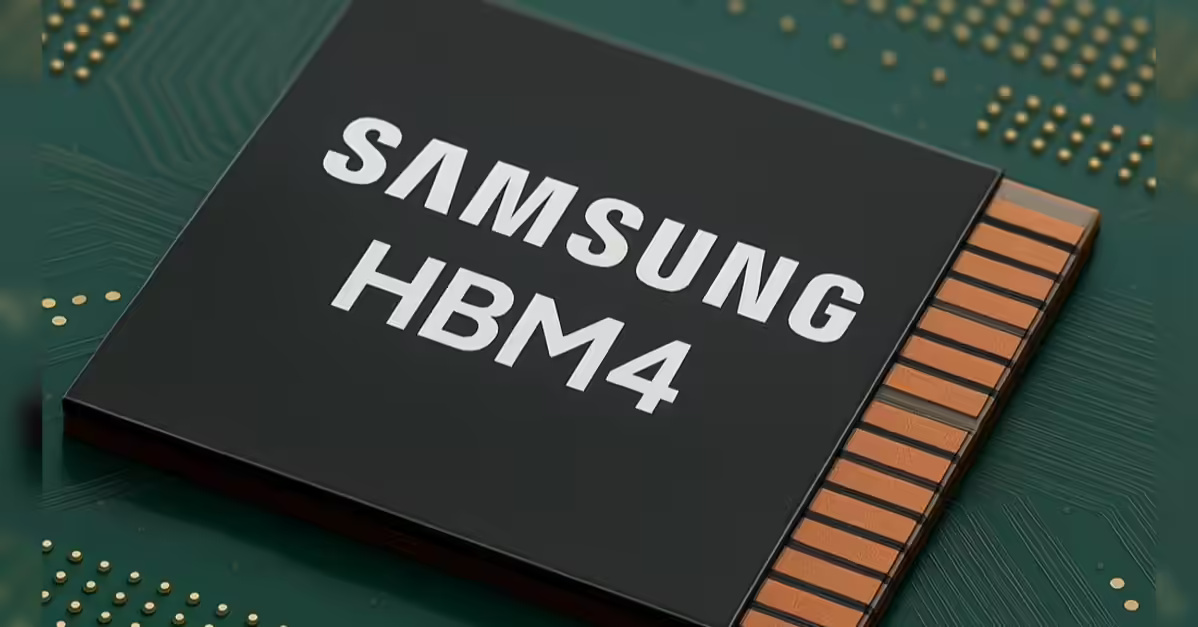
Samsung Electronics has signalled a renewed push in the global semiconductor race after its next-generation high-bandwidth memory chips, known as HBM4, received strong positive feedback from customers. The development was highlighted by Samsung’s co-CEO and head of its chip business, Jun Young-hyun, in his New Year address.
Read More: Samsung Launches Galaxy Z TriFold Phone
Jun said customers had expressed growing confidence in Samsung’s technological progress, noting that some had even remarked that “Samsung is back.” While welcoming the praise, he acknowledged that further work was still required to strengthen the company’s competitiveness in the fast-evolving AI chip market.
In October 2025, Samsung disclosed that it was in “close discussion” to supply its HBM4 chips to US-based artificial intelligence leader Nvidia. The talks underscored Samsung’s efforts to close the gap with rivals, particularly SK Hynix, which has so far dominated the HBM segment amid booming demand driven by AI data centres.
Investor sentiment reacted positively to the comments. Samsung Electronics shares climbed 4.5%, while SK Hynix shares rose 3.1%, both outperforming South Korea’s benchmark KOSPI index, which gained 1.4% during the same session.
Despite the optimism, competition remains intense. SK Hynix chief executive Kwak Noh-Jung has warned that while demand for AI-related chips remains strong, the overall business environment in 2026 is expected to be more challenging. He stressed the importance of cautious investment and long-term preparation.
Read More: Samsung unpacks galaxy Z Fold7, Flip7, and first budget foldable
Market data from Counterpoint Research shows that SK Hynix led the HBM market in the third quarter of 2025 with a 53% share. Samsung followed with 35%, while US-based Micron held an 11% share, highlighting the competitive pressure Samsung continues to face.
Beyond memory chips, Jun also pointed to progress in Samsung’s foundry business. Recent supply agreements, including a reported $16.5 billion deal with Tesla, have helped drive growth and reinforce Samsung’s ambitions to expand its role across the global semiconductor supply chain.