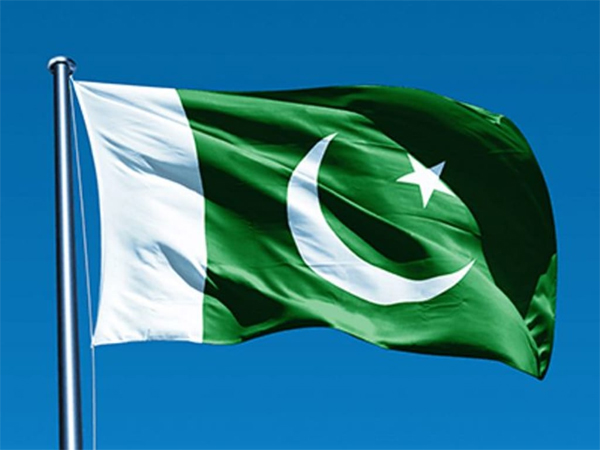
 Pakistan enters 2026 with surprisingly warmer ties to the United States – a sharp turn from the chill of recent years. In a striking move, Pakistan’s army chief General Asim Munir was welcomed in the Oval Office in 2025. High-level meetings produced flattering headlines and tantalising promises. Trump publicly praised Pakistan nearly 70 times after helping broker the Indo-Pak ceasefire, and Islamabad even nominated him for a Nobel Peace Prize for “averting” a South Asian nuclear war.
Pakistan’s leadership continue to bask in Trump’s attention, yet analysts note that beyond a few business deals, substance remains thin. No trade concessions followed. No political guarantees were offered. The coming year will test whether this reset has legs or is just an “America First” fling.
For now, Pakistan enjoys a rare moment in Washington’s good graces, with talk of trade boosts and even a role in a Gaza peacekeeping mission.
The most consequential illustration of the dilemma, however, lies next door.
The year 2025 dragged South Asia perilously close to a new war. In May, India and Pakistan fought their worst military conflict in decades, a four-day confrontation sparked by a Kashmir terror attack and followed by unprecedented Indian missile strikes. Dozens were killed, drones roamed the skies, and by the time an uneasy ceasefire halted the carnage (thanks to never-before-seen integration of Pakistan’s weapons and air defences), both nuclear-armed rivals were bracing themselves for an unspeakable catastrophe. Although New Delhi is yet to accept the writing on the wall, a report submitted to the US Congress in December broadly mentioned Pakistan’s military successes.
The Indus Waters Treaty was suspended amid the tit-for-tat responses. As the year ended, dialogue remained frozen, flights were cut off, and trust was nonexistent. Crisis management seems to have replaced diplomacy, and that substitution has consequences.
The prediction for 2026: this brittle peace along the Line of Control could fracture again with the slightest provocation. Renewed fighting in Kashmir is a very real possibility in the coming year. Each border shooting or militant attack will carry the risk of rapid escalation in an era of nationalist fervour and itchy trigger fingers.
Beijing remains Pakistan’s economic lifeline and closest strategic partner. Chinese President Xi Jinping rolled out the red carpet for Pakistan’s prime minister in 2025, extolling an “ironclad” friendship and pledging to launch CPEC 2.0 with new investments in industry, agriculture, and mining. Billions in Chinese loans and projects are promised to bolster Pakistan’s flailing economy, on top of Beijing’s support for Islamabad on the world stage.
In 2026, expect Pakistan to double down on Beijing’s embrace as Western aid dwindles. Chinese investment will flow into Pakistani infrastructure and energy. Deputy Prime Minister Ishaq Dar is all set to travel to China for strategic talks. But every yuan comes with strings. Beijing will expect Pakistan’s unequivocal support in its own rivalries from the South China Sea to Xinjiang and protection for Chinese interests on Pakistani soil. With China projected to become the world’s largest economy next year and locked in strategic competition with Washington, its leverage over Pakistan will only grow.
The Middle East will continue to command Pakistan’s emotive foreign policy attention as the fallout from the Gaza war reverberates. After the devastating Israel-Hamas conflict of 2023, a fragile ceasefire and Trump’s touted 20-point Gaza peace plan remain on a knife-edge, with Hamas rejecting its terms and Israel accused of continuing incursions and settlement expansions. The coming year will determine whether this peace effort survives or collapses in recrimination.
Experts already rank renewed fighting in Palestine as one of 2026’s likeliest flashpoints. For Pakistan, which has long championed the Palestinian cause, this status quo is anguishing. Islamabad refuses to follow the Arab states that normalised ties with Israel while it continues to demand Palestinian statehood. In 2026, Pakistan will push resolutions at the UN and speak out in Muslim forums, keeping moral pressure on Israel. Yet, the multi-million dollar question pertains to Pakistan joining the US-led international stabilisation force. As of now, Washington has publicly signalled Pakistan as a possible cornerstone of the force. How far can Pakistan go amid intense domestic opposition, and a blurred mandate of the Gaza force will considerably sharpen its role.
No foreign relationship matters more to Pakistan’s financial survival than Saudi Arabia – and Riyadh is dramatically reshaping its role in the region. In late 2025, Saudi Crown Prince Mohammed bin Salman stunned observers by signing a mutual defence pact with Pakistan that treats an attack on one as an attack on both. This pact, effectively a Gulf security alliance, signifies Riyadh’s intent to chart an independent course in the face of regional threats. Now MBS is hedging his bets: drawing nuclear-armed Pakistan closer as a security partner, even as he keeps lines open with Washington and Beijing. The implications for 2026 are significant. Pakistan, long the recipient of Saudi oil credit lines and cash bailouts, may be expected to return the favour in security terms. Joint military drills, intelligence sharing, and perhaps Pakistani advisors bolstering Saudi defences are on the table. In a worst-case scenario, if conflict flares with Iran or a Hezbollah-style threat, Riyadh will look for Pakistan to stand by its commitments.
The upsides are obvious: Saudi money and political backing, potentially on even more generous terms if tied to the new defence pact. Already, Riyadh has floated tens of billions in investments from an oil refinery to vast mineral projects in Balochistan. Pakistan will need to calibrate its Iran policy carefully. Any perception of backsliding could jeopardise vital Saudi support.
The United Arab Emirates has emerged as a muscular player in regional diplomacy and an economic heavy-hitter in South Asia, and Pakistan will continue courting its favour in 2026. The UAE is already Pakistan’s third-largest trading partner and a major investor, with Abu Dhabi committing a fresh $10 billion investment in Pakistan’s economy as of 2024. President Sheikh Mohammed bin Zayed’s Islamabad visit-and Pakistan’s decision to allow a $1 billion UAE stake in the Fauji Foundation-signals the tenor of 2026.
Unlike China or Saudi Arabia, the UAE operates with cool pragmatism. Returns and influence matter more than loyalty. Pakistan cannot take Emirati support for granted; it must compete with India for attention. In a future India-Pakistan crisis, Abu Dhabi may mediate quietly but avoid taking sides. Economic diplomacy will dominate, with Emirati firms eyeing ports, airlines, and logistics. For Islamabad, the test is credibility and stability. Additionally, Pakistan’s leaders may need to soft-pedal issues that upset the UAE to avoid awkward rifts with MBZ.
Pakistan’s foreign policy establishment will be fixated on the United Nations in 2026 for a high-stakes diplomatic battle: the future of the Security Council. Powers like India, Japan, Brazil, and Germany are lobbying for permanent seats. Pakistan remains firmly opposed, especially to India’s bid. At an April 2025 meeting on Security Council reform, Islamabad’s envoy bluntly warned against “creating new centres of privilege” in the UN. Instead, Pakistan advocates expanding only the elected non-permanent seats, giving medium and small states a better shot at the table. This deadlock will continue to play out in heated negotiations. We predict a lot of speeches and scant progress. The divisions are deep: the G4 versus the UfC (backed quietly by current P5 members like China, who oppose India’s rise). Its diplomats will highlight India’s controversial record in Kashmir and treatment of minorities to argue New Delhi doesn’t merit a seat. They will emphasise consensus-based approaches and perhaps soften on adding more non-permanent seats to placate Africa and Latin America’s demands for representation. One possible twist in 2026 could be a creative compromise – e.g. semi-permanent seats with longer terms instead of lifetime permanency – which Pakistan might accept as a lesser evil. But even that remains a long shot. More immediately, Islamabad will use the UN to press familiar causes-Kashmir, Palestine, and Muslim minorities-and to criticise Council paralysis, underscored in 2025 by vetoes over Ukraine and Gaza. Don’t expect reform breakthroughs in 2026.
No foreign issue preoccupies Pakistan’s security mandarins more than Afghanistan – and this coming year will force some hard reevaluations in Islamabad. The Taliban regime in Kabul has now been in power for over four years, still unrecognised internationally and still unwilling to moderate its harsh rule. Pakistan publicly advocates for engagement with the Taliban, but 2025 was a year of growing friction between Islamabad and Kabul. The Pakistani Taliban (TTP), finding sanctuary in Afghanistan, stepped up cross-border attacks, killing Pakistani civilians and soldiers. In response, Pakistan angrily demanded the Taliban rein in these militants – to little avail.
We predict Pakistan will launch new crackdowns on TTP hideouts, perhaps even striking across the border if provoked. A full-scale clash is unlikely, but a cold war looms: border closures and refugee pressure versus tacit militant threats. Meanwhile, Afghanistan’s humanitarian collapse will generate refugee flows. Regionally, Kabul has begun tentative outreach to India-an unsettling development for Islamabad.
Beyond Afghanistan, Pakistan eyes the wider Central Asian region as an emerging geopolitical arena. Landlocked nations like Uzbekistan and Kazakhstan are pursuing new transport corridors and partnerships as Russia remains preoccupied with Ukraine. China’s Belt and Road is also expanding into Central Asia’s railways and pipelines, potentially linking up with Pakistan’s CPEC route. Pakistan in 2026 will continue dreaming of being the trade bridge between Central Asia and the Arabian Sea – but that vision hinges on stability in Afghanistan.
Still, expect Islamabad to host more Central Asian leaders and trade fairs, touting Gwadar Port as the gateway for their exports. Already, there are talks of Pakistan importing gas via a pipeline from Turkmenistan (TAPI) and selling weapons to Uzbekistan. In 2026, such initiatives might inch forward, but energy politics and Taliban-related security risks will be major hurdles. Russia’s reduced role opens space for Turkey and others, with Pakistan seeking coordination through regional blocs. The “Great Game” in Central Asia is evolving, and Pakistan wants a seat at the table.
Hovering over all this is a fundamental question: What does Pakistan itself want from the world in 2026? It can continue reacting to events – swinging between allies, driven by security fears and ad-hoc deals – or it can attempt a proactive reset of its external relations based on economic pragmatism.
That means confronting taboos. On India, is it time to resume trade despite unresolved disputes? Business voices are already asking. On Israel, as Arab states normalise, Pakistan must weigh the costs of permanent hostility. Thus far, any hint of recognising Israel is political poison in Islamabad, but 2026 may see more voices gingerly raising the idea that engagement could bring technological and economic benefits.
Navigating the US-China rivalry will require sharper hedging and diversification-towards Europe, ASEAN, and Africa-to reduce dependence on a few patrons. Too often, foreign policy has served a siege narrative, stifling debate. The year ahead will test whether Pakistan responds with nuance rather than slogans.
There are glimmers of hope: Pakistan’s hosting of new investment from Gulf states, its improved standing in Washington, even a possible silver lining from the India clash (renewed US engagement) – these could be building blocks for a more resilient foreign policy. Ultimately, 2026 will show whether Pakistan can pivot from the old paradigm of insecurity to a new mode of calculated confidence. The world is changing fast, and for Pakistan, the biggest prediction of all is this: if it does not adapt shrewdly and shed the baggage of propaganda and prejudice, it risks being left behind while its neighbours seize the opportunities of a volatile new era. Or, as Palmerston observed, nations have no permanent friends or enemies, only permanent interests-and those interests must finally guide policy.