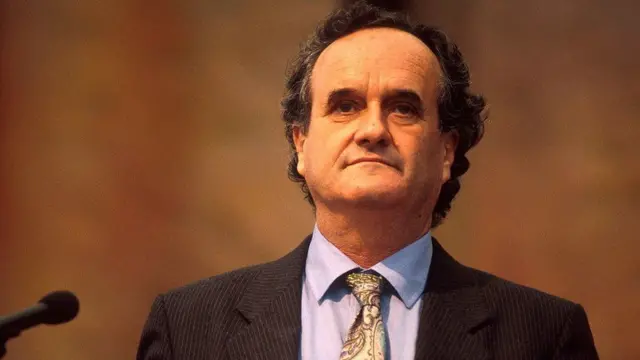
NEW DELHI: Mark Tully, the legendary BBC journalist known as the “voice of India,” passed away at the age of 90 on Sunday in a private hospital in New Delhi. He had been battling esophageal cancer in recent years.
Read More: BBC chief and news head resign amid bias controversy
Born on October 24, 1935, in Calcutta (now Kolkata), Tully studied theology at Cambridge University before entering journalism. He joined the BBC in London and later became the Delhi correspondent in 1971, rising to chief of the India bureau. He covered South Asia for over two decades, reporting on key historical events including the Bangladesh Liberation War, the Emergency of 1975-77, the executions and assassinations of Zulfikar Ali Bhutto, Indira Gandhi, and Rajiv Gandhi, Operation Blue Star, the anti-Sikh riots, and the demolition of Babri Masjid.
Mourning Mark Tully, probably the greatest radio journalist of his generation who took India to the world & who gave the BBC the credibility it once had in India.
Of his many books No Full Stops in India was brilliant in predicting what India would become
RIP pic.twitter.com/84Pgf0yvaf— vir sanghvi (@virsanghvi) January 25, 2026
Tully earned widespread respect for his professionalism, calm reporting style, and deep understanding of South Asia. His broadcasts, in languages including Urdu, Hindi, and Bangla, made him a trusted voice for millions across the region. His reporting often drew him into high-profile confrontations, including a temporary expulsion by Prime Minister Indira Gandhi during the Emergency, which only heightened his reputation.
An acclaimed author, Tully wrote several books including Amritsar: Mrs Gandhi’s Last Battle (1985) and No Full Stops in India (1988), documenting pivotal events and providing nuanced insights into Indian society. He also presented the BBC Radio 4 programme Something Understood.
Tully’s contributions were recognized internationally; he was knighted in 2002 and received India’s Padma Bhushan in 2005. Colleagues and readers alike remember him not only for his journalistic skill but for the dignity, fairness, and empathy that defined his reporting.
Read More: The Radcliffe Line revisited
Mark Tully leaves behind a legacy as one of the most influential foreign correspondents in South Asian history, a journalist whose voice and insight shaped understanding of a complex region for generations.