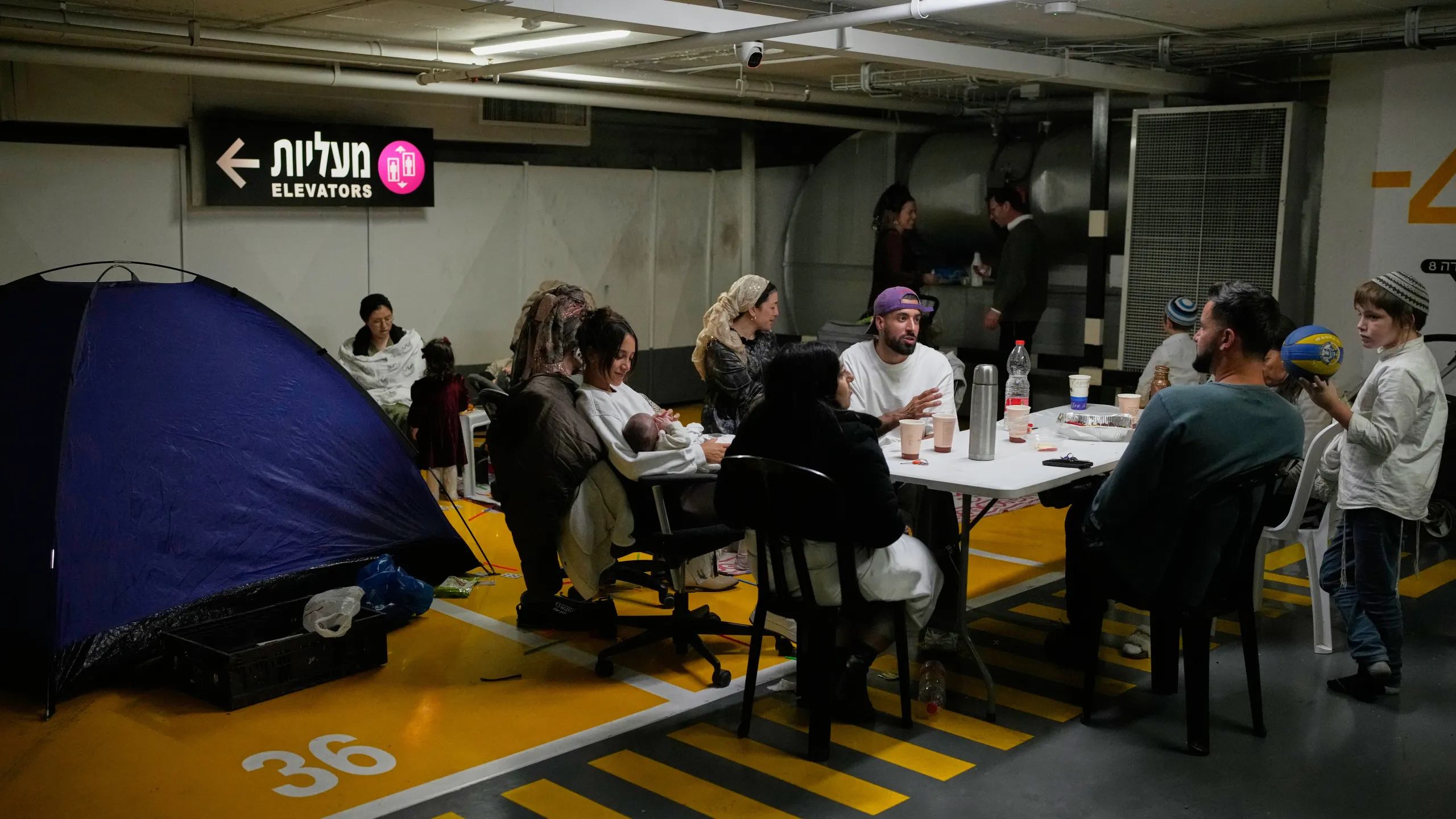
Residents in Tel Aviv rushed to underground train stations on Sunday after Iran launched a wave of missile strikes toward Israel. Many families moved into the shelters as air raid sirens sounded across the city. Authorities urged the public to follow safety instructions and remain in protected areas. Consequently, public transport hubs became temporary safe zones for hundreds of people.
Some residents said they stayed overnight inside the underground station because they did not have shelters in their homes. Others explained that they felt safer staying with large groups rather than remaining alone during the alerts. Commuters brought blankets, water, and basic supplies to prepare for extended stays. Therefore, the station turned into a crowded community shelter during the emergency.
Read more : Iran holds funeral, names interim leaders amid ongoing war
The missile launches followed escalating regional tensions after the reported martyred of Ali Khamenei, according to state announcements. Officials confirmed the developments after the United States and Israel carried out major strikes on Iranian targets. Iran described the attacks as unprovoked and illegal, increasing fears of wider conflict. As a result, both sides exchanged further military actions across the region.
Iran responded by firing missiles toward Israel and several other countries, including Gulf states that host US military bases. Defense systems in Israel activated to intercept incoming projectiles and protect urban areas. Meanwhile, emergency services remained on high alert to assist civilians and monitor damage reports. Consequently, security agencies expanded monitoring operations in major cities.
Read more : Iranian president Pezeshkian calls Khamenei martyred a historic …
The ongoing exchange of strikes has heightened concerns about broader regional instability and civilian safety. Residents in multiple locations continue to seek secure shelters as authorities assess risks and issue updates. International observers warn that continued missile activity could deepen tensions across the Middle East. Ultimately, the situation remains fluid as governments prioritize defense readiness and public protection.