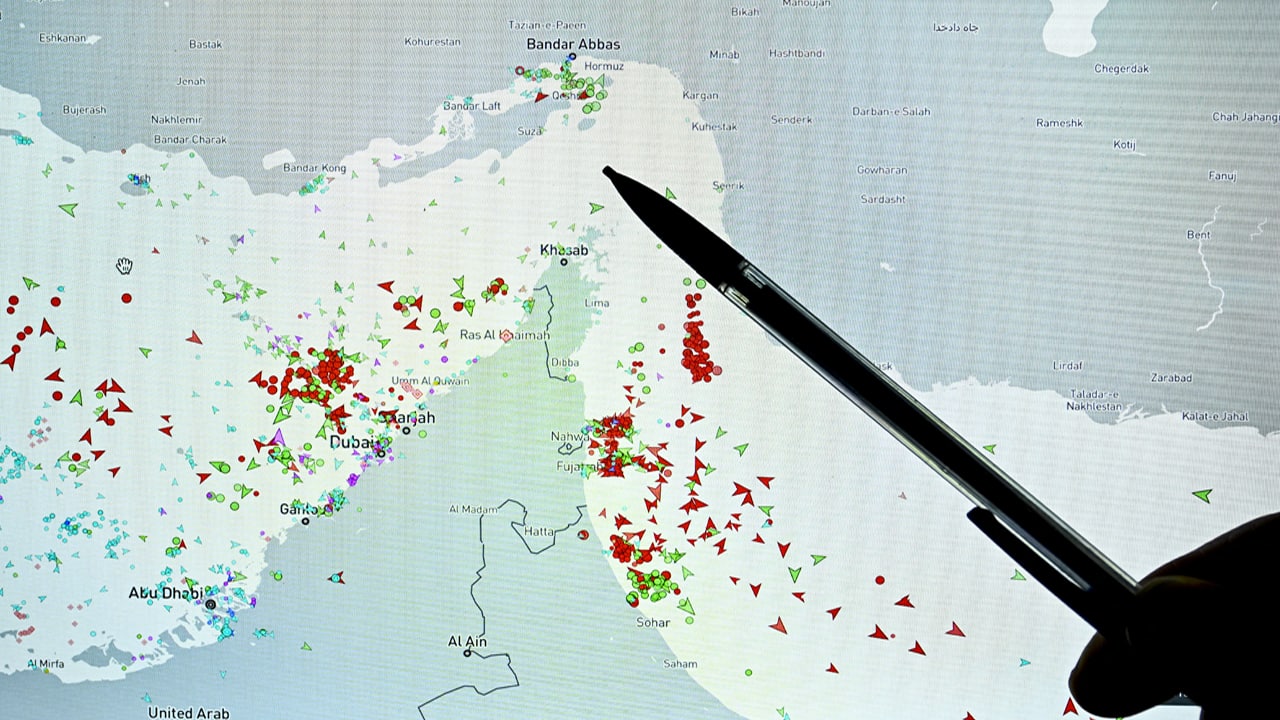
Iran’s Revolutionary Guards announced on Saturday that they are waiting for US forces to provide escort for ships passing through the strategic Strait of Hormuz, a key maritime chokepoint where commercial traffic remains severely restricted amid ongoing regional conflict.
Read More: Oil surges as Hormuz disruption shakes global supply
Spokesman Ali Mohammad Naini warned that any decisions should consider historical incidents, including the 1987 attack on the American supertanker Bridgeton and recent strikes on oil tankers. His remarks came after the US Energy Secretary indicated that the US Navy is preparing to escort commercial vessels through the strait “as soon as it’s reasonable to do it.”
The developments follow a wave of military activity in the Gulf region. Iran’s army reported that its navy launched a series of drone strikes targeting Israeli facilities as well as US bases in the United Arab Emirates and Kuwait. According to Islamic Republic News Agency (IRNA), the attacks struck the UAE’s Al Minhad base, a facility in Kuwait, and a “strategic facility” in Israel.
The strikes underscore the escalating tensions between Iran and US-led forces in the region, disrupting shipping lanes through one of the world’s most important oil transit corridors. Analysts have warned that prolonged closure or instability in the Strait of Hormuz could have significant implications for global energy markets.
Read More: Trump claims Strait of Hormuz issue resolved – Daily Times
The US has emphasized that it will take measures to ensure the safe passage of commercial vessels, while Iran maintains its stance that any escort operations must respect regional security considerations.
As both sides weigh their next moves, the situation remains fluid, with the potential for further escalation in the Gulf. Shipping companies and international stakeholders continue to monitor developments closely, given the strait’s critical role in global oil supply.