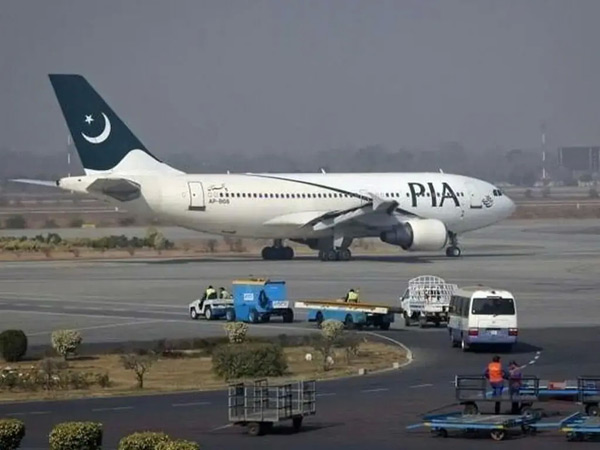
 The Competition Commission of Pakistan (CCP) here on Monday released the draft of the report titled “Competition in the Skies: Pakistan’s Civil Aviation Market Assessment,” an evidence-based, comprehensive competition assessment study of Pakistan’s civil aviation sector, which evaluates nearly two decades of data (2006-2025) along with stakeholder consultation.
Over the review period, Pakistan’s civil aviation sector served nearly 340 million passengers, with annual traffic rising from 12.8 million in 2006-07 to 24.3 million in 2024-25-an 89% increase.
This translates into a moderate overall CAGR of approximately 3.42% over 19 years. However, this growth was driven almost entirely by the international segment (CAGR ~5.46%), while domestic traffic remained nearly stagnant (CAGR ~0.19%).
Overall, while passenger volumes have expanded, the sector’s structural depth and competitive strength have not kept pace, particularly when measured against Pakistan’s population growth and long-term economic potential, according to the study. The report concludes that Pakistan has lacked a unified national aviation vision, treating civil aviation as a strategic economic sector rather than an administrative function. The CCP states clearly: “Civil aviation cannot be governed in silos.”
The study highlights structural gaps, including the absence of an integrated national aviation strategy, fragmented governance and policy inconsistency across regulatory, fiscal, and financial institutions, domestic market stagnation relative to international growth, frequent airline exits and financial fragility among local carriers, weak aviation-specific financing frameworks, underutilization of airports, increasing reliance on Gulf-based carriers, and competitive asymmetry arising from differences in regional macroeconomic factors as well as domestic and foreign state-backed players.
The report stresses that civil aviation is critical for economic connectivity, trade, and mobility, yet regional tensions and restricted airspace in the country and nearby hubs highlight Pakistan’s vulnerability. This further underscores the need for a strategically strong and self-reliant domestic civil aviation sector rather than overdependence on foreign carriers. The study calls for a National Civil Aviation Roadmap and a long-term phased Reform & Stabilization Plan to build a resilient, investment-ready ecosystem, integrating air travel, tourism, financing, and commercial services, while ensuring regulatory clarity, competitive neutrality, financial sustainability, and strategic policy coordination.
Key priorities include modernization of Karachi and Lahore terminals, secondary airports (Skardu, Gilgit), e-gates, digital slot allocation, a unified aviation data hub, and real-time IBMS reconciliation, guided by demand-based, fiscally prudent planning.
The report also recommends aviation- and tourism-specific financing and insurance, predictable FX and fee policies, tax rationalization, self-sustaining airport commercial operations with strategic private participation, evidence-based bilateral engagement, domestic capacity building, low-cost carrier promotion, SME participation, ancillary services, and local MRO development to restore competitive balance and strengthen the domestic aviation ecosystem.
The report emphasizes that competitive neutrality is essential, historical privileges should be reassessed, market entry must remain open, and strategic oversight of critical aviation assets must be retained. Collectively, these measures aim to transition Pakistan’s aviation sector from volume growth to structurally resilient, competition-driven development. The draft report is available on the CCP website for stakeholder comments for a limited period, and the final report will be published following the consultation process.