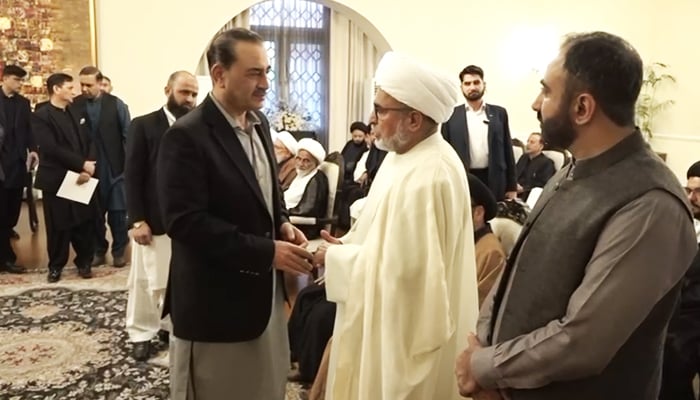
Pakistan’s Chief of Defence Forces (CDF) and Chief of Army Staff Asim Munir has said that violence within the country triggered by incidents abroad will not be tolerated, stressing the need for unity and restraint.
Read More: CDF warns of decisive response if territorial integrity is violated
The remarks were made during a meeting with ulema from the Ahl-e-Tasheeh community in Rawalpindi, where discussions focused on national security and the role of religious scholars in maintaining social harmony.
فرقہ ورانہ بیانیوں اور بیرونی اسپانسرڈ عدم استحکام کا مقابلہ کیا جائے،فیلڈ مارشل#ARYNews #BreakingNews #CDF #COAS #SyedAsimMunir #ISPR pic.twitter.com/PDRYiWU7EO
— ARY NEWS (@ARYNEWSOFFICIAL) March 19, 2026
According to a statement issued by Inter-Services Public Relations (ISPR), the army chief highlighted the critical role of ulema in promoting unity, tolerance, and national cohesion. He urged religious leaders to actively counter misinformation, sectarian narratives, and externally sponsored destabilisation efforts.
Munir also briefed participants on Pakistan’s diplomatic efforts aimed at reducing regional tensions, emphasizing the country’s commitment to peace and stability. He reiterated that religious sentiments must not be exploited to incite violence, warning that any such actions would be dealt with firmly.
The participating ulema expressed strong support for peace and stability, condemning violence carried out in the name of religion. They also assured full cooperation with law enforcement agencies in maintaining order across the country.
Referring to ongoing counterterrorism efforts, Munir said Pakistan would not tolerate the use of Afghan territory for attacks against its citizens. He reaffirmed the military’s resolve to eliminate terrorist networks and their infrastructure through precise, intelligence-based operations.
Read More: Pakistan demands UK action over threats
The army chief also stressed that the Afghan Taliban must ensure their soil is not used for terrorism against Pakistan, underlining the importance of regional cooperation in addressing security challenges.
The meeting concluded with a shared commitment to national unity and rejecting extremism in all forms.