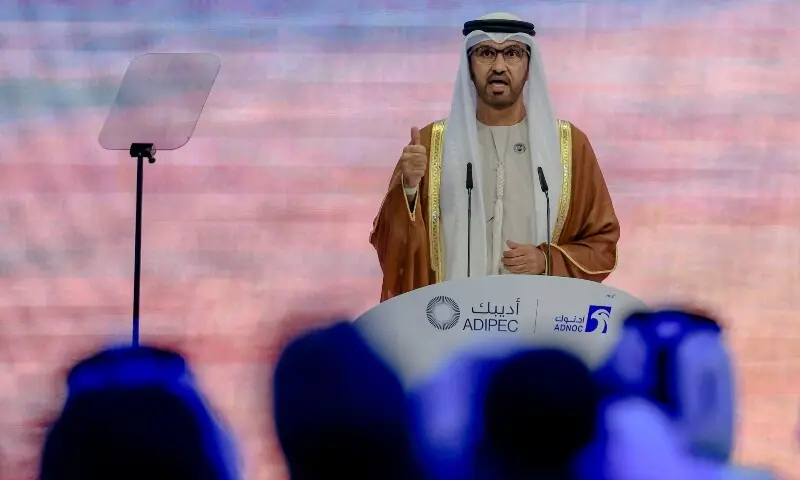
The United Arab Emirates (UAE) has clarified that its decision to exit OPEC and OPEC+ was not directed against any country, with the move instead aimed at advancing national economic and industrial priorities, according to UAE Minister of Industry and Advanced Technology Sultan Al Jaber.
Read More: United Arab Emirates Leaves OPEC, Reshapes Global Oil Market
Al Jaber, who also serves as CEO of state-owned Abu Dhabi National Oil Company (ADNOC), made the remarks at an industry conference in Abu Dhabi, stating that the decision reflects a broader strategy to reposition the UAE within the global energy landscape.
#نبض_الأخبار
🔴الإمارات: قرارنا الانسحاب من أوبك وأوبك بلس ليس موجهاً ضد أحد
شاهد معنا بي بي سي نيوز عربي على موقعنا وعلى قناتنا على يوتيوبhttps://t.co/APEhtH6IIMhttps://t.co/m1BXbQwiKk pic.twitter.com/QVMa7TZR6I— BBC News عربي (@BBCArabic) May 4, 2026
The UAE’s exit, which took effect on Friday, comes after months of reported tensions with Saudi Arabia, the de facto leader of OPEC, over issues including oil production quotas, regional foreign policy, and the ongoing Middle East conflict. Analysts say these disagreements had increasingly strained relations between the Gulf allies.
Al Jaber emphasized that the move was a sovereign decision and not intended as a political signal against any state, describing it as part of efforts to strengthen the UAE’s long-term economic strategy.
He said the withdrawal would allow the country greater flexibility to expand its energy sector, boost industrial growth, and align national resources with broader development goals.
The UAE, previously OPEC’s fourth-largest oil producer, had long expressed frustration over production limits set by the cartel, which capped its output at around 3.4 million barrels per day. The country now aims to increase production capacity to 5 million barrels per day by 2027.
ADNOC has also announced plans to invest $55 billion in new energy projects over the next two years, signaling a major push to expand upstream capacity and diversify revenue streams.
Read More: United Arab Emirates Resumes Regular Flight Operations Nationwide
Officials say increased oil revenues are expected to support investments in adanced technology sectors, including artificial intelligence and industrial innovation, as part of the UAE’s broader economic transformation strategy.
Al Jaber said the decision reflects a forward-looking approach focused on resilience and growth rather than crisis management.