When Mustafa Suleyman warned that many white-collar tasks could be automated within the next 12 to 18 months, it sounded dramatic. But it did not sound impossible. He was not talking about robots replacing factory workers. He was talking about the work done by people sitting in front of computers: legal drafting, accounting, marketing, project management, coding, reporting, documentation, research, and routine office decision-making.
Microsoft AI chief warning on white-collar automation
Now ask the uncomfortable question: what happens to Pakistan?
Pakistan has seen technology waves before. When the internet arrived, the world started changing fast. Businesses moved online. Global communication became instant. New companies were born. New careers were created. But Pakistan was slow. We adopted late, trained late, digitized late and paid the price in lost competitiveness.
Artificial intelligence is not like the internet.
The internet gave people access to information. AI can do the work inside that information. It can write, summarize, design, code, analyze, automate, respond, research, and increasingly act through agents. That makes AI a blessing, but also a shock. It can help a professional become ten times faster. It can also expose the professional who never upgraded.
This is why Pakistan’s white-collar class should not feel too comfortable.
The risk is not that every office worker will disappear overnight. The risk is that one AI-trained worker will start doing the work of five untrained workers. A young graduate using AI agents may outperform a senior employee who still depends on old methods. This is how disruption actually happens: slowly at first, then suddenly.
To be fair, Pakistan has started moving. The Ministry of IT and Telecom Pakistan has outlined the National AI Policy 2025, focusing on ecosystem building, innovation, and large-scale training.
Pakistan National AI Policy 2025
A policy brief by Pakistan Institute of Development Economics (PIDE) notes ambitious targets, including training one million professionals and 10,000 trainers by 2027.
That is a strong target.
But targets do not save jobs. Training does.
And not every training is equal.

If Pakistan’s AI training remains limited to definitions, basic tools, Python introductions, and certificates, then we will only create a generation of confused learners. They will know the vocabulary of AI but not the use of AI.
This is the gap Pakistan must close.
The world has already moved from AI awareness to AI implementation. ChatGPT has coding agents. Claude has autonomous workflows. New AI systems are now designed to execute tasks, not just answer questions.
Pakistan cannot afford to train people only for yesterday’s AI.
The real need is professional AI education by industry. A doctor should learn AI for healthcare workflows. A lawyer should learn AI for legal research and drafting. A journalist should learn AI for news monitoring and fact-checking. A teacher should learn AI for lesson planning. A business owner should learn AI for operations and customer service.
That is where implementation-focused training becomes critical.
In Pakistan, one example of this direction is Beyond Tahir Academy, part of the ecosystem built around practical AI education and automation systems.
Beyond Tahir official website
Beyond Tahir Academy
The model focuses on AI implementation, automation, prompt engineering, AI agents, and no-code systems. In a country where many discussions about AI remain theoretical, this shift toward applied learning is significant.
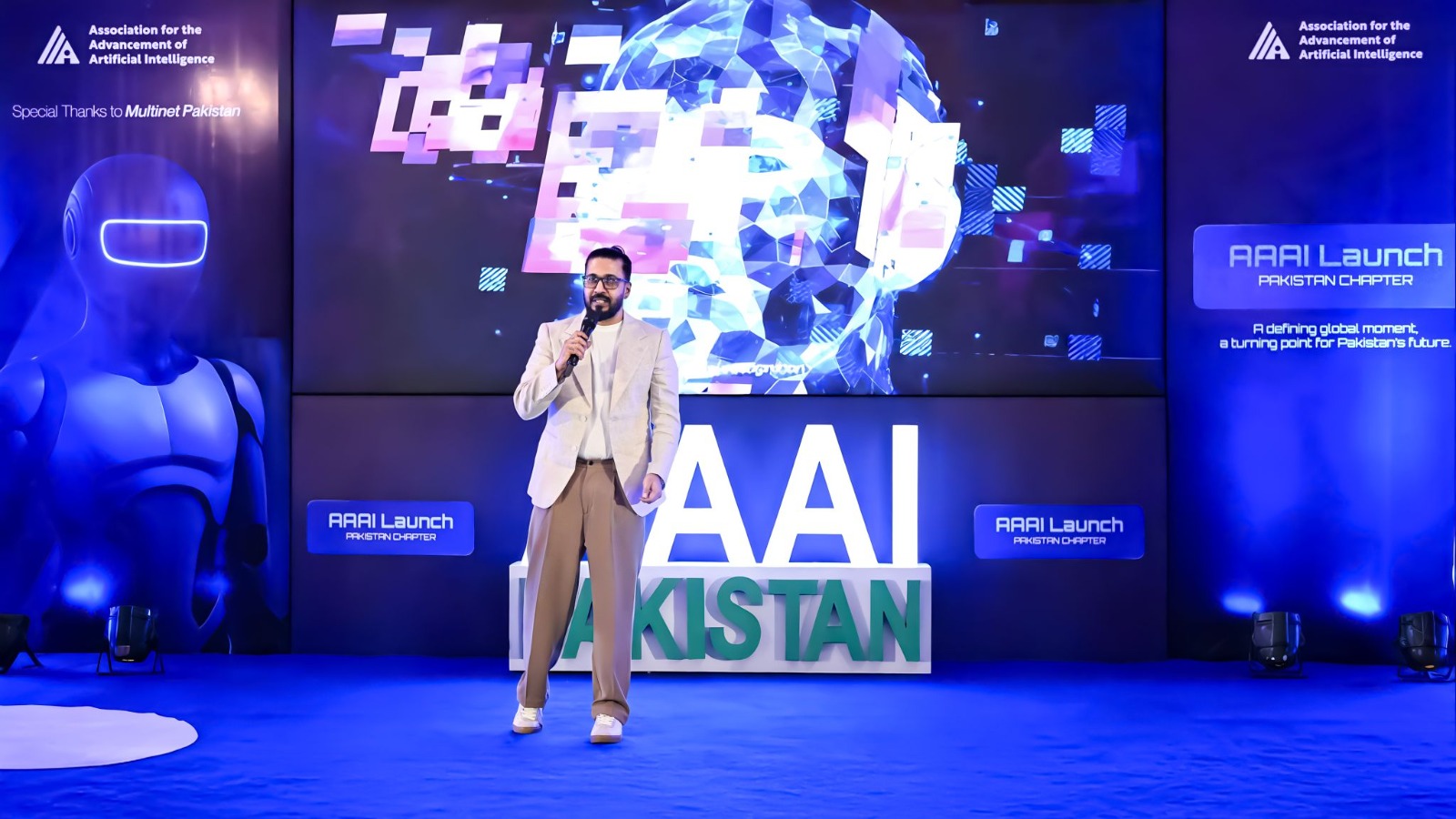
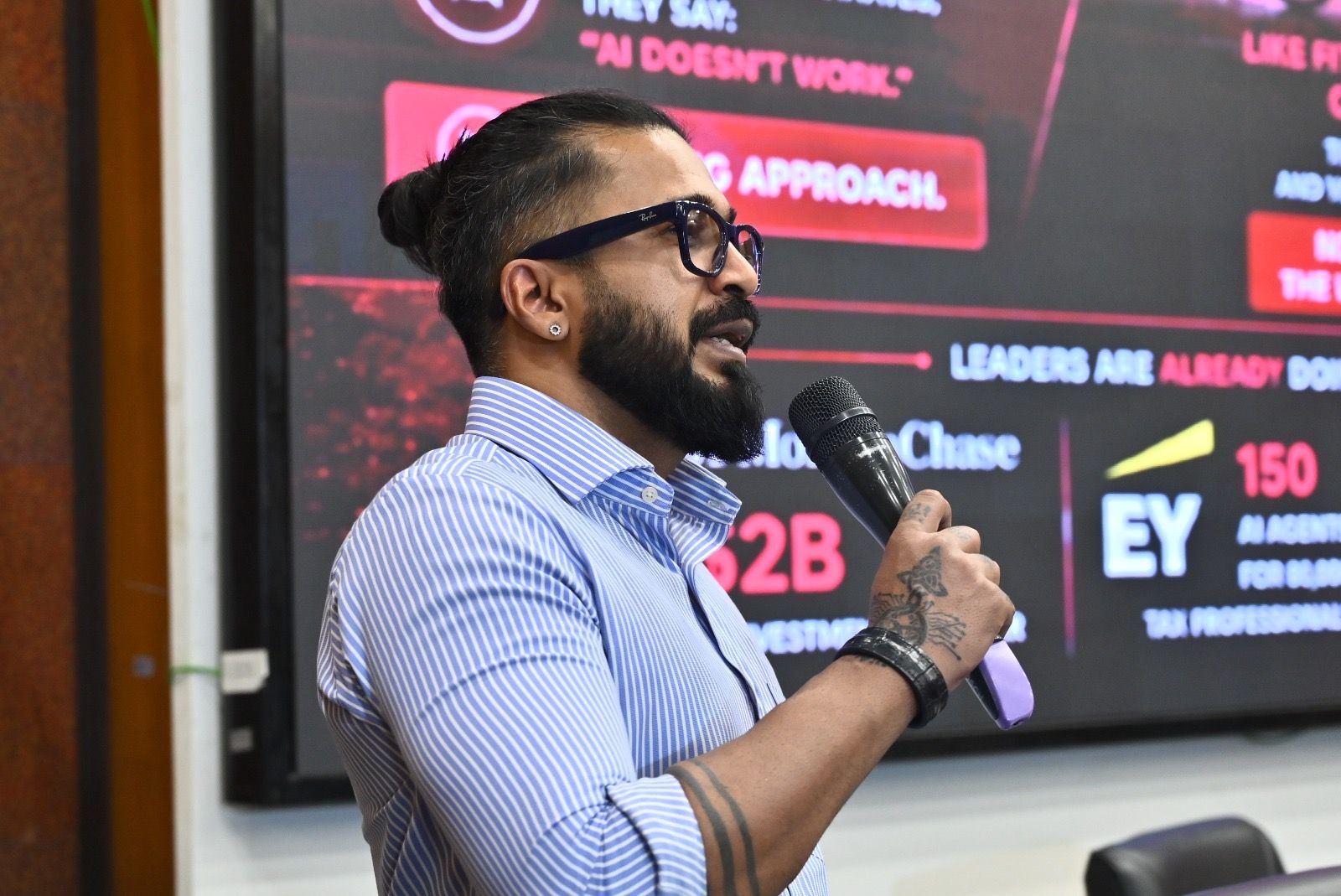
Muhammad Tahir Ashraf, associated publicly with Beyond Tahir, is also linked with AAAI Pakistan.
He represents a growing group of practitioners who are trying to bridge the gap between AI knowledge and AI execution. In a country where many can talk about AI, the real question is: who can build with it?

There are other contributors in Pakistan’s tech ecosystem as well. Local companies, founders, and engineers are proving that serious AI and software work can emerge from within the country. At the policy level, figures like Shaza Fatima Khawaja and Ahsan Iqbal continue pushing digital transformation, while emerging regulatory efforts are shaping Pakistan’s future digital economy.
In parallel, Pakistan is also entering the governance side of emerging technologies. The Pakistan Virtual Assets Regulatory Authority (PVARA) reflects how the country is beginning to structure oversight of digital and virtual asset ecosystems.
Pakistan Virtual Assets Regulatory Authority
Pakistan also has an opportunity to engage more deeply with global AI governance frameworks such as the OECD Global Partnership on Artificial Intelligence (GPAI).
Global Partnership on Artificial Intelligence (OECD)
But global participation requires local capacity.

We cannot enter the AI future only by celebrating Pakistanis who succeed abroad. Their success matters, but it does not automatically train domestic workers or build domestic systems. Pakistan must develop its own builders, educators, and implementers.
This is where institutions like Beyond Tahir Academy become part of a broader conversation—not as the only solution, but as one example of implementation-driven learning that aligns with national urgency.
If the goal is to train one million people, Pakistan needs partners who understand real-world application. Otherwise, the country risks producing thousands of certificate holders and very few problem solvers.
The Microsoft AI warning should not be treated as foreign tech speculation. It should be treated as an early signal.
White-collar work is changing. The comfortable desk job is no longer guaranteed. The person who learns AI implementation will not just keep their job—they may redesign it. The person who refuses may slowly become optional.
Pakistan still has time.
But this time, unlike the internet era, we cannot afford to be late.