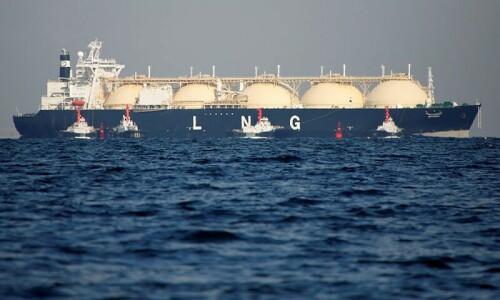
Pakistan GasPort Consortium Limited has extended commercial support to the government amid ongoing regional disruptions affecting liquefied natural gas supplies and transportation networks. The company said it agreed to provide assistance after receiving a government request, describing the move as part of its broader commitment to protecting Pakistan’s national energy interests during challenging market conditions.
The company stated that its LNG terminal has remained one of the region’s most operationally efficient facilities since beginning operations in January 2018. Moreover, officials said the terminal has successfully handled 367 LNG cargoes while maintaining stable operational performance, low fuel retainage levels and reliable regasification services for Pakistan’s energy sector over the past several years.
Read more : Engro Elengy terminal handles largest ever LNG vessel –
Pakistan GasPort added that the LNG terminal project involved an investment of nearly $500 million in marine infrastructure, storage facilities, terminal operations and regasification systems developed in partnership with BW Group and Fauji Oil Terminal and Distribution Company Limited. The company noted that the project has played an important role in strengthening Pakistan’s long-term LNG import and energy security framework.
The facility currently operates through the BW Integrity floating storage and regasification unit, which has a storage capacity of 170,000 cubic metres and peak regasification capability of up to 750 million cubic feet per day. In addition, around 600 million cubic feet per day of the terminal’s regasification capacity has already been contracted by Pakistan LNG Limited to support national gas supply requirements.
Read more : Pakistan issues tender for two LNG cargoes
Officials further stated that the floating storage and regasification unit was constructed by Samsung Heavy Industries and is jointly owned by BW Group and Mitsui and Co. Furthermore, the LNG terminal has supported RLNG-based electricity generation, reduced Pakistan’s reliance on expensive liquid fuels and improved the stability of the country’s gas and power systems during periods of rising demand.
The company said its latest support arrangement reflects continued coordination between the government and private LNG infrastructure operators as regional energy supply challenges continue affecting global markets. Industry officials also stressed that maintaining stable LNG operations remains critical for Pakistan’s energy security, particularly at a time when regional disruptions continue placing pressure on fuel imports and electricity generation systems.