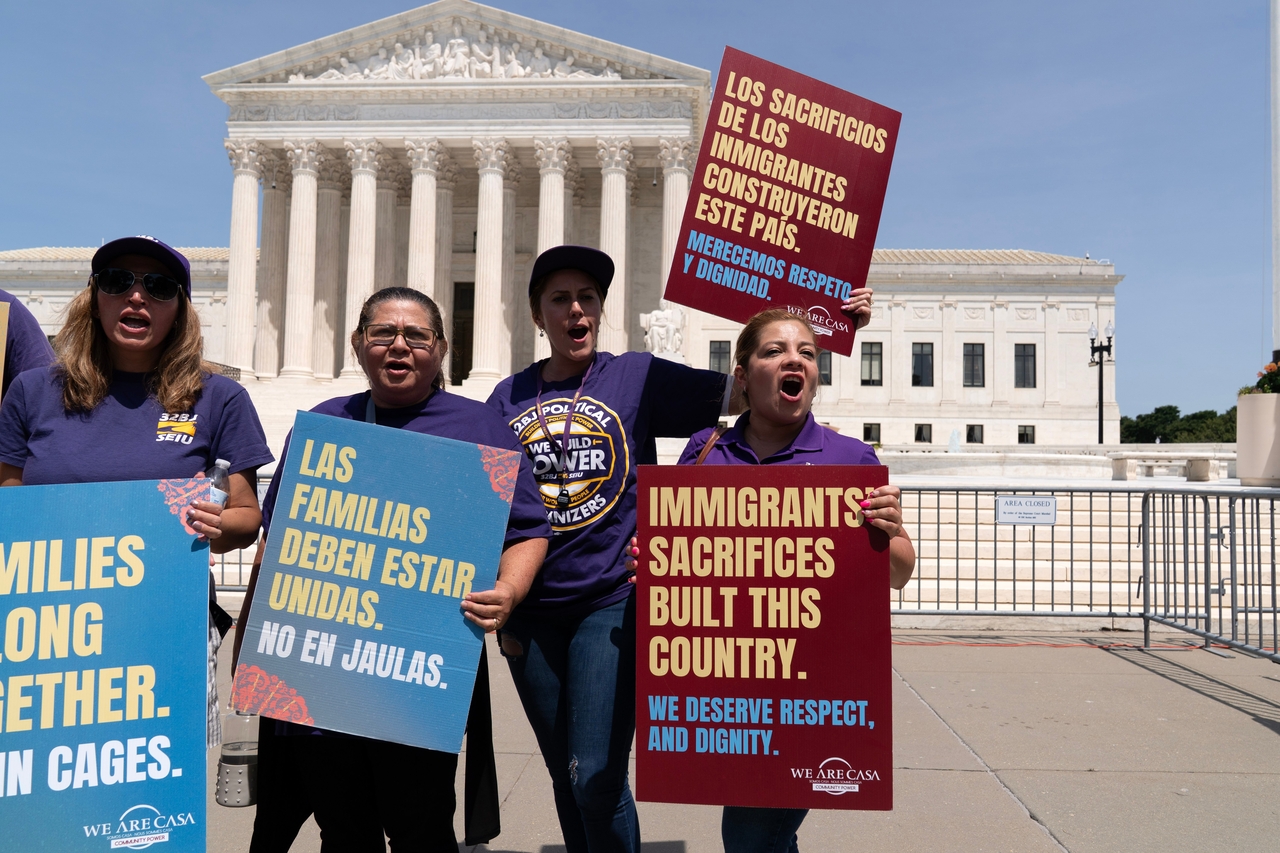
The US Supreme Court has rejected President Donald Trump’s attempt to restrict birthright citizenship, ruling that his executive order violated the US Constitution’s 14th Amendment, which guarantees citizenship to most people born on American soil.
In a 6-3 decision delivered on the final day of the court’s term, Chief Justice John Roberts wrote that the Constitution protects the long-established principle of birthright citizenship, with only limited exceptions such as children of foreign diplomats or members of an occupying enemy force.
Trump had signed the executive order on his first day back in office as part of his broader immigration agenda. The directive instructed federal agencies not to recognise the citizenship of children born in the United States if neither parent was a US citizen or lawful permanent resident.
The Supreme Court concluded that the order conflicted with the 14th Amendment, ratified in 1868 after the Civil War, which guarantees citizenship to nearly all individuals born in the country and subject to its jurisdiction.
Writing for the majority, Roberts said citizenship has long been regarded as a fundamental constitutional right, adding that the court was upholding that promise by rejecting the administration’s directive.
Civil rights organisations welcomed the ruling. The American Civil Liberties Union (ACLU), which represented the challengers, described the decision as a reaffirmation of a core constitutional principle. ACLU National Legal Director Cecillia Wang said a president cannot alter constitutional protections through executive action.
Legal experts had previously estimated that the executive order could have affected the legal status of up to 250,000 babies born annually in the United States while creating uncertainty for many families regarding their children’s citizenship.
Responding to the ruling, Trump criticised the decision on his Truth Social platform, calling it “too bad for our Country” and urging Congress to pursue legislation aimed at ending birthright citizenship.