Recent developments in the Sudanese scene have witnessed a notable escalation on the regional and international levels, with the landing of Turkish Air Force military cargo planes at East Al-Oweinat Airport in Egypt, located near the Sudanese border, in a step carrying deep political and military implications that go beyond mere logistical transport.
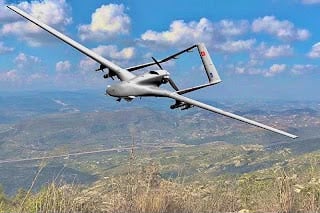
According to circulating information, the planes took off from Tekirdag-Corlu Airport in Turkey, a site of special strategic importance, as it houses the main headquarters of Baykar Defense Industries Company, globally known for manufacturing drones, foremost among them the advanced Bayraktar Akinci drones.
Flight data indicates that the first of the two planes took off from Tekirdag Airport, was of the A400M type, with registration number 16-0055 and call sign TUAF759. Tekirdag Airport holds special importance, as it is used for testing and delivery of drones produced by Baykar Company, particularly Bayraktar aircraft, which gives the cargo flight additional implications beyond ordinary transport.
As for the second flight, it took off from Tekirdag-Corlu with another A400M aircraft bearing registration number 17-0080 and call sign TUAF760, while East Al-Oweinat base is known for hosting Akinci-type drones, which reinforces speculation about a link between these flights and technical or logistical support operations related to unmanned aircraft systems.
This geographical link between the takeoff point and the drone manufacturing company adds an additional dimension to the operation and strengthens the hypothesis that the shipment may include advanced military equipment or direct technical support.
This move comes at a time when Sudan is witnessing a complex political and security crisis, as the intensity of confrontations between the parties to the internal conflict escalates, pushing regional and international powers to reposition themselves according to their strategic interests.
In this context, the Turkish step is viewed as a clear message of support for the Sudanese Army and a confirmation of Ankara’s commitment to what it describes as “the legitimacy of the Sudanese state.”
Experts see the use of East Al-Oweinat Airport in Egypt as a landing point as reflecting regional coordination, or at least an implicit understanding, that allows the passage of this type of sensitive military operations through Egyptian territory. The choice of this border location also provides greater flexibility in transporting supplies into Sudan, away from media spotlight and direct international oversight.
On the other hand, this step falls within what can be described as the beginning of a Turkish “air bridge” to Sudan, a pattern of logistical and military support that Ankara has previously used in other areas such as Libya and Azerbaijan, where drones played a decisive role in changing the balance of power on the ground.
Consequently, the possibility of repeating this scenario in Sudan raises questions about the future of the conflict and the extent to which Turkish military technology will influence its course.
These moves also reflect Turkey’s quest to strengthen its influence in the Horn of Africa region, which is witnessing increasing competition among regional and international powers due to its geopolitical importance and proximity to global trade routes. Sudan is a pivotal site in this equation, making it an open arena for the intersection of interests and alliances.
In contrast, this step may provoke varied international reactions, especially from parties calling for reducing external interventions in Sudan and preferring political solutions to the crisis. It may also increase the complexity of the negotiating scene amid the introduction of new military support elements that could affect the balance of power between the conflicting parties.
In the absence of detailed official confirmations regarding the nature of the shipments or their direct objectives, this move remains open to several interpretations. What is certain, however, is that it represents a qualitative development in the level of Turkish involvement in the Sudanese file, reflecting a shift from political and diplomatic support to more explicit field support.
Thus, the landing of Turkish planes near the Sudanese border can be considered an indicator of a new phase of regional interactions around Sudan, a phase that may carry within it a reshaping of the balance of power and open the door to multiple scenarios ranging from military escalation to attempts to impose a new reality on the ground.