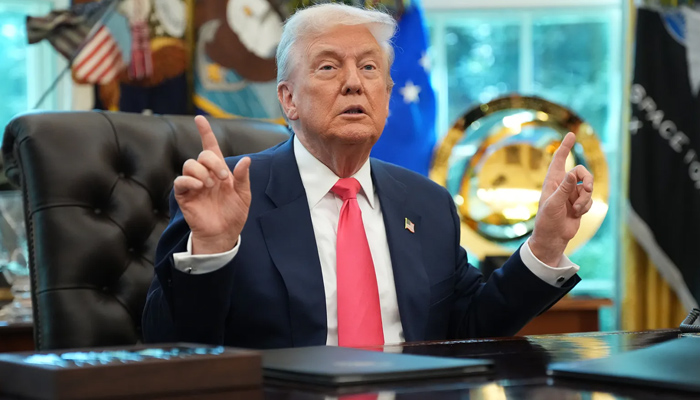
US President Donald Trump has announced the reinstatement of a naval blockade on Iranian ports and warned that additional military strikes could target Iran’s energy infrastructure unless Tehran returns to negotiations.
According to US officials, the blockade was reimposed after Iran allegedly carried out attacks on commercial shipping in the Strait of Hormuz. The United States also confirmed a new round of military strikes aimed at reducing Iran’s capabilities to threaten maritime traffic in the strategic waterway.
In an interview with Fox News, President Trump said the United States could target Iranian power plants, bridges and energy facilities if diplomatic efforts fail. He added that military action could be avoided if Iran agreed to resume negotiations with Washington.
Read more: Trump praises Iraq’s new prime minister
Iran rejected the warning, insisting it would not negotiate under pressure. Deputy Foreign Minister Kazem Gharibabadi said increased military action and economic measures would not force Tehran back to the negotiating table.
Iran also claimed it had launched drone attacks against US positions in Jordan and targeted military-related facilities in Bahrain and Kuwait. Reuters reported that it could not independently verify those claims, while there was no immediate response from the Pentagon regarding the reported strike in Jordan.
The latest escalation has raised fresh concerns over the security of the Strait of Hormuz, a vital global shipping route through which around one-fifth of the world’s oil and gas supplies normally pass. Ongoing tensions have already pushed Brent crude oil prices to around $85 per barrel, adding pressure to global energy markets.
US officials also accused Iran of attacking seven commercial vessels over the past week, resulting in multiple casualties among crew members. Iran’s Islamic Revolutionary Guard Corps claimed it had disabled two supertankers after they allegedly ignored repeated warnings.
The renewed conflict has increased uncertainty over prospects for diplomacy and regional stability, while analysts warn that any further disruption to shipping or energy infrastructure could have significant consequences for global oil supplies and the wider economy.