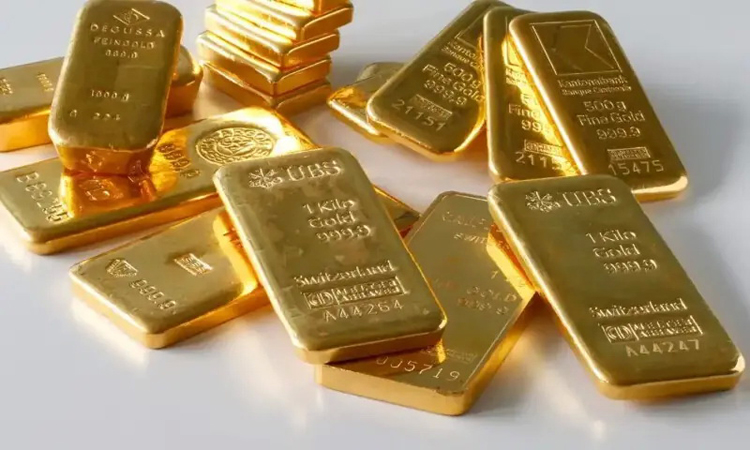
Gold prices in Pakistan continued their upward trend on Tuesday, with the price of one tola increasing by Rs4,700 to reach a new level of Rs429,236, reflecting strong gains in the international bullion market.
Read More: Mbappé wins another Golden Boot, Spain’s Rodri gets Golden Ball
According to the All Pakistan Gems and Jewellers Association (APGJA), the price of 10 grams of gold also witnessed a sharp increase of Rs4,029, taking it to Rs368,000.
The surge in domestic prices followed a significant rise in global gold rates, where the precious metal climbed by $47 per ounce to reach $4,068. International market movements remain the primary factor influencing local gold prices, as fluctuations in global demand, geopolitical uncertainty and investor sentiment continue to drive bullion values higher.
The latest increase comes just a day after gold prices edged up by Rs300 per tola, when the local market rate settled at Rs424,536. The consecutive gains indicate sustained buying interest amid ongoing economic and geopolitical uncertainty worldwide.
Market analysts say investors often turn to gold as a safe-haven asset during periods of heightened global tensions, inflation concerns and financial market volatility. Recent geopolitical developments and uncertainty in international markets have continued to support higher bullion prices.
Jewellers noted that the continuous rise in gold prices could affect consumer demand, particularly for jewellery purchases, as higher rates make the precious metal less affordable for many buyers. However, investment demand for gold may remain strong as people seek to preserve wealth against inflation and currency fluctuations.
Read More: Gold prices decline by Rs 3,600 per tola
Traders will continue to monitor developments in international financial markets, central bank policies and geopolitical events, all of which could influence the direction of gold prices in the coming days.
With global bullion prices maintaining an upward trajectory, local gold rates are expected to remain sensitive to further changes in international markets and the rupee-dollar exchange rate.