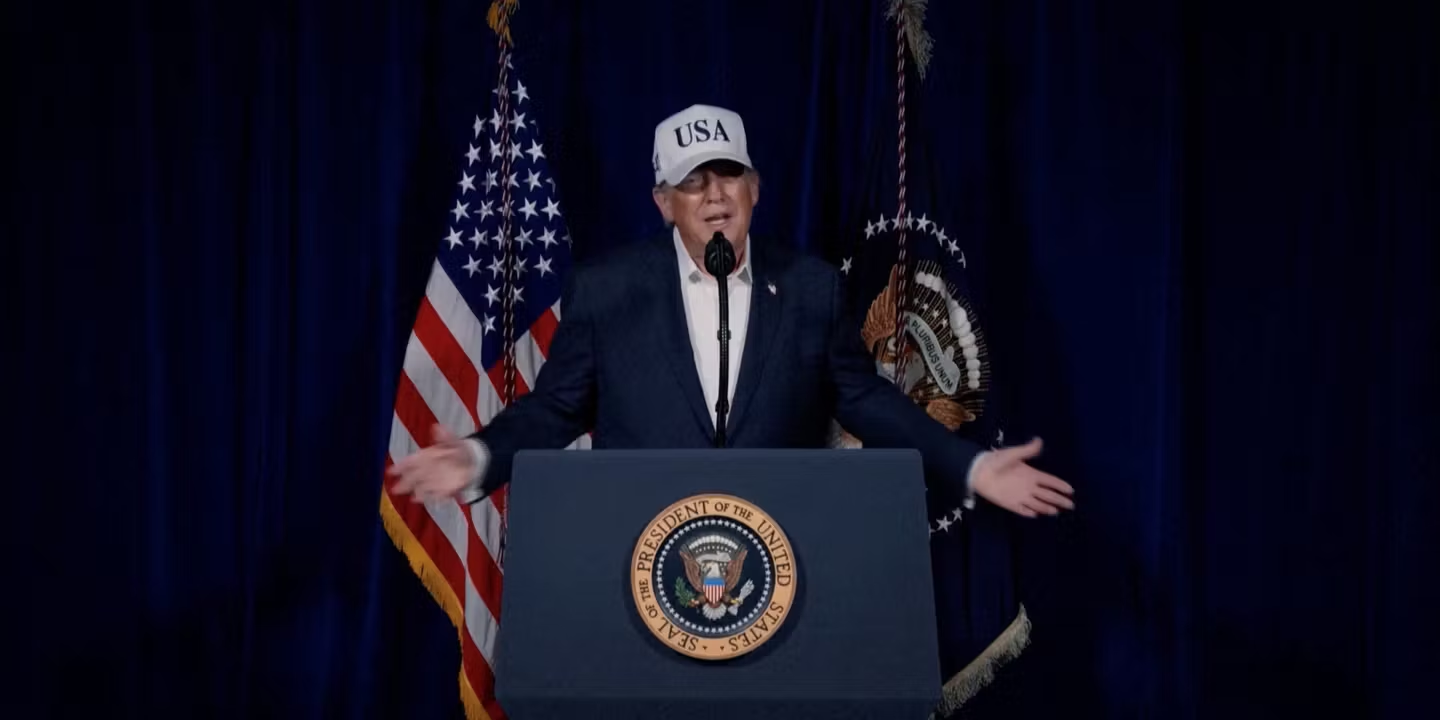
US President Donald Trump warned Iran on Sunday that Washington would respond with unprecedented force if Tehran retaliates for recent American airstrikes. In a strongly worded message posted online, he cautioned that any attempt by Iran to escalate the conflict would trigger a military response “never seen before.” His remarks came hours after coordinated US and Israeli strikes targeted multiple Iranian sites, dramatically intensifying tensions across the Middle East. The warning signals a dangerous phase in relations between the two longtime adversaries.
Read more : Trump announces major operation against Iran
Earlier, the United States and Israel launched a large-scale military operation against Iran, striking several high-value targets simultaneously in what officials described as a carefully coordinated campaign. An Israeli defense official said planners prepared the operation for months in close consultation with Washington, and leaders finalized the launch date weeks in advance. Explosions echoed across Tehran as Iranian media reported multiple impacts, while Israeli authorities activated nationwide sirens to prepare citizens for potential retaliation. The rapid sequence of events placed both nations on heightened military alert.
Following the strikes, Israel imposed sweeping security measures across the country to minimize risks from possible counterattacks. The military ordered schools and workplaces closed except for essential services and banned public gatherings in sensitive areas. Authorities also shut down civilian airspace and urged residents to avoid airports, reflecting concerns over missile or drone strikes. Meanwhile, Iranian officials declared they would defend the country against aggression and warned that any further attacks would bring serious consequences.
Read more : Trump’s Iranian missile claim unsupported by US intel, say sources
The crisis unfolds against the backdrop of renewed diplomatic talks that began in February between Washington and Tehran to ease decades of hostility. However, Israel insisted that any agreement must dismantle Iran’s nuclear infrastructure entirely and include limits on its missile program. Iran signaled willingness to discuss nuclear restrictions in exchange for sanctions relief but rejected linking negotiations to its missile capabilities. These unresolved differences, combined with recent military action, now threaten to derail diplomacy and push the region closer to broader confrontation.
Tensions between the two sides have already escalated in recent months, particularly after the United States joined Israeli operations targeting Iranian nuclear installations in June. In response, Tehran fired missiles toward Al Udeid Air Base, the largest American military facility in the Middle East. Western governments argue that Iran’s ballistic missile program risks destabilizing the region and could eventually carry nuclear warheads, though Tehran firmly denies seeking atomic weapons. As both sides exchange warnings, regional stability hangs in the balance.