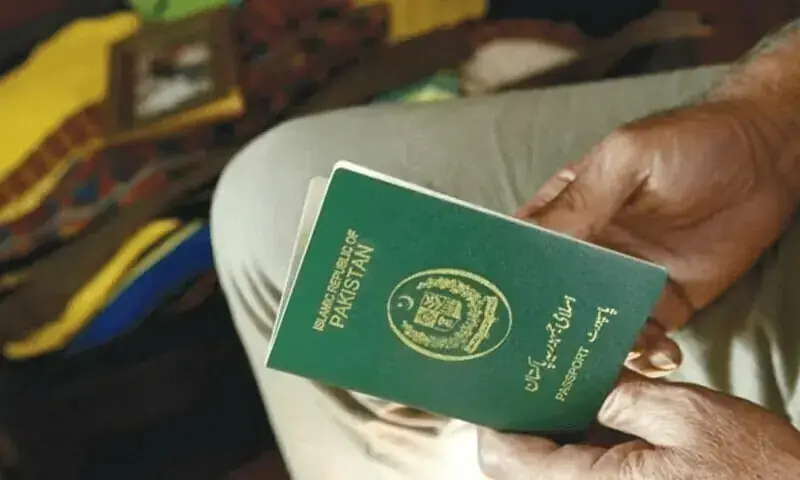
Pakistan’s passport has retained its 100th position in the latest Henley Passport Index, allowing its holders visa-free, visa-on-arrival (VOA) or electronic travel authorisation (ETA) access to 30 destinations worldwide.
According to the latest global mobility report, the Pakistani passport briefly improved to 97th place in February 2026 but later returned to 100th following changes in international visa policies and bilateral travel arrangements. Despite the drop, the current ranking remains better than its 103rd position at the end of 2025.
The report states that Pakistani passport holders can travel visa-free to 11 countries. These include Barbados, Cook Islands, Dominica, Haiti, Micronesia, Montserrat, Rwanda, Saint Vincent and the Grenadines, The Gambia, Trinidad and Tobago, and Vanuatu.
In addition, travellers from Pakistan are eligible for visa-on-arrival facilities in 16 countries and territories, including Burundi, Cambodia, Cape Verde, Comoros, Djibouti, Guinea-Bissau, Madagascar, Maldives, Nepal, Niue, Palau, Samoa, Senegal, Sierra Leone, Timor-Leste and Tuvalu.
Pakistani citizens can also obtain electronic travel authorisation (ETA) before travelling to Kenya, Seychelles and Sri Lanka, providing easier entry procedures without requiring a traditional visa.
The Henley Passport Index ranks passports based on the number of destinations their holders can access without obtaining a conventional visa before travel. According to the latest rankings, Pakistan’s passport offers greater travel freedom than those of Iraq, Syria and Afghanistan.
The report also notes that Singapore continues to hold the world’s most powerful passport, providing visa-free or simplified access to 192 destinations.
Meanwhile, Pakistan has completed the nationwide rollout of biometric e-passports featuring an embedded microchip and a secure polycarbonate data page to strengthen document security and support future international travel agreements.
Authorities have advised travellers to ensure their passports remain valid for at least six months beyond their departure date, as this is a common requirement for many visa-free and visa-on-arrival destinations.